One of the things I am drawn to, and quite skilled at, is processing data. It’s why I enjoyed operating a fire truck, and it’s also why I like my job in medicine and enjoy the technical end of SCUBA. I would probably been pretty good at engineering. I love processing data and doing math in my head. I also enjoy having a good tool that will make that job easier.
Enter dive computers. These machines take all of the guesswork out of diving. Traditionally, divers would use a table where the maximum depth and total dive time were looked up on a table that would tell you the maximum time you could be underwater. This is called “square profile” diving. The table assumes you descend from the surface to a set depth, remain at that depth the entire dive, then return directly back to the surface. In reality, no one dives like that.
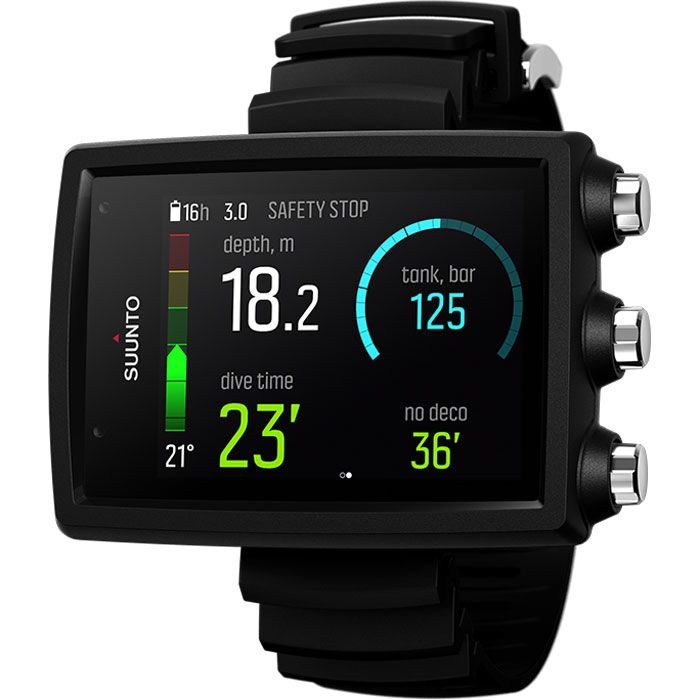
A dive computer uses a mathematical model to calculate how much Oxygen (and other gases) are in your tissues, then uses that to tell you what you need to do in order not to get the bends. It resamples the factors of the dive every 30 seconds.
That’s one of the things that I can’t understand about this diving accident. The diving computer would have warned them:
that they were approaching the no decompression limit once they had been under for about 7 minutes at a maximum depth of 160 feet. It would beep and flash.
When they reached 187 feet, they would have gotten another set of beeps warning them that the oxygen was at the maximum safe limit of 1.4 atmospheres of pressure
Most computers have a depth alarm that would have warned them about exceeding depth limits
Many computers have turnaround alarms that will warn you when you have used a third (or some other programmable amount of your air) of your breathing gas
Many dive computers would have had their models exceeded and would go into “violation” mode. There are more alarms here, and the computer only functions as a digital set of gauges after that point.
In short, there is no way that dive was an accident, and that is not even considering the stupidity of swimming that far into a cave. It always astounds me that someone will pay a thousand dollars for an expensive piece of gear that’s designed to save your life, then will ignore that device. The cheapest dive computer can be bought for less than $100 (although I wouldn’t bet my life on cheapest.)
My dive computer cost me well over $600, but it is obsolete and no longer for sale. If I were to buy one today, I would want a gas integrated console computer that can handle multiple gas mixes on one dive. The small wrist ones aren’t readable by this old man’s eyes- the numbers are too small on the display and I don’t want to wear a prescription dive mask.
So with that being said, I would want:
gas integrated
nitrox capable to 100%
multiple gases on one dive
With that, I my research settles on these:
Apeks DSX Dive Computer:The nice thing about this one is it would let me upgrade to trimix if I decide to do that in the future. It’s pricy though: $1200. Also, the connection to your tank is wireless, and that means sometimes losing the signal and not knowing how much pressure you have left.
Mares Genius: This one is cheaper at $800. Still has the wireless connection issue.
Oceanic Pro Plus X: This one solves the wireless issue, but it only handles nitrox to 50% and can’t do trimix. It’s also pricy at $1200.
I’m sure there are others, but those are the ones I would consider.
The disclaimer: I don’t advertise, and receive nothing for my reviews or articles. I don’t think that I ever will. I have no relationship with any products, companies, or vendors that I review here, other than being a customer. If I ever *DO* have a financial interest, I will disclose it. Otherwise, I pay what you would pay. No discounts or other incentives here. I only post these things because I think that my readers would be interested.
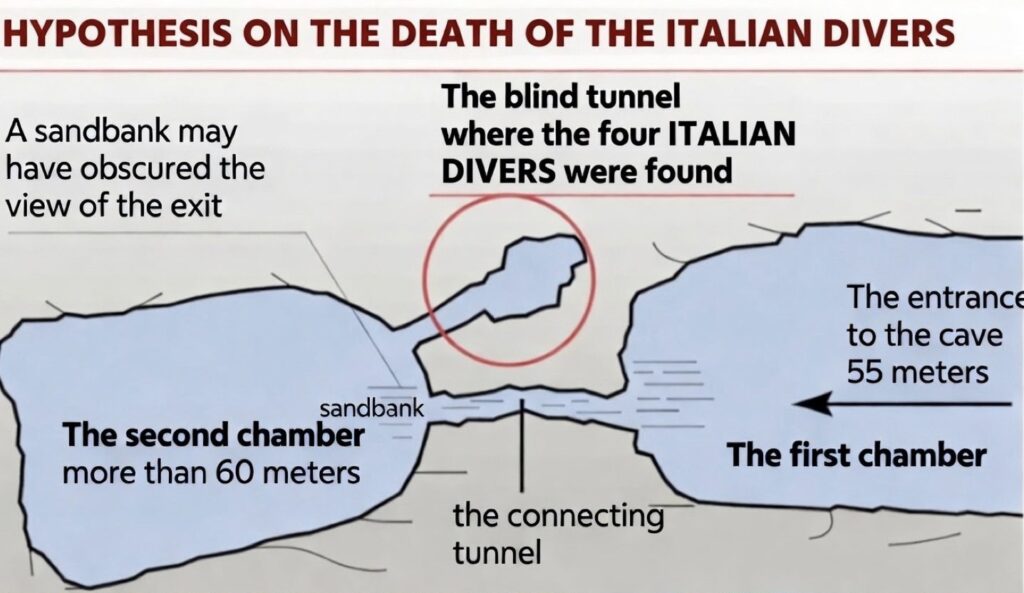
From la Repubblica, a story of the deceased divers from the Maldives. A Finnish team managed to recover the final two deceased divers yesterday. All four of the remaining divers were located in the same chamber, more than 200 feet below the surface, and more than 300 linear feet inside the cave. The rescue team has given some insight into what happened to the missing divers. To understand what happened, a map of the underwater cave.
This is a diagram of the cave system, as seen from above, looking down.The divers entered the cave from the right, off of the frame.
The divers entered the cave system at a depth of 180 feet. The cave begins with a first large, very bright cavern with a sandy bottom. It would seem enticing to go further, as this looks very inviting.
They swam through a connecting tunnel from the first chamber to the second. This connecting tunnel is almost 100 feet long, ten feet across, and just three feet tall. It led to the second chamber of the cave, which is a large, round space with no natural light. This second chamber had a depth of over 200 feet. The interior of this chamber would be completely cut off from daylight, and the only visibility would be provided by any handheld lights that the divers had brought with them. The inside of such a chamber is a confusing jumble of rocks, with one rock looking much like any other rock. Even though the water in here was clear, it was a dark, confusing maze of rocks and sand.
At some point, they entered the third chamber (which was a dead end with no way out) through another tunnel whose entrance was right next to the connecting tunnel leading back to the first chamber and the exit. The Finnish team notes that the exit tunnel’s opening was partially obscured from view from the vantage point of a diver in the second chamber by a large pile of sand. It is easy to get over the sandbank into the second chamber, but when you turn around to leave again the bank almost looks like a wall, hiding the corridor from view. The team believes that the divers mistook the tunnel leading to the dead end and their literal death for the tunnel that would lead them to safety.
The divers were only equipped with 80 cubic feet of breathing air. At 200 feet, they would breathe through that supply at 7 times the rate of the surface. By the time they had penetrated the cave to that point, they likely had a minute or two of air left before they all drowned from lack of air.
This reinforces my opinion of what I think happened. These divers were diving beyond their training, experience, and equipment. Had they been properly equipped and trained, they would have stretched a guideline as they went and wouldn’t have gotten lost. They would have had more than just 80 cubic feet of breathing gas, and they wouldn’t be dead.
This was diver error, plain and simple. As I said before, the ocean is an outright jealous bitch, and she shows no mercy to those who do not give her the respect she deserves.
EDITED TO ADD
One of the things that gets me, although it shouldn’t at this point, are the social media experts who are claiming this team had tons of training and experience, so something else must have happened. I have seen theories ranging from “they had bad air” to rogue currents (although how a current runs through a dead end cave, they don’t explain), and even one that claims they were drug there by a large squid to be used as food.
I am not the only experienced diver who actually knows better. It doesn’t take any special disaster to have made this happen- just a combination of inadequate training and experience combined with arrogance of Dunning Krueger and a dangerous environment with a very small margin of error, and that’s all you need.
The SCUBA tragedy in the Maldives has another interesting turn, and one that actually supports my belief that the divers were diving far beyond their training, equipment and experience. The bodies of the four missing divers have been recovered, and they were located in the third chamber of the cave at a depth of 200 feet.
The Italian tour operator that manages the Maldives diving trip denied authorizing or knowing about the deep dive that violated local limits, its lawyer told Italian daily Corriere della Sera on Saturday, according to an AP report.
Orietta Stella, representing Albatros Top Boat, said the operator “did not know” the group planned to descend beyond 30 meters. Crossing that threshold requires special permission from Maldivian maritime authorities and the tour operator “would have never allowed it,” she said.
I want you to look at this short video of the equipment that the dive team is using to recover the bodies.
This setup is called a rebreather. It works by having the diver rebreathe the air in his lungs over and over again. The device removes CO2 from the exhaled air and adds oxygen as needed to maintain a safe mixture. These devices are the gold standard for diving at the edge of human physiology. This is closed circuit diving, and rebreathers are specialized equipment, costing tens of thousands of dollars for each.
Now consider what the divers who died were equipped with:
The Italian divers were experienced, but the equipment used appeared to be standard recreational gear rather than technical equipment suited for deep-cave diving, she said.
This is the part that I can’t confirm, but this is reportedly the cave where the group was diving. Even if it isn’t the exact same cave, this is what it would look like. These caves are covered in fine silt, and one wrong move, one errant fin kick sends that silt up into the water of the cave, reducing visibility to zero.
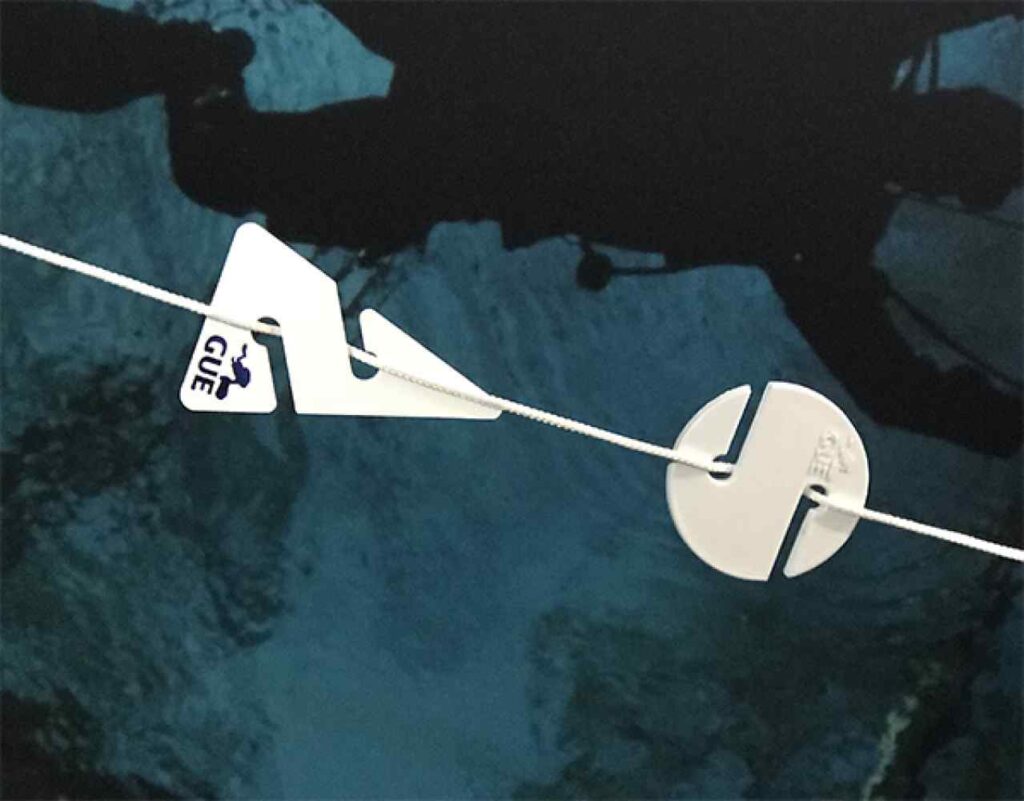
One of the things you do in an area where visibility is potentially poor is use guidelines. A guideline is a rope that leads you back to the exit. Firefighters, rescue personnel, and cave divers are all familiar with this. The line has markers on it to indicate direction so you don’t accidentally follow the line in the wrong direction. It looks like this:
The round markers are called cookies, and the arrows are called, well, arrows. These shapes are easy to identify by feel in cases where there is no visibility. The arrow is placed on the line so it points to the exit. Unlike arrows, which explicitly point toward the nearest exit, cookies are round and do not point anywhere. They are used to mark other things. For example, if a cave branches off in different directions, the guideline will as well. So you use a cookie to mark which of the guidelines the team followed to go deeper into the cave.
In this case, it is evident that the divers didn’t use guidelines. They weren’t equipped for deep or decompression diving, and none of the divers involved were trained for this.
When that visibility is zero, you are weightless, it’s very disorienting. If you don’t know what you are doing in a cave, this is a death sentence. You have about 3 minutes to figure it out, or you and everyone with you in this cave is dead. That’s how 5 divers can die all at once. My guess is that this is what happened, and one of the divers managed to make it as far as the cave entrance before his air ran out. This has been my belief all along, and nothing I have seen to date contradicts my belief.
Now that the bodies have been located, the plan is to recover two of them tomorrow, and the final two on Wednesday.
I love how the readers of this blog have such a depth and breadth of experience. Nothing illustrates that more than the SCUBA discussions we have been having. I keep my gear as simple as I can, both because I want to manage the dive, not my gear, and the simpler your gear, the lower the odds for a malfunction. Let me explain my setups:
Buoyancy Compensator
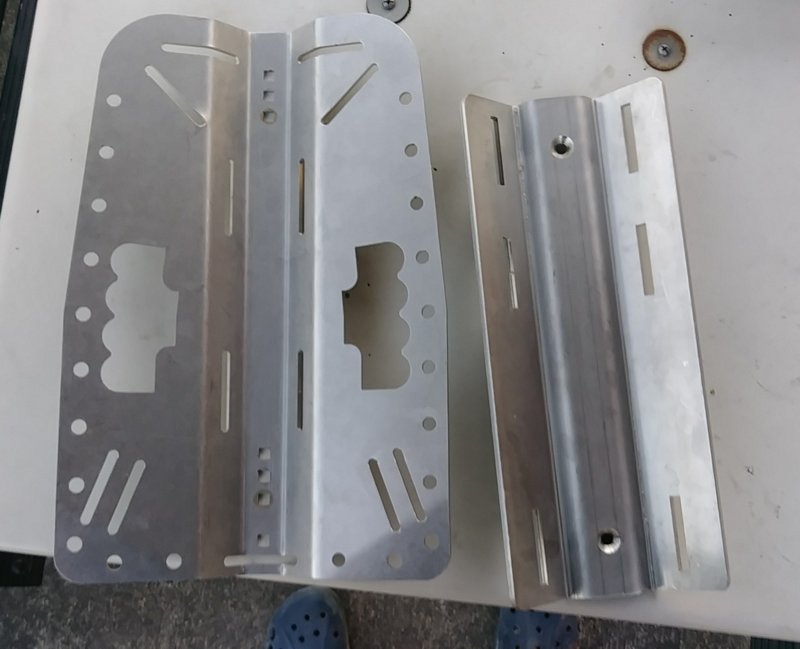
My BC is one I made myself. There was a custom metal shop in Pennsylvania that made custom backplates out of solid stainless steel. The company was called Hammerhead SCUBA. They have since gone out of business. The plate and tank adaptor, pictured below, weigh in at about 12 pounds.
To that, I added a single length of seatbelt webbing wound through the plate, making it into both a waist belt and shoulder straps. On the waist belt, there is a single pouch for adding a single soft weight, so I can use it to adjust buoyancy for things like thicker wetsuits. Also on it are numerous stainless steel d-rings so I can attach various things to my gear when needed.
Also attached to the backplate is an OxyCheq wing with 30 pounds of available lift. They are great wings, and in over a decade of diving, I actually wore one of them out and they let me buy a replacement at 50% off. Great company.
To make things comfortable, I also put a back pad in it. This also created a pocket of sorts that is the perfect place to hide a folding dive flag for when I am on the surface and want to be seen by nearby boats.
Regulators:
I have two Aqualung Legends, one with a DIN connector and one with a Yoke. The yoke connector fits my pony bottle. I also have an older Mares regulator that I sometimes use, there is a DIN fitting on it, and the two DIN regulators I have are tuned so that when you take a good breath on them, they practically force air down your throat. When I am working hard, I want there to be no feelings of being air starved. I have a mechanical pressure gauge on all of them, as well as a QD hose for my dive computer, which allows me to move the computer easily from one regulator to the other, if needed.
Computer
I went through a few computers before I found one I really liked. I tried the wireless ones, and didn’t like them. They lose connection to the pressure sensor too easily. My favorite computer is the Oceanic Pro Plus. Also, it has large numbers that are easier for this old man to read without glasses than is a wrist mount computer. Other advantages are that it allows me to change between three different gas mixes on the same dive. I’ve had great luck with this computer- it served me on hundreds of dives with no issues, including the occasional decompression dive.
Tanks
For tanks, I have a pair of 120 cubic foot high pressure steel tanks, and another pair of 100 foot tanks. I like the 100 foot tanks better. They are 11 pounds negative when full, 2 pounds negative when empty. Using this and a steel backplate enables me to dive without using a weight belt. With this configuration, I am neutral at 10 feet of sea water and an empty tank. Perfect buoyancy. I only accept EAN from companies that blend. I will not use banked EAN because I have had too many issues with contaminated gas from them.
I also have a 19 cubic foot aluminum tank that I use either as an emergency supply or as a deco tank. As a deco tank, I fill it with EAN80, as an emergency tank, it either has air or EAN32.
The rest of it
Completing my setup, I dive with 36 inch freediving fins, because I find that a long stiff fin allows me to drift and steer with little effort but also lets me take advantage of strong leg muscles and really get some speed on. I wear a pair of diving shorts with pockets, so I can store a lift bag and thumb reel with 100 feet of line in one pocket, and a rechargeable flashlight in the other. Attached to my waist belt is a short 4″ dive knife. No snorkel, none of that other extraneous stuff that isn’t really needed, just a simple mask. Too many divers buy a ton of crap that they don’t need, then look like they are wearing half the dive shop while they are in the water. All that does is create drag and weight, which slows you down and causes you to use more gas.
Diving for (Almost) Free
At first, my girlfriend at the time and I used to maintain a website that was a list of dive spots and boats in Florida. We would review all sorts of sites and boats. That’s why my internet handle is divemedic. The site is gone, but it was fldiving.com, and once a boat or shop found out you were running a website for divers, you got all kinds of free stuff. Then my girlfriend and I split up, and I let her keep the website. It lasted a year or two longer, then it disappeared. I guess she didn’t keep up with it.
After that, I spent a few summers working as an underwater dive guide. You don’t make any money at that. What you do get to do is dive for free. Get on the good side of a local dive shop, especially near a tourist area. Florida does some odd things diving that people up north aren’t used to. One of the things we do is drift diving, which other places really don’t do. Tourists want someone to walk them through it, so the dive shop gives them your name and number. They call, and you recommend a boat. There are boats that know my name and offer to let me dive for free if I bring at least three other divers with me. The tourists make the reservation with the boat and pay for their dives and give the boat your name. It doesn’t cost the tourist any extra money for my services, they get a guide who makes sure they have a good time while being safe, and the boat gets some business for the price of an extra diver that costs them nothing. Everyone wins.
When it comes time for the dive, you help them get set up on the boat, then right before we all jump in, I would check their gear to make sure it was setup correctly. After that, all I had to do was throw on the BC and mask, jump in the water, pull on my fins, and I was good to go. This setup is very quick and easy to get into and out of. Fitting these dive trips into my fire department schedule was easy, and I would spend the summer getting in as many as 50 or 60 dives a month. One summer, I hit almost 200 dives from June through August. The most dives I have ever done was a two day period when I did 10 dives between 60-110 feet in just two days. All free.
I would guide my tourist puppies through the dive and get them back to the boat. Sometimes they would tip, sometimes not. I didn’t care. All the tips did was pay for the gas and tolls to get from Orlando to West Palm Beach, Pompano, or Boynton Beach, those being the locations of my favorite dive boats.
The drift diving here is fantastic. The boat drops you on a reef one or two miles offshore, with the bottom being 55-110 feet below, depending on which reef you are diving. For tours, I used to seek out 55-65 foot deep reefs so I could dive it on EAN36 without an issue. The leader (me, when I was the guide) tows a buoy with a dive flag on it using a rope. The divers drift with the current along the reef. You can see a tremendous amount of interesting sea life. At least one or two sharks on every dive- most of the time, you will see even more. Occasionally, you see a really large one- 8 feet or more. During the summer, water visibility can vary from 20 feet all the way up to being able to see the dive boat while on the bottom at 80 feet. On those days, it’s like swimming in a glass of gin.
The limit for the dive is when the first diver in the group hits 700 pounds of gas remaining, a diver hits his NDL limit, or we have been in the water for an hour. I would then have the entire group surface with me. We would spend an hour on the boat, change tanks, then do a second dive. In all, we would spend about 3 or 4 hours on the boat. I would use the rinse hose and some baby shampoo to shower on the back of the boat while we were headed back to shore. Sometimes, I would take a vacation or sick day and spend a week diving every day.
Those were my best days of diving. I spent my summers (this was about 2 years after I divorced my first wife) SCUBA diving. I was great- my tan was awesome. I can see the allure of being a beach bum. It was amazing. I got over 2,000 dives in less than 3 years, averaging more than one dive every calendar day.
One of the boats used to joke with me, because I once spent over an hour and a half on a 60 foot dive and he was pretty pissed. I pointed out to him that he said “dive the limits of your computer or until you are at your reserve air pressure.” Not my fault I have great SAC, a 120 cubic foot tank, and was breathing EAN36.
After that day, the captain would drop my buddy and me in the water first, motor off some distance to drop the rest of the divers, pick them back up, then come over to get me. He was a nice guy. Near as I can tell, his boat is no longer in business.
The woman who was the defacto leader of the group is being called an “expert with over 5,000 dives.”
Ms Montefalcone’s husband, Carlo Sommacal, told Italian outlet La Repubblica that his wife was an “expert” and had done 5,000 dives.
I can’t stress how difficult and dangerous this dive is. As I said in the other post, my experience and certifications are remarkably similar to hers, and I am telling you now that I am not, and she is not, in any way qualified to do that dive, nor was she equipped to perform that dive. I know I am not trained or equipped for it. In addition to being NAUI and PADI certified as a divemaster, rescue diver, nitrox, public safety diver, and cavern certified, I am also SSI certified for extended range diving and extended range nitrox. (the first two classes in this list.)
The reports I am seeing is that her group of 5 divers were diving ordinary open circuit with single aluminum 80 cubic foot tanks. That is not the way to do this, and she should know better. It is my belief that Dunning-Krueger is in full effect here- she was making the assumption that all diving is the same, so diving to double the recreational limit is no big deal, and basing that on her training and experience in shallower depths- perhaps thinking her professorship and TV fame made her smarter than everyone else.
The issue with this latest death, is that the Maldives military is no better. It’s being reported in SCUBA circles that the military diver was in recreational gear with single tank and an extra slung aluminum 80. That is nowhere near good enough. The entrance to that underwater cave is at 160 feet. The caverns that are being searched are at 200+ feet.
There is no safe limit for diving to that depth that doesn’t require decompression.
Nitrogen is intoxicating at that depth. This compounds the danger, and requires mixed gases, especially as you approach 180 feet or deeper.
Oxygen in normal air becomes toxic when breathed at depths greater than 185 feet.
For the reasons above, dives to that depth require what’s called hypoxic trimix, a mix of 10-16% oxygen, 50% helium, and the remainder nitrogen. That mixture avoids the risks of OXTOX, narcosis, and lessens the issues with decompression sickness. The issue is that hypoxic trimix can’t be breathed on the surface or at shallower depths. This means a diver has to have what’s called a transit gas, usually trimix with 21% oxygen, to get from the surface to about 150 feet or so. Then there are decompression gases needed, which can include 50% nitrox or other gases. The exact depth for each gas and when to switch depends on the chosen mix, target oxygen pressure (1.2–1.4 atmospheres), Equivalent Narcotic Depth (END), and the decompression plan. The people who do this always use gas and dive planning software. This isn’t the sort of dive where you just dive in and go for it.
In all, a dive like this could require every single diver to enter the water with 4 or more tanks, and still be required to use a surface supplied decompression gas. In many cases with a dive like this, divers will go in ahead of the search team and bring in full tanks of trimix that are left in staging areas within the cave. It’s a very complex and dangerous operation.
Now multiply that by the number of divers you need- this will include the search team, support divers who don’t enter the cave but assist the search team in managing the dive at depths from 150 feet up to the surface, the divers who penetrate the cave to set up staging tanks, then there is a medical team, and other members.
Each diver who enters that cave will have about 25 minutes to conduct the search, then will spend the next two hours working their way to the surface as they decompress at progressively shallower depths. Total run times of 3+ hours are common, with significant stops on 50% nitrox and pure O₂ required to decompress.
In all, an operation like this will take a dozen or more people and cost over a million dollars.
Or you could just cancel the entire useless exercise and leave the dead where they lie. Why risk creating more bodies? My opinion is leave them where they are. They are already dead, and any potential benefit in recovering the bodies isn’t worth losing yet another life. If the Italian government or the family isn’t happy with that, they can mount the expedition, with the understanding that any other death will result in the supervisor of that dive being charged with negligent homicide.
The ocean is an unforgiving bitch if you don’t show her proper respect.
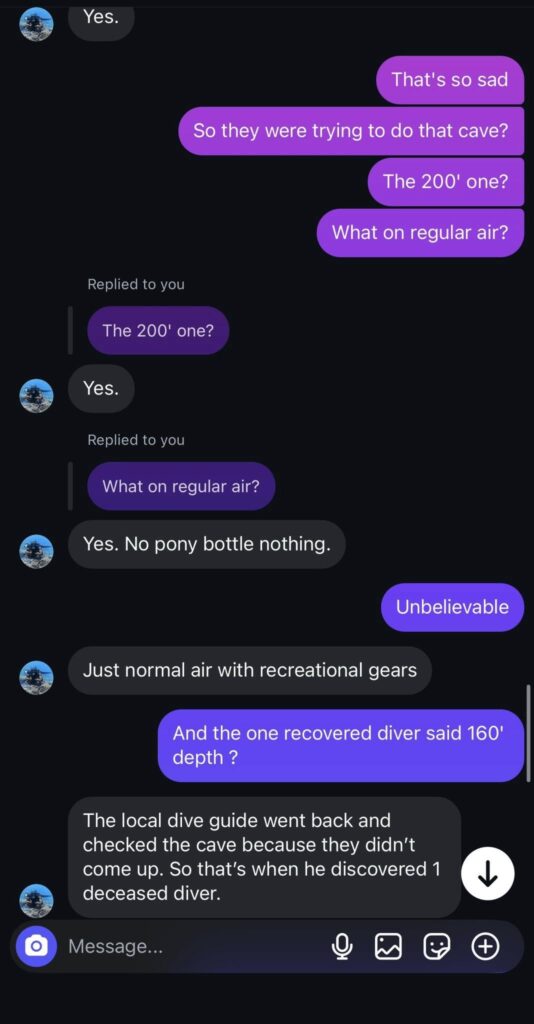
The worst diving accident in the history of the Maldives– 5 people died while on a cave dive to a depth of 160 feet. They died because they were foolish and likely were diving beyond their training, experience, and equipment. Let me explain:
Waves alone were likely not a factor. When you are underwater, you can feel waves to a depth of about 7 times the waves’ height. In order to even feel the effects of waves at 160 feet, those waves would have had to have been at least 23 feet high. That’s not very likely. However, strong winds can cause significant currents around atolls and through underwater caves. That may have factored into this, but no one is talking yet. Still, they had an experienced local dive guide who would be familiar with local conditions with them, so this may not be the case.
More of a factor was depth and the fact that they were in a cave. When you are SCUBA diving, the ultimate safety factor is being able to reach the surface. That’s why new divers are told to always dive with a buddy, because you can share that buddy’s air supply to reach the surface in an emergency. New divers learn all sorts of limits that are intended to ensure you can reach the surface.
When you can’t reach the surface, you are doing what is called “diving in the overhead.” In other words, there is something between you and the surface that is keeping you from reaching it. There are four things that can keep you from reaching the surface. Let’s discuss them:
SAC
The first is the amount of breathing gas you carry. A standard SCUBA tank is filled with 80 cubic feet of compressed air. At rest on the surface, a well experienced diver will breathe half a cubic foot of air per minute. Inexperienced divers can easily triple that, and a diver exerting themselves will also have increased air consumption. That is called your Surface Air Consumption, or SAC.
Depth increases your air consumption. Since pressure increases by one atmosphere of pressure every 32 feet of seawater, a person at 160 feet is breathing 5 times the air as one on the surface. That 80 cubic feet of air is now going to last only 32 minutes instead of 160 minutes. Add in fear, exertion, and the fact that it will take 3 minutes to get to that depth and 5 and a half minutes to safely ascend from that depth, and now your bottom time is about 7 or 8 minutes, maybe less.
When I was heavily into diving, I would usually dive with 120 cubic feet of gas. At 120 feet, I could get a maximum dive time of about 25 minutes. If they were diving Aluminum 80s at 150 feet, that time would likely have been no more than 14 minutes, and my SAC was excellent.
You are limited from returning to the surface simply because you will drown before you get there if you don’t have enough breathing gas.
No Decompression Limits
Another thing limiting your return to the surface is physiological. Your body absorbs gas while you are breathing it under pressure. Since air is a mixture of multiple inert gasses that are not metabolized, those gasses tend to be absorbed into your body tissues. The principle of these is nitrogen. Once the pressure is relieved by going to a shallower depth, that Nitrogen comes out of your tissues and makes tiny bubbles that expand as the pressure lessens. Think about the bubbles in soda. That’s what is happening. Those bubbles get trapped in places like joints, blood vessels, and various organs and cause all sorts of problems.
To prevent this from happening, divers restrict the amount of gas that is absorbed through limiting the amount of time they spend at depth. The maximum time a diver can remain at a given depth is called the “no decompression limit” or NDL. The definitive table for determining what the NDL is for any particular depth comes from the US Navy. (non-hosted pdf warning) It’s a complex subject, but the NDL for 160 feet of depth is about 7 minutes. If you remain at that depth for longer than this, you can’t return to the surface without decompressing, or you will get decompression sickness.
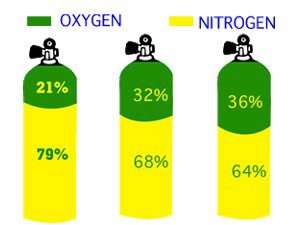
The NDL can be extended by using gas mixtures other than air. For example, a mixed gas called Nitrox was carried on the boat involved in this accident. Nitrox allows divers to stay down longer because some of the nitrogen in the air is replaced with oxygen. The catch here is that oxygen becomes toxic when breathed under pressure (called oxygen toxicity, or OXTOX). That limits the depth at which Nitrox can be used. The most common Nitrox mixes are EAN32, and EAN36. These contain 32% oxygen/68% nitrogen, and 36% oxygen/64% nitrogen. Neither of those mixes is safe for 160 feet. The maximum oxygen mix you can have at 160 feet is 27%, which is an uncommon custom blend.
Decompression sickness can also be avoided by letting those gasses leech out of your tissues at a slower rate. The easiest way to do this is to return to a shallower depth for an amount of time, to allow them to bleed off. For example, a diver might stop at 30 feet for 6 minutes to bleed off some of the nitrogen he absorbed while at a deeper point before returning to the surface. Many divers do what is called a “safety stop” at the end of every dive, which is in reality a 3 minute decompression stop at 15 feet.
For various reasons, most divers don’t use tables to compute all of this. Instead, they wear computers that constantly compute the amount of gas in your tissues and advise you on how long you can stay down, and if you violate that limit they will make recommendations for decompression stops.
Physical barriers
The next barrier to reaching the surface is a physical one- diving in a location where there is a literal thing between you and the surface. That can be inside of a wreck, or in a cave. The hazard here is that it is easy to become disoriented or lost inside of one of these, and you are trapped and unable to find your way out. It takes different procedures, training, and equipment to enter a wreck or cave.
Though the dive-group were said to have entered the water in the morning, the alarm was raised only at 1.45pm, suggesting that they might have been prepared for a long, deep dive. Details have yet to be released about the equipment they were using.
I have been present for several diving accidents, and I have known several people who have died SCUBA diving. I have also read hundreds of reports of SCUBA accidents. In each and every case of which I am aware, the accident was caused by a diver who went into a situation for which they were not:
experienced
equipped
or trained
Or some combination of those three. That appears to be the case here. A dive inside of a cave, at a depth of 160 feet is beyond the training and experience of recreational diving. It’s called a technical dive, and these require a lot more training and equipment than most divers have.
Dives that go into more complex environments have to be planned. The deeper you go, the longer you stay down, and going into a cave or wreck all require much more planning than a simple 60 foot open water dive.
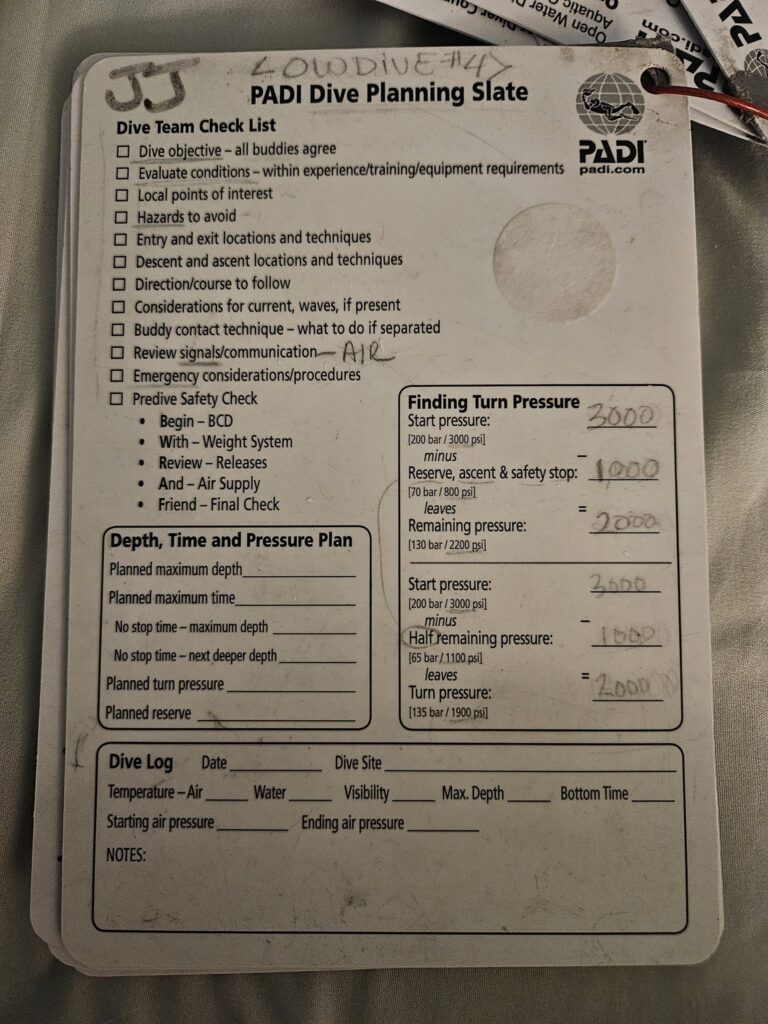
When diving in an overhead environment like this, the rule of thumb is take enough gas so where you have 1/3 of it in reserve when you reach the surface. For this dive, that would mean about 100 cubic feet of gas, but more like 110 cubic feet to be safe.
On top of this, the Maldives limits recreational diving to no more than 100 feet in depth.
This tragedy was a case of divers going beyond their limits, as most dive accidents are. Diving is a safe sport, as long as you follow the safety rules. Too many divers get tempted to push just a little beyond the limit, and that’s when tragedy strikes.
The ocean can be an unforgiving bitch if you don’t respect her.
On the gripping hand
Other than diver error, there is also the possibility that their air was contaminated. Breathing in carbon monoxide, or air contaminated with compressor oil can be deadly. I once dove with Nitrox that was contaminated with compressor oil. I got a buzz from it at 50 feet and had to abort the dive. It cost me several hundred dollars to get all of my equipment cleaned for oxygen service. I never returned to that dive shop.
So there are other possibilities, but the smart money is on diver error.
My training
I have over 4000 logged dives, and I don’t know how many unlogged ones. I am a Master Diver and served on a Rescue Dive team for a number of years. We mainly did body and evidence recovery. The majority of my logged dives were from 60-120 feet, with my deepest dive being a 180 foot dive in Mexico. I’ve done a number of wreck dives, and a few caverns and caves. Caverns and caves just don’t interest me, it’s just a bunch of rocks. Boring.
I was just beginning to get into tech diving when I stopped diving. I had just completed extended range nitrox and was looking into doing trimix. Sadly, it became harder and harder to find others to dive with, so I went no further. My last dive was about 6 years ago.
I’m not going to say that I never broke the rules. I was just lucky enough not to get dead. I once went SCUBA diving in a hurricane. Well, the edge of a hurricane. We thought we would sneak a dive in, in between squall lines. That was one of the scariest dives I have ever done, and I learned an important lesson about the unpredictability of currents when the weather turns bad. Still, I got off lightly. All I wound up losing was a fin strap and the flooding of a $1200 underwater camera.
Today’s post comes from the UK, and I try not to talk about legal issues in other countries because I just don’t understand the laws in other nations, and don’t want to stick my nose in them. The difference here is that the case involves some technical issues of SCUBA diving and of dive medicine, areas where I feel like I have some level of mastery. This is a technical post, so for those of you who are not interested in physiology and physics of SCUBA, this may or may not be interesting.
A diving instructor in the UK was teaching an experienced recreational diver a course on deep diving. The dive that they did was to 115 feet.
On this dive, they were diving at around 4.5 atmospheres, and this requires some level of care. I don’t see in this account where the instructor messed up, with the exception that I wouldn’t have had a student doing a check dive like this with an 80 cuFt cylinder (which is what the Europeans call 12 liter).
In this case, however, the government brought in a diver from the UK Navy as their expert witness. He testified that the instructor was wrong in three ways- the dive violated the rule of thirds, they were down longer than the dive tables dictated for that depth, and he held his struggling student underwater when the student was attempting to get to the surface, causing his death by drowning.
Let’s start by addressing each of these in turn. The rule of thirds. The rule of thirds is a rule that says you use one third of your air supply to get into the dive, one third coming out, and hold one third in reserve. This rule is generally only used when you are “diving in the overhead,” meaning that there is either a physical or physiological barrier that would prevent you from surfacing. A physical barrier would be diving in a cave, a shipwreck, or diving so deep for so long that you cannot surface because you have a decompression obligation to work through before you can surface. Neither of those was the case here. In that case, the rule is to ensure that you surface with at least 500 psi of gas left in your tank.
The second argument, that the dive tables’ “no decompression” limits for that depth had been exceeded is ridiculous. When you are a new open water diver, you are taught to use tables, but no one, and I mean no one, follows them. The invention of dive computers has rendered them obsolete. The reason for this is that the dive tables assume that you descend at the maximum safe rate from the surface to the maximum depth, then ascend at the maximum safe rate to the safety stop. This is called a “square profile” and no one dives like this in real life. A dive computer monitors your depth every 30 seconds or so, and gives you “credit” for time spent at shallower depths. This has the effect of more than doubling your permissible dive time. Everyone today “dives their computer.”
A great example of this is the standard dive on Florida’s coral reefs. Off the coast of West Palm Beach, there are several reef lines. The most interesting one from a SCUBA perspective is about a mile or so offshore, in 60-100 feet of water. If you were to dive the top of that reef, the tables say that you can spend a maximum of 40 minutes at 70 feet of depth before exceeding the no decompression limit. Most divers will spend a minute or two at that 70 feet, maybe 5 or 10 minutes at 65 feet, then more time at 55 or 60 feet, etc. The result is that divers with computers might well spend 55 to 65 minutes and still not exceed decompression limits. The Commander would have known this, himself being a certified PADI divemaster.
Instead, he contends that the “out of air” situation was so dire that the diver should have been permitted to make an unrestricted surfacing, despite the fact that the student was breathing on the instructor’s plentiful air source. Ridiculous.
I actually did this exact dive here in the states when I got my own extended diving certification some years ago. It is standard practice at the end of any dive that is deeper than 40 feet to stop at a depth between 15 and 20 feet for three minutes. This is called a “safety stop” and is intended to give any gases that have been absorbed in the blood time to diffuse out of the blood and prevent hyperbaric injuries. It’s recommended by each of the three big certification agencies. (NAUI, PADI, and SSI)
Another protocol that some divers follow is to stop for one minute at half of your current depth. So if you had been at 120 feet, a one minute stop at 60 feet is followed by a one minute stop at 30 feet, followed by a one minute stop at 15 feet. No matter how you do it, coming up as slowly as you can is how you avoid hyperbaric injury.
In fact, three of the dive accidents that resulted in injury, and the only diving fatality I have ever been present for was related to a diver ascending too quickly. The physics and physiology of breathing pressurized gases is technically demanding, especially so when diving to depths below 99 feet. Safety stops are VERY important, especially when you are diving at pressures higher than 4 atmospheres of pressure (99 feet).
I myself have had four diving emergencies that required either emergency surfacing or my buddy’s intervention. Three of them were due to equipment failure, and one because I was a moron. One of them required sharing air. We still had time to do our safety stop.
Even so, it’s obvious that the prosecution wanted to railroad this guy. The student in question had a history of high blood pressure, and the autopsy showed that he had alcohol and cocaine in his system. None of this was known to the instructor at the time of the dive.
In this case, the signs of immersive pulmonary edema were there. For those of you who may dive, or who may work in the medical field, pay attention. Immersive pulmonary edema is very similar to the flash pulmonary edema seen with heart failure patients who are suddenly taken off of CPAP. It’s complicated by the changes in pressure caused by depth changes messing with the Renin-Angiotensin-Aldosterone System (RAAS), which regulates blood pressure. Also adding to the complications is the creation of nitric oxide that occurs with sudden pressure changes in SCUBA diving. In patients with hypertension, heart problems, or kidney problems, this combination can be life threatening.
The signs were there: The student was easily winded with mild exertion, he couldn’t perform underwater navigation while at depth (indicating possible mental status changes from hypoxia), and was complaining that he wasn’t getting any air, even though everything was working perfectly ( a sign of shortness of breath). If he was taking an ACE inhibitor for his high blood pressure, this could even make this condition worse.
So how do you treat this? While diving, adopt the rules that I have always followed:
Any diver on any given dive can terminate the dive for any reason. This is done by giving any diver in your group a “thumbs up” sign, and is called “thumbing a dive.”
Any diver having apparent confusion, disorientation, or an equipment problem should cause the thumbing of the dive.
Any diver having shortness of breath should be placed on oxygen as soon as they are on the surface.
On the way down, take a few seconds at 65 feet or so to get organized. Look each other in the eye and make sure everyone gives you the “OK” sign.
At any dive below 60 feet, make sure that you do your safety stops.
Follow other safe practices like ascent rate, NDL limits, and make sure that everyone is diving within the limits of their training and experience.
My Qualifications
My Internet handle has been Divemedic for more than two decades for good reason. I am a certified Master diver, deep diver, mixed gas diver, public safety diver, and Rescue diver. I am certified by all three of the big US recreational SCUBA training agencies at one level or another: NAUI, PADI, and SSI. I have been SCUBA diving for about 30 years. I used to be on a professional dive rescue team. I have been employed at various times as a rescue and salvage diver and had more than 2,000 dives in my logbook, representing more than 900 hours underwater before I stopped bothering to log them, 16 years ago. Enough dives that I have literally worn out a few sets of equipment. I have been present for half a dozen dive casualties, one a fatality. So I understand many of the issues. With that being said, let’s get into the post.