Smith wielded the country’s most powerful law enforcement tools to nab data on Trump supporters who purchased MAGA hats, including their shipping addresses.
Smith’s sweep — though ostensibly focused on the events of January 6, 2020 — captured data back to 2005.
The documents suggest that Smith sought to ensnare the information of thousands of everyday Republicans, effectively treating them like parties to a criminal conspiracy due to their party affiliation.
All of that data is still on file somewhere. Your guess is as good as mine when it comes to figuring out what all of that data is going to be used for.
On a side note: Most of my posts are written the night before, and scheduled to post the next day, with the first one of the day posting around 3am, Eastern time. This one is a live post, that is, I posted it as soon as I wrote it.
There is a huge effort by Federal agencies to create and maintain a list of Americans who are enemies of the revolution. The post office is keeping a list. All they have to do is see who you get mail from. The NRA? Second Amendment Foundation? Conservative fundraising? Think about the mail you get, and ask if someone could determine your political leanings by looking at your correspondence. It’s basic traffic analysis.
After all, a sitting member of Congress is the one who suggested that the government keep an “enemies list” so they can be confronted. Even the media joined in, including the “conservative blogger” who works for the Washington Post:
Any R now promoting rejection of an election or calling to not to follow the will of voters or making baseless allegations of fraud should never serve in office, join a corporate board, find a faculty position or be accepted into "polite" society. We have a list.
1. Lists of people interacting with Trump’s Twitter account—2023. Smith’s office obtained a warrant requiring Twitter to disclose account interactions from October 2020 through January 2021. It expressly sought lists of users who followed, unfollowed, muted, blocked, or otherwise took specified actions toward Trump’s account. Reporting on the released warrant also identifies demands for lists of people who liked or retweeted his posts. This is a close parallel: investigators sought identifiable groups connected to Trump’s online activity.
2. Bank searches using “Trump” and “MAGA”—January–February 2021. FinCEN shared methods with banks for reviewing transactions, including payment-message searches containing those political terms. Treasury’s February 2024 response acknowledged the terms but said they were intended to be considered alongside other suspicious-activity indicators.
3. Bank of America’s customer list supplied to the FBI—2021. According to testimony reproduced in the House report, Bank of America supplied names of customers who used its cards in the Washington region January 5–7, 2021, with firearm-purchase information used to prioritize names. The FBI circulated information to field offices.
Separately, the FEC maintains searchable political-donor records, including Trump donors, under disclosure requirements applying across parties. Those are public campaign-finance records, a different category from investigative collection.
Now combine that with the location data that is being compiled by a nationwide network of Flock cameras.
These lists are going to eventually be used- whether officially, unofficially, or simply abused by those who have access. We’ve already seen some so-called “rogue cops” who are using them to stalk former and current lovers as well as targeting enemies. Make sure that you have robust contact with others who may be on the list. Once prominent people on the list begin to disappear, you will know that the lists are being used.
It is a sure sign of a dictatorship when there are mass arrests and disappearances. The Soviets even had a word for it- “vzyali” meaning “they have taken,” and there was no pronoun or noun needed to indicate who “they” were- “they” were unspeakable. They were feared. It was never “arrestovani” or arrested, because there were no charges and no trial. They simply disappeared. Vzyali was a word that struck fear in the hearts of Soviet citizens.
The people who were vzyali were never put in jail. They weren’t executed, for the most part. No, they were put into camps where they were forced to work themselves to death. Read about the eight most evil gulags at this page, and remember that all communists wind up using their lists for this purpose.
I’ve long said the Civil War of the 1860’s was not about slavery. At its core, that war was about the North pillaging the wealth of the Southern states. Profits were being secured by having the southern states nearly completely fund the federal government, and those same states were forced by tariffs into captive consumers of union manufactured goods. Protectionism at its most brutal.
Lol, Woman brings in family heirloom from the civil war which they think is a slaves bracelet, turns out to be a dog collar. Even better? Slave bracelets never existed.
The look on her face at the end is pretty close to priceless. This is on the list of never not being funny. pic.twitter.com/I936IJX1Ub
The Tariff of 1828, which included very high duties on raw materials, raised the average tariff on imported goods to 45 percent. The Mid-Atlantic states were the biggest supporters of the new tariff. Southerners, who imported all of their industrial products, strongly opposed this tariff.
The tariff was nominally created to repay the debts incurred after the War of 1812. This wasn’t actually the case. By 1832 the national debt was paid and there was no reason for this tariff. What actually happened was that the tariff created a favorable situation for the North, who benefited greatly from such high taxes at the expense of the South. Since the Southern states didn’t produce manufactured goods, they were forced to buy those goods from either Europe or the Northern states. Since the South also needed to sell their agricultural goods in Europe, this created a situation where the Southern states were paying roughly 75% of all American taxes.
The Southern states just didn’t want to pay the tariffs, and began refusing to do so. (This idea of “State nullification” of Federal laws that states didn’t feel were constitutional was first advanced by Thomas Jefferson and James Madison.) The states, led by South Carolina, declared the tariff null and void, and simply refused to pay.
So in 1833, the “Force Bill” was passed, allowing the president to use whatever force he deemed necessary, including the military, to collect taxes owed by the Southern states. Along came Lincoln, who campaigned on a platform of putting the tariffs back in place so that his sponsors could again enjoy the profits that the protectionist scheme caused.
Then it came to pass that in 1861, a new tax was passed, the Morrill Tariff. This tariff was the highest tax in American history to that point, and taxed imports at over 45%, with imported iron products taxed at 50%. This forced the South to buy northern iron products from the North at whatever prices the North wanted to charge. Victorious Republicans cheered the heavy taxes that benefitted the Northern industrialists who had backed Lincoln’s campaign.
The South announced that it no longer wanted to be a part of a union where they would be robbed in order to make northern businessmen wealthy. They seceded. The north still enforced the tariffs using military force.
Draw your own parallels as you realize the Union states were nothing more than thieves who were using the power of the Federal government and an Army as a means of stealing the wealth of others. No different from the DSA party movement of today.
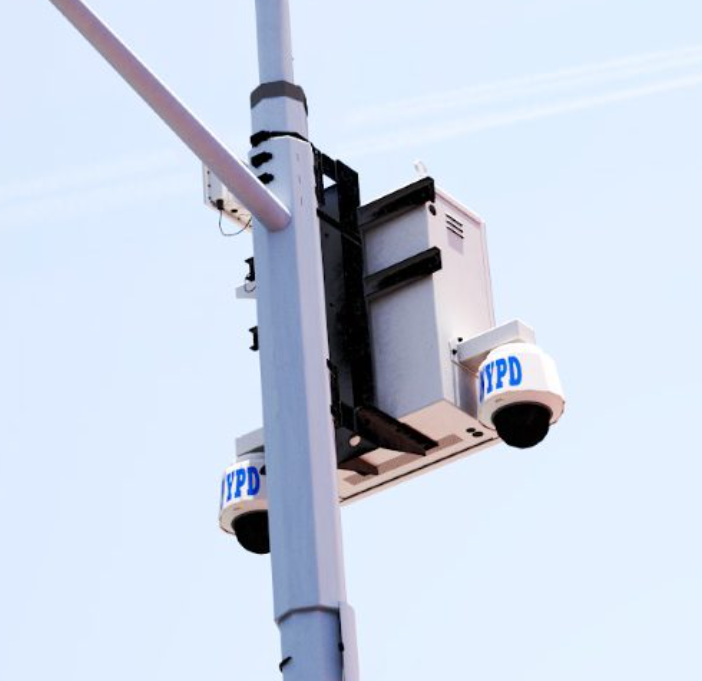
The NYPD thinks citizens with cameras are a concern, as they worry citizens with smart glasses could film their operations. One thing police need is the ability to perform their duties in secret. (/sarc)
This from the organization that maintains over 25,000 surveillance cameras with automated facial and license plate readding capabilities.
Trump excluded certain left leaning members of the MSM from the White House grounds. The left is losing their collective minds, claiming this to be an unprecedented assault on the First Amendment, and of course making comparisons to Hitler, their standard accusation. They have almost completely memory holed the fact that both Obama and Biden did the same thing.
In October 2009, amid a feud in which White House officials (including Communications Director Anita Dunn) publicly described Fox News as not a legitimate news organization but more like “the research arm or the communications arm of the Republican Party” and said they would treat it “the way we would treat an opponent,” even while saying the network’s point of view was “ultimately destructive” to the nation, then ordered the Treasury Department to exclude a Fox journalist from a multi-network interview pool.
Obama’s administration was widely criticized by journalists (including from outlets not aligned with Fox) for tight control of information, fewer formal press conferences than many predecessors, restricted photographer access (favoring official White House images), delays or stonewalling on FOIA, and “blackballing” or limiting access for some critical reporters at agencies.
Obama’s efforts to plug leaks and persecute leakers even exceeded those of George W. Bush’s administration. The administration prosecuted Stephen Kim, a former State Department official, merely for discussing a classified report about North Korea with Fox News reporter James Rosen, even going so far as to seize Associated Press phone records for two months and used the FBI to conduct surveillance on James Rosen (naming him as an “unindicted co-conspirator” in one case) and New York Times reporter James Risen while trying to identify sources.
Even in earlier times, the actions were hardly unprecedented:
Woodrow Wilson investigated journalists critical of his administration by invoking the espionage act of 1917.
During the late 1930s, Franklin Delano Roosevelt harassed activists, including members of the press, who sought to keep the United States out of the war raging in Europe.
Richard Nixon went to great lengths attempting to prevent the New York Times and Washington Post from publishing the Pentagon Papers because those documents exposed how US policymakers repeatedly lied to Congress and the American people about the Vietnam War.
Cato institute has a lengthy article about the abuses of opposing press outlets by Presidents. As for my blog, I detailed how the Bush administration and Republicans used laws against pornography. One of the Florida enforcers of this is none other than Sheriff Grady Judd.
Christopher Michael Wilson was investigated by Judd because he ran a website that allowed people to post nude pictures of women on the site, and it required a credit card to access so that the Wilson would know that people accessing the site were adults. Military men deployed in the Iraq war complained that they could not do so while in Saudi Arabia and Iraq, because the web servers in those countries blocked credit cards from being processed by companies who promoted pornography. Because of this, Wilson allowed members proving they were deployed by posting pictures from the war zone to have access to the site. Because of those pictures, the site became a photo journal that chronicled the Iraq war. It was one of the first sites to publish the Abu Grhaib pictures that so embarrassed former President Bush. The pictures being posted to that site caused major problems for the Bush administration.
Judd arrested Wilson on 301 counts of distributing pornography, even though Wilson did not post the pictures, he merely ran a site where people posted content, and the servers were not in Polk County (they were in the Netherlands). A plea deal was reached where Wilson had to turn the website over to Judd.
Don’t forget that Grady Judd is also one of the Sheriffs who broke the law in 2011 when they lobbied the state legislators to defeat the open carry law. I am one of the few people not on the left who think Judd is a grandstanding, authoritarian asshole. He also has previously engaged in arresting people who are critical of his policies, including arresting one woman for “lewd activity in the presence of a minor” because her neighbor and his child heard a “sexual sounding noise” coming from the woman’s home 48 days earlier. Of course, it was only a coincidence that the woman had been critical of the sheriff and his policies. The charges were dropped, but the woman had to sign an agreement to stop criticizing the sheriff.
Yeah, so using political power to silence dissent is nothing new. It’s been going on as long as we have had a nation. Both parties do it, but each claims the other is the evil one. I have news for you: they both are evil, power grabbing assholes who will stop at nothing to gain power.
I believe that the government agents: cops, firefighters, bureaucrats, whatever, all fall into one of three camps.
They are siding with the commies
They are siding with traditional America
They side with whoever they need to side with in order to keep their pensions and pay
Case in point:
In Augusta, Maine on October 18, 2025 there was a No Kings rally on the Memorial Bridge. A man shows up dressed in an American Flag costume with a BYRNA pepper ball gun (which is legal to possess in Maine) to counter-protest. The lefty protesters call 911 screaming “HE’S GOT A GUN.”
The cops immediately handcuff the man and place him under arrest. They refuse to tell him why he is being arrested, only saying that he will find out what the charges were when he gets to the police station. As soon as they arrive at the station, the police simply release the cuffs and tell him he is free to go, no charges.
The officers later admitted they removed him in handcuffs to prevent the mob from becoming violent.
To those officers who read this blog, especially those who have criticism for what I have to say: Is this something you support? Would you silence one side, violating their constitutional rights and your own oath, simply to prevent the mob from becoming violent? If the answers to either of those questions are yes, then we know where the police stand.
Read about the encounter here:
🚨🚨🚨 TALE OF TWO MAINE POLICE DEPARTMENTS 🚨🚨🚨
⚖️🇺🇸 AUGUSTA PD – OCTOBER 18, 2025 🇺🇸⚖️ 📍 (No Kings rally, Memorial Bridge)
I show up in FULL PATRIOTIC GEAR with a LEGAL NON-LETHAL BYRNA to counter-protest. The Bridge Screamers call 911 screaming “HE’S GOT A GUN.” 🚨
In the first half of the 20th Century, the Supreme Court stretched the intent of the Constitution beyond all recognition. The historical shift that permanently expanded federal power occurred during the New Deal Era (1937). Before that point, the Supreme Court strictly limited Congress by drawing sharp lines between “local” production (like manufacturing, farming, and mining) and “interstate” commerce (the actual shipping of goods).
Frustrated by repeated legal defeats, President Roosevelt proposed the Judiciary Reorganization Bill of 1937. This plan would allow him to add up to six new, sympathetic justices to the Supreme Court. While Congress rejected the plan, the threat of packing the Court heavily pressured the sitting justices to rule his way more often. Justice Owen Roberts, a supposedly conservative justice, shifted his vote in a landmark labor case, creating a new majority that favored the expansion of Federal power. The new lever that allowed the Federal Government to insert it’s abnormally large nose into everyone’s affairs was the commerce clause.
The Constitution grants the Federal government the power to regulate commerce through the “commerce clause.” The Commerce Clause refers to Article 1, Section 8, Clause 3 of the U.S. Constitution, which gives Congress the power “to regulate commerce with foreign nations, and among the several states, and with the Indian Tribes.”
As with many things, they use the commerce clause to get their hands on powers they otherwise wouldn’t have. There were a few cases involving the commerce clause that came before it, but the one doing the most damage to state’s rights was Wickard v. Filburn (1942). I’ve blogged on this case a couple of times. That case concerned a farmer that was growing wheat for use on his own farm. He contended that he was not subject to the limits that the Federal Government had placed on wheat production, because his wheat was not sold, so it could not be regulated as commerce, let alone “interstate” commerce (described in the Constitution as “Commerce… among the several states”). The Supreme Court disagreed. They held that because he was growing his own wheat, he did not buy wheat from someone else. Since he did not buy someone else’s wheat, this affected interstate commerce and made his wheat subject to the regulations.
This court case basically says that the Feds can rule over anyone they please, without worrying about enumerated powers. All they have to do is play “six degrees of separation” to show that the behavior they wish to dictate affected interstate commerce in some way, no matter how tenuous.
The reason I bring this up today is because Justice Thomas’ concurrence in United States v. Hemani, in which he urged courts to reconsider the constitutional foundation of federal law. Thomas argued that goes too far, writing the Commerce Clause authorizes Congress only “to regulate the buying and selling of goods and services trafficked across state lines,” not “activities wholly separated from business, such as gun possession.”
This is an opinion that anyone with half a brain could see, what the gun ban crowd calls “common sense.” If I carve a toy out of wood and give it to my child, I didn’t affect interstate commerce, but those who would increase Federal powers would say it does. The same goes for making my own firearm at home, or for a felon who possesses a firearm. None of those activities affect interstate commerce, and are thus state law issues and none of the Federal government’s business.
“Congress cannot regulate the possession of every thing that ever traveled across state lines,” Thomas wrote, warning that such an interpretation risks converting Congress’ limited commerce authority into “a general police power of the sort retained by the States.”
Judge Stephen Higginson said striking down Section 922(g) would be “a significant departure from existing, settled, and binding Commerce Clause jurisprudence” and could “mark the start of a new, severely contracted Commerce Clause era.”
“Can the federal government no longer criminalize possession of child pornography? Of explosive materials? Of biological weapons?” Higginson asked. “Past the Title 18 level, do we lose regulations on financial transactions? On intellectual property? On endangered species?”
If the financial transactions, intellectual property, or child pornography crosses state lines, then yes, the Federal government may criminalize it. If not, then that would be up to the states. No one is saying these things shouldn’t be illegal- I am saying that it should be up to each state to make their own laws.
That’s what is meant by a Republic- each member of the republic retains its own identity.
I guess the cops that read here will call this “more anti cop bullshit” but I still call them like I see them, and this is unconstitutional as hell:
🚨FORT WORTH, TEXAS🚨Police told street preachers at the FW all-ages Pride event they could be cited if someone was offended by their speech. Asked if calling a transgender woman “sir” was citable, an officer replied, “It’s a gray area.”
Saying someone will be arrested for calling a tranny “sir” is a violation of the First Amendment. End. Full stop.
EDITED TO ADD: This isnt one Ft Worth cop. Its apparently department policy.
EXCLUSIVE 🚨 Fort Worth, Texas – On June 27, 2026, at Trinity Pride Fest in Fort Worth, Texas, street preachers Richard Penkoski and David Grisham were subjected to multiple violations of their First Amendment rights while attempting to preach on public property.
The posts from the last week on how you are being tracked are about to get a boost. The FCC is about to pass a rule making anonymous cell phone ownership illegal. Registration is always misused.
They want to track your every movement, word, and thought.
On Saturday, we talked about how you are being followed on the internet, even if you think you aren’t. Yes, I know there are plenty of people out there who claim they can’t be tracked because of their elite computer skills. All evidence says they are wrong, but I won’t be able to convince them otherwise, so I won’t try. A great example is how I replaced my electronic locks on my safe with mechanical locks. That step makes it more difficult to get in, but not impossible. Sure, there are things I can do to make it harder to get in, but I can never make it impossible.
It gets worse than that- you are being followed in meat space, as well, whether you realize it or not, and it isn’t just license plate readers. As you travel, the things that travel with you are constantly emitting electronic signals unique to you, and those are being used to monitor your every move.
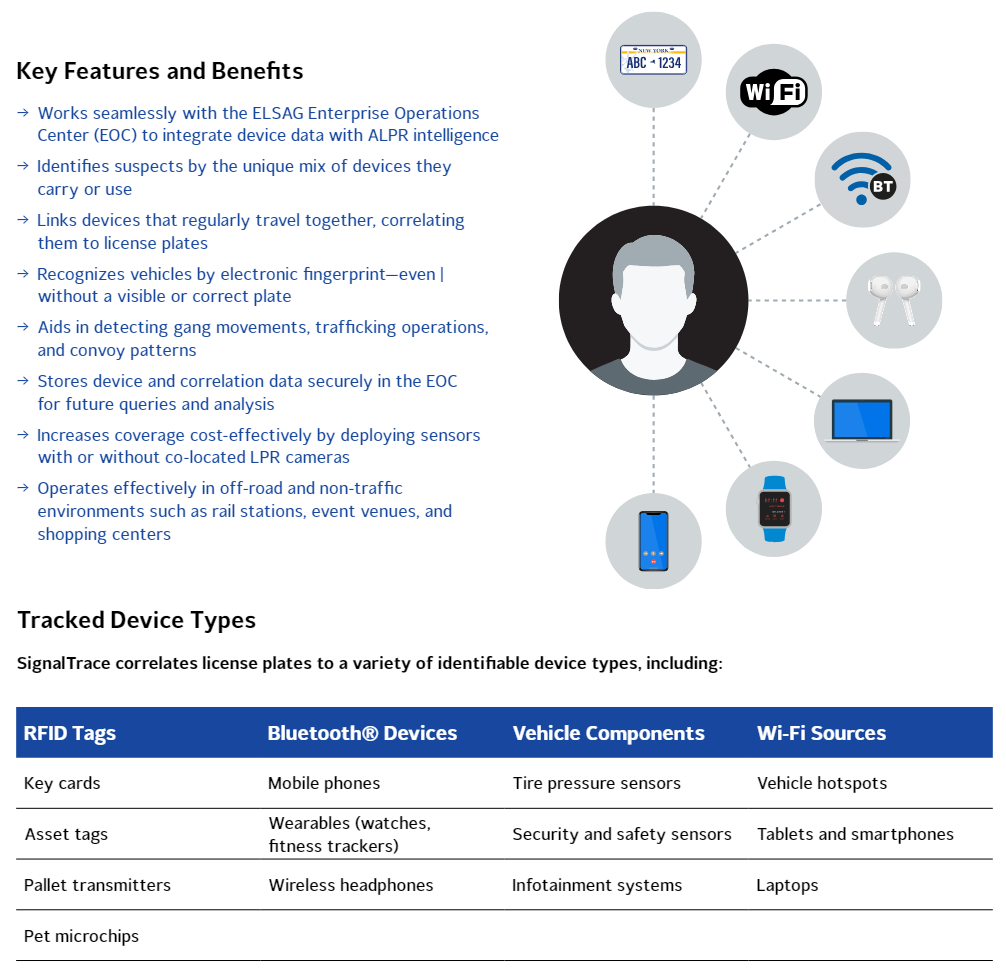
Your Bluetooth earbuds, your cell phone, even the tire pressure monitors in your car (which have been required in every car made in the past 25 years), are constantly sending out electronic signals that can and are being used to track your movements. They are even using the chips embedded in your pets to keep track of your location. It’s pervasive, and there is no hiding from it. Defense contractor Leonardo is promoting a new technology called SignalTrace that will package plate cameras with sensors that can scrape unique identifiers tied to your smart devices and make that data available to law enforcement:
SignalTrace works by linking devices that regularly travel together, correlating them to license plates, then using them to track where you are. We’ve all been aware for years how cameras could track a car’s whereabouts at any given time. Throw in personal identifiers, and the job of tying an individual or multiple people to that vehicle becomes trivial, and not something anyone can simply opt out of. Now they know where you are, and how you got there. Like Flock is already doing, if the company’s tracking systems decide you are acting suspiciously, they report their findings to the government.
The company claims to “capture device frequencies emitted into the air” and “does not decrypt or capture the contents of the devices or their communications.” Which is how these firms are able to evade culpability for the surveillance they enable. Whether they’re cracking encryption or not, the results are the same: they know where you go, who you associate with, and combined with your internet habits, what you are doing there.
The companies are using the camera network not just to investigate based on suspicion, but to generate suspicion itself- it’s a way for police to make an end run around Constitutional protections. The company isn’t subject to protections against search and seizure, so they scoop up all of this information, then present it to the police, and there isn’t a damned thing you can do about it.
How difficult is it to track someone’s entire life? I can match your car, your earbuds, your cell phone, and every other piece of electronics you own. This allows me to match your online life with your physical one. This is why the people who were conspiring with Trump left all electronics at home and communicated only through 2 meter HAM radios. Once the powers that be know who you are, they can read all of your traffic. The Feds have been tapping the phones of the Portland Antifa crowd. Well, not exactly tapping. They cloned the SIM cards of protesters that they came in contact with, and then were able to intercept calls made to that device. The fact that none of them have been arrested makes one wonder, but that’s off topic for this post.
Predictably, the police are already misusing this technology. In Orlando, a woman was jailed for 13 days when vehicle tracking said she was the one who caused a deadly accident before fleeing the scene. All the cops did was scan the database for every car matching the description of the one fleeing the scene, and Lindsay Isaacs’ black Dodge Durango had recently driven through the area, so police found and arrested her. It turns out that her car had driven through 2 minutes before the accident, and she had no idea that a deadly crash had even occurred. When FHP caught up with her, there was no damage to her car, but that didn’t matter, the cops merely lied and claimed there was. It took her a month to clear her name. It turns out, the vehicle actually involved in the crash was a maroon Durango. She is suing the FHP.
“I feel there’s really no way of fixing what they did to me. It will always hurt me. My reputation was ruined. I’m still receiving death threats and hate. It’s very hard,” Isaacs said.
Alisa Lee Montalvo, 47, of Deltona, was arrested and charged with 9 crimes for that crash, including three counts of vehicular homicide, three counts of leaving the scene of a crash with death, leaving the scene of a crash involving serious bodily injury, reckless driving, and tampering with evidence. (As an aside, in my opinion, there is a good chance she will walk. If I were her attorney, I would introduce to the jury evidence that the police lied to arrest someone else for this crash, then I would attempt to convince the jury that, if they lied in this case once and manufactured evidence, what’s to say they aren’t doing so now? Reasonable doubt all day.)
There are even those who say it’s no big deal, because their shopping habits are benign, the equivalent of “If you have nothing to hide, you should let the police search your home,” but the troubling part isn’t the technology itself or whether or not you value privacy—it’s the complete absence of meaningful limits on how it is being deployed. Every year brings new ways to collect, store, and analyze information about ordinary people, while the legal protections meant to restrain government surveillance continue to erode.
They can paint a pretty accurate picture of your entire life by knowing what you read, your shopping habits, your political opinions, and your whereabouts at any time of the day, and given the time and access, the powers that be can find a law you’ve broken. That’s a certainty.
Each and every one of us is responsible for reading, understanding and following over one million pages of laws, regulations, and court decisions- with complete understanding. If one were to begin studying these laws at age 12 by reading 50 pages per day, by age 67 you would have read all of them. The only problem is that, at the current rate, the government would have added another 500,000 pages of laws and 28 years of reading to your quest while you were busy reading. s of the year 2000 (the last time it was counted) there were nearly 1.7 million regulatory crimes that a person could commit in this country.
If you are spraying insect killer on some ants using a bug spray that says spray from 6 inches away, but you spray from 8 inches, you are a Federal criminal, because failure to follow label instructions is a Federal crime. If you are buying a gun and you live in Florida, you had better use the abbreviation of FL as your address, because using the old abbreviation of FLA is a felony and can land you in prison.
Why is this happening? Ayn Rand gives us an insight into this:
The only power any government has is the power to crack down on criminals. Well, when there aren’t enough criminals, one makes them. One declares so many things to be a crime that it becomes impossible for men to live without breaking laws.
Truer words were never spoken. More laws equals more crimes, which equals more criminals, which equals more power for those enforcing the laws.
The result is a system where everyone is monitored, everyone is cataloged, and anyone can become a suspect based on flawed data, bad assumptions, or outright misconduct. History has repeatedly shown that powers granted in the name of public safety rarely remain confined to their original purpose. Once a surveillance system is built, the pressure is always to expand it, not dismantle it. The question is no longer whether the government can track your movements and associations in near real time; it is whether there will be any meaningful safeguards left when that power is inevitably abused.
The answer to that is, of course, there aren’t, nor will there be.
There is only one destination for the path we are on: tyranny, enslavement, and the complete control of everything. That will eventually lead to revolution. Whether or not that will happen in my productive lifetime is anyone’s guess.