SCOTUS and Flock

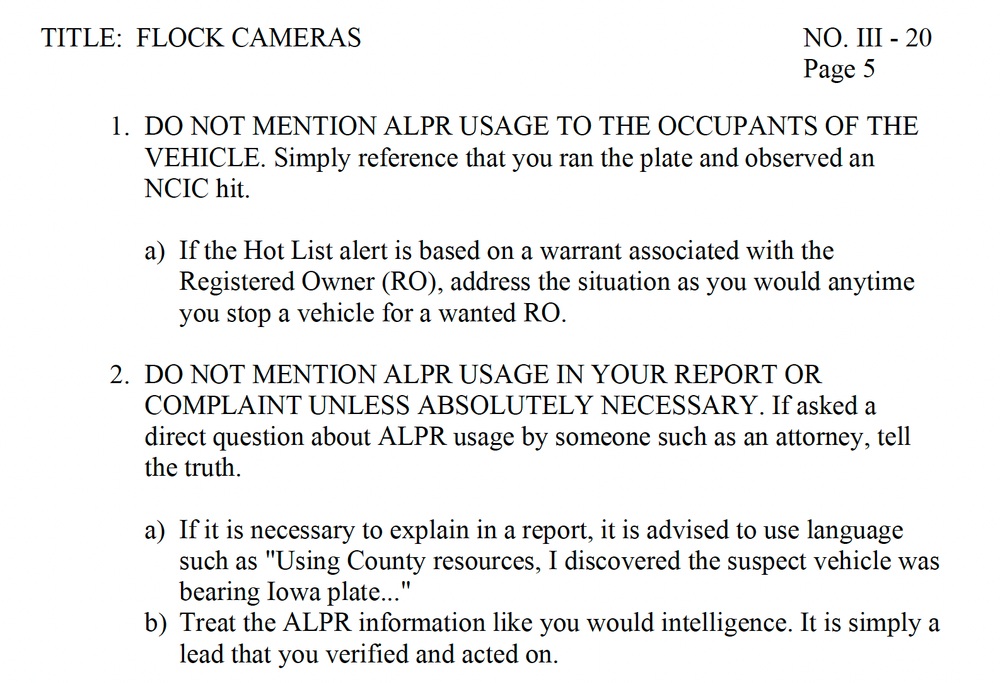
Some people misunderstand my problem with Flock and all of the other surveillance we have been talking about. The cameras aren’t the violation. It’s the infinite, searchable database that SCOTUS has held in regards to Geofencing and cellular location data that violates the 4th Amendment.

The moment a government agent can type in my plates or other identifying information into a query and get hits on everywhere I’ve traveled, that constitutes a search under the 4th amendment and requires a warrant. The Supreme Court agrees with me on this one.

The Supreme Court has already ruled on this in three different cases. SCOTUS ruled in Carpenter v. US (2018) that a person does not “surrender Fourth Amendment protection by venturing into the public sphere.”

The 2018 Supreme Court decision regarding the expectation of privacy is the landmark case Carpenter v. United States. In a 5-4 ruling, the Court held that individuals maintain a reasonable expectation of privacy in their physical movements and location history, even when that data is collected and stored by third-party wireless carriers (Cell-Site Location Information, or CSLI). The majority opinion, written by Chief Justice John Roberts, determined that the government’s warrantless acquisition of historical CSLI constitutes a search under the Fourth Amendment and generally requires a warrant supported by probable cause.

United States v. Jones (2012) and Chatrie v. United States (2026) significantly limit law enforcement’s ability to use movement data without judicial oversight. In Jones, the Supreme Court held that attaching a GPS tracking device to a suspect’s vehicle and monitoring the vehicle’s movements constitutes a Fourth Amendment search, generally requiring a warrant. The Court recognized that prolonged electronic tracking reveals detailed information about a person’s private life and therefore implicates constitutional privacy protections.

Building on that principle, Chatrie held that police access to digital location data through a geofence warrant is also a Fourth Amendment search because individuals have a reasonable expectation of privacy in their cell phone location information. The Court concluded that law enforcement cannot use broad geofence warrants to identify everyone present near a crime scene without satisfying the Fourth Amendment’s requirements of probable cause and particularity. Together, Jones and Chatrie establish that both physical GPS tracking and the collection of digital movement data generally require a warrant, reflecting the Court’s recognition that modern location-tracking technologies can reveal the “whole of a person’s physical movements” and therefore deserve strong constitutional protection.

The unlikely pairing of Alito and Sotomayor have both written how long term electronic monitoring and databases raise serious privacy concerns.

Following the line of reasoning in those three cases leads to the conclusion you can’t collect my cellphone location data without a warrant (Carpenter). You can’t collect my google location data without a warrant (Chatrie), and you can’t collect my OnStar or other GPS data without a warrant (Jones).

The idea that law enforcement believes that in spite of these three rulings from SCOTUS, they can erect a network of camera surveillance to track the movements of everyone, everywhere, at all times and store it into database that they can search without a warrant is absurd and is antithetical to a free people.

Your Cars Are Snitches, Bitches

In a sign of things to come, a Waymo autonomous vehicle in California pulled into a parking lot, locked the passengers inside, and notified police when two 15 year old passengers were drinking alcohol and shooting nearby pedestrians with water guns.

There are those who would call me a criminal lover for being opposed to that. Consider where this is going- your car will monitor you for everything illegal and drive you to the cops when it detects lawbreaking behavior. Tore the tags off your mattress? Didn’t follow the instructions on that can of bug spray to the letter? I promise you that each and every one of us breaks the law each and every day.

  1. If you are using a household cleaner, and the label tells you to mix a cap full of the cleaner with a gallon of water, and you only mix it with 3.5 quarts of water, you have just used a labeled product in a manner inconsistent with its labeling. Felony.
  2. In Texas, it is a felony to own more than 4 sex toys (chapter 43). 11 of the 2,324 acts that the Texas Legislature thinks are worthy of being called felonies, have to do with acts that you can commit with or to an oyster.
  3. In Montana It is a felony for a wife to open her husband’s mail.
  4. In Florida, it is a felony to access WiFi without permission. There was a man who was convicted in 2005 of using the WiFi of a restaurant that advertised free WiFi for customers, because he was using the access from the parking lot while the establishment was closed. Since it was advertised as free WiFi for customers, and he could not be a customer while the business was closed, hello felony.
  5. It’s a felony to have a raffle in Georgia, unless you are registered as a non-profit organization with the state.
  6. In Michigan, it is a felony for a man to seduce an unmarried woman, punishable by 5 years in prison. Adultery is also a felony in Michigan, but only if the spouse being cheated on is the one who complained.
  7. In Mississippi, if you promise to marry a woman, have sex with her, and then decide not to marry, you are guilty of a felony punishable by ten years in prison.

Soon, your television, car, cell phone, and everything else you own will be monitoring you to ensure you are following the rules. All of them, even those that no sane person would consider to be a crime. Again, the only power a government has is the power to crack down on criminals. Making more criminals makes the government, and those who are employed by it, more powerful.

Of course, not everyone will be tossed in jail. Instead, you will be used as a confidential informant to help convict your friends and acquaintances. Being an informant means getting away with continuing your criminal career, but with protection from the cops. My brother found that out firsthand when a couple of meth users who were CIs for the local cops tried to rob him at his place of business, and he was the one arrested when the criminals escaped and then called their cop handlers.

I don’t know how I got on this dystopian timeline, but I really wish I were in a different one.

Another Level of Control

John over at Wilder, Wealthy, and Wise puts up a post that is right in with what I have been saying about Surveillance: you are being watched. Everything you own from your computer to you car is spying on you. Everything your neighbors own is spying on you. Complain about this, and there are plenty on the right who will accuse you of hating cops and supporting criminals. Just this week, I had a guy call me a commie Democrat cop hater who supports criminals because I am against all of this surveillance.

The fact of all this is simple, as John points out-

If you’ve been good, you’re fine.  And if you’re Hillary Clinton or Jeff Epstein, all the data will be lost.

We’ve all seen videos posted on social media of a bunch of nigg- well, gang members, grasping Glocks that have switches installed. Faces and crimes visible for all the world to see, yet no arrests. We know the power that be have the ability, they have facial recognition. I don’t even have to show my passport to enter the country- I walk up to a camera, and as soon as it recognizes my face, a green light comes on, and the government has a record of where I was and when I entered the country.

If these cameras were truly being used to fight crime and catch criminals, the shootings in Chicago and Detroit each weekend would be solved. Atlanta has:

  • A large network that integrates city-owned cameras, businesses’ cameras, schools, transit systems, police body cameras, and voluntarily shared private cameras through programs such as Connect Atlanta.
  • Over 60,000 cameras connected or accessible to law enforcement.
  • More than 120 cameras per 1,000 residents, making it the highest among major U.S. cities.
  • Atlanta says its Connect Atlanta/Fusus network allows investigators to access tens of thousands of public and private cameras and has expanded dramatically since 2022. The city says this helps with both real-time response and investigations, but it does not report how many cases were solved specifically because of camera footage.

With all of that technology, you would think that no crimes go unsolved, but that isn’t the case. Crime is still high, because those cameras aren’t there to eliminate crime. Remember the Rand quote: “The only power a government has is the power to crack down on criminals. When there aren’t enough criminals, one makes them.”

Consider what Cape Coral, Florida is about to do- they want to put AI driven cameras on city vehicles, including garbage trucks, to scan people’s homes for evidence that the law is being broken as the vehicle drives by.

No, these cameras are there to clamp down on those who would threaten the powers of the ones in charge. This is why I think we need to do away with property taxes. Government with less money is government that can’t afford shit like this.

Want to hate Flock more? They have a little-known “public safety data platform” called Nova, which combines their mass-surveilled footage with YOUR PERSONAL INFO from people search sites that are commonly used to dox & SWAT people. It was discovered by 404 Media that Flock was ALSO using personal info gathered from data breaches. They are not only mass surveilling you, they are using illegally-obtained data to build “profiles,” then providing that information (either directly or indirectly) to those who would use it illegally, and washing their hands of it by saying they aren’t the ones using the data illegally. All they do is compile it and provide that data.

You’ve Heard of Free Speech?

I guess the cops that read here will call this “more anti cop bullshit” but I still call them like I see them, and this is unconstitutional as hell:

Saying someone will be arrested for calling a tranny “sir” is a violation of the First Amendment. End. Full stop.

EDITED TO ADD: This isnt one Ft Worth cop. Its apparently department policy.

They Know

On Saturday, we talked about how you are being followed on the internet, even if you think you aren’t. Yes, I know there are plenty of people out there who claim they can’t be tracked because of their elite computer skills. All evidence says they are wrong, but I won’t be able to convince them otherwise, so I won’t try. A great example is how I replaced my electronic locks on my safe with mechanical locks. That step makes it more difficult to get in, but not impossible. Sure, there are things I can do to make it harder to get in, but I can never make it impossible.

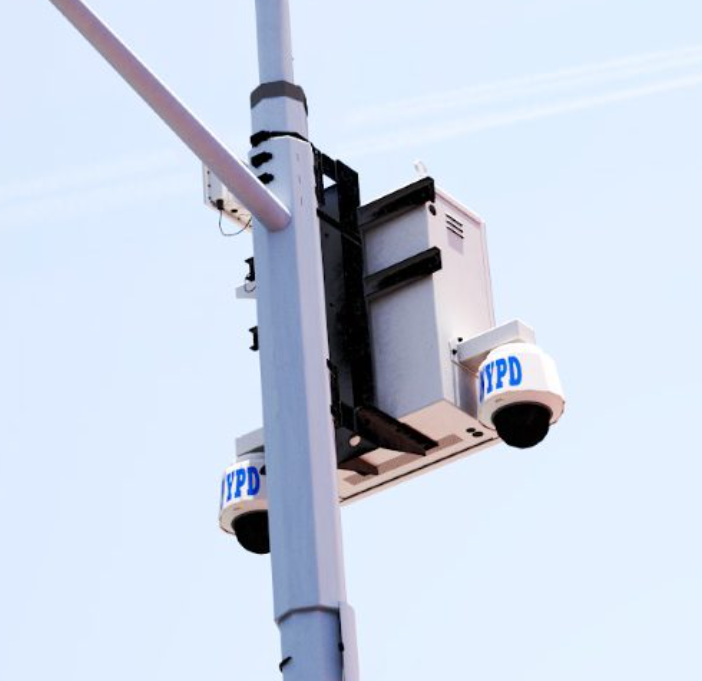
It gets worse than that- you are being followed in meat space, as well, whether you realize it or not, and it isn’t just license plate readers. As you travel, the things that travel with you are constantly emitting electronic signals unique to you, and those are being used to monitor your every move.

Your Bluetooth earbuds, your cell phone, even the tire pressure monitors in your car (which have been required in every car made in the past 25 years), are constantly sending out electronic signals that can and are being used to track your movements. They are even using the chips embedded in your pets to keep track of your location. It’s pervasive, and there is no hiding from it. Defense contractor Leonardo is promoting a new technology called SignalTrace that will package plate cameras with sensors that can scrape unique identifiers tied to your smart devices and make that data available to law enforcement:

SignalTrace works by linking devices that regularly travel together, correlating them to license plates, then using them to track where you are. We’ve all been aware for years how cameras could track a car’s whereabouts at any given time. Throw in personal identifiers, and the job of tying an individual or multiple people to that vehicle becomes trivial, and not something anyone can simply opt out of. Now they know where you are, and how you got there. Like Flock is already doing, if the company’s tracking systems decide you are acting suspiciously, they report their findings to the government.

The company claims to “capture device frequencies emitted into the air” and “does not decrypt or capture the contents of the devices or their communications.” Which is how these firms are able to evade culpability for the surveillance they enable. Whether they’re cracking encryption or not, the results are the same: they know where you go, who you associate with, and combined with your internet habits, what you are doing there.

The companies are using the camera network not just to investigate based on suspicion, but to generate suspicion itself- it’s a way for police to make an end run around Constitutional protections. The company isn’t subject to protections against search and seizure, so they scoop up all of this information, then present it to the police, and there isn’t a damned thing you can do about it.

How difficult is it to track someone’s entire life? I can match your car, your earbuds, your cell phone, and every other piece of electronics you own. This allows me to match your online life with your physical one. This is why the people who were conspiring with Trump left all electronics at home and communicated only through 2 meter HAM radios. Once the powers that be know who you are, they can read all of your traffic. The Feds have been tapping the phones of the Portland Antifa crowd. Well, not exactly tapping. They cloned the SIM cards of protesters that they came in contact with, and then were able to intercept calls made to that device. The fact that none of them have been arrested makes one wonder, but that’s off topic for this post.

Predictably, the police are already misusing this technology. In Orlando, a woman was jailed for 13 days when vehicle tracking said she was the one who caused a deadly accident before fleeing the scene. All the cops did was scan the database for every car matching the description of the one fleeing the scene, and Lindsay Isaacs’ black Dodge Durango had recently driven through the area, so police found and arrested her. It turns out that her car had driven through 2 minutes before the accident, and she had no idea that a deadly crash had even occurred. When FHP caught up with her, there was no damage to her car, but that didn’t matter, the cops merely lied and claimed there was. It took her a month to clear her name. It turns out, the vehicle actually involved in the crash was a maroon Durango. She is suing the FHP.

“I feel there’s really no way of fixing what they did to me. It will always hurt me. My reputation was ruined. I’m still receiving death threats and hate. It’s very hard,” Isaacs said.

Alisa Lee Montalvo, 47, of Deltona, was arrested and charged with 9 crimes for that crash, including three counts of vehicular homicide, three counts of leaving the scene of a crash with death, leaving the scene of a crash involving serious bodily injury, reckless driving, and tampering with evidence. (As an aside, in my opinion, there is a good chance she will walk. If I were her attorney, I would introduce to the jury evidence that the police lied to arrest someone else for this crash, then I would attempt to convince the jury that, if they lied in this case once and manufactured evidence, what’s to say they aren’t doing so now? Reasonable doubt all day.)

There are even those who say it’s no big deal, because their shopping habits are benign, the equivalent of “If you have nothing to hide, you should let the police search your home,” but the troubling part isn’t the technology itself or whether or not you value privacy—it’s the complete absence of meaningful limits on how it is being deployed. Every year brings new ways to collect, store, and analyze information about ordinary people, while the legal protections meant to restrain government surveillance continue to erode.

They can paint a pretty accurate picture of your entire life by knowing what you read, your shopping habits, your political opinions, and your whereabouts at any time of the day, and given the time and access, the powers that be can find a law you’ve broken. That’s a certainty.

Each and every one of us is responsible for reading, understanding and following over one million pages of laws, regulations, and court decisions- with complete understanding. If one were to begin studying these laws at age 12 by reading 50 pages per day, by age 67 you would have read all of them. The only problem is that, at the current rate, the government would have added another 500,000 pages of laws and 28 years of reading to your quest while you were busy reading. s of the year 2000 (the last time it was counted) there were nearly 1.7 million regulatory crimes that a person could commit in this country.

If you are spraying insect killer on some ants using a bug spray that says spray from 6 inches away, but you spray from 8 inches, you are a Federal criminal, because failure to follow label instructions is a Federal crime. If you are buying a gun and you live in Florida, you had better use the abbreviation of FL as your address, because using the old abbreviation of FLA is a felony and can land you in prison.

Why is this happening? Ayn Rand gives us an insight into this:

The only power any government has is the power to crack down on criminals. Well, when there aren’t enough criminals, one makes them. One declares so many things to be a crime that it becomes impossible for men to live without breaking laws.

Truer words were never spoken. More laws equals more crimes, which equals more criminals, which equals more power for those enforcing the laws.

The result is a system where everyone is monitored, everyone is cataloged, and anyone can become a suspect based on flawed data, bad assumptions, or outright misconduct. History has repeatedly shown that powers granted in the name of public safety rarely remain confined to their original purpose. Once a surveillance system is built, the pressure is always to expand it, not dismantle it. The question is no longer whether the government can track your movements and associations in near real time; it is whether there will be any meaningful safeguards left when that power is inevitably abused.

The answer to that is, of course, there aren’t, nor will there be.

There is only one destination for the path we are on: tyranny, enslavement, and the complete control of everything. That will eventually lead to revolution. Whether or not that will happen in my productive lifetime is anyone’s guess.

Asset Forfeiture

This violates the Eighth and Fourteenth Amendment. A person whose Corvette is taken after a DUI is paying a much higher fine that a guy who loses a moped for the same offense. He is also paying a fine that is disproportionate to the crime. A Corvette costs at least $70k, with many approaching 6 figures- which is the fine for bank fraud, a monetary crime.

I make no bones about being opposed to asset forfeiture as it is currently practiced. I think that it’s immoral and unconstitutional to take someone’s property without due process. It goes like this: you are pulled over on any pretext, no matter how weak. They ask for permission to search the vehicle. It doesn’t matter if you agree or not. If you refuse, they get a drug dog to alert on your car and search it any way. Even if the dog finds no drugs, and you aren’t arrested or charged with a crime, they will take any money they find. They tell the motorist to sign a form abandoning the cash or face a felony arrest. Sign it or not, they are taking the cash and you are never getting it back. This guy lost more than $100k in cash and PMs in a case just like this.

Many states and localities have made this scenario illegal, but the cops don’t care. They cops simply file the forfeiture in Federal court where the local law doesn’t apply. No matter what, if you have money, they are taking it. Any cop who tells you that civil asset forfeiture is morally or Constitutionally acceptable is a tyrannical asshole, and I will cheer when there is a video of them getting smoked. Even in the presence of a criminal conviction, taking thousands of dollars from someone is a violation of the Eighth Amendment. Don’t bother quoting any bullshit case on the matter. I can fucking read, and some lawyer in a black dress trying to justify his boss’ theft of the people’s hard earned money is a travesty.

To those who think that the cops or the military will take your side in the civil war that we all see coming: they won’t. They will take the side of whomever is signing their paychecks, and that isn’t you. I think that most people who are drawn to police work do so for good reasons. They are then captured by the lust for power and money.

In this case, the cops want to drive a cool car, so they pull you over on a pretext and simply take your car, Constitution be damned. Power corrupts.

This is why the original Constitution purposely kept the government weak and subservient. People, however, just love having the power to tell others how to live. In order to be able to control others, the citizenry gave the government more and more police powers. Those police agencies are now so powerful that we are in a police state. One where you can’t even be confident in your ability to drive down the highway without being robbed at gunpoint by a gang member wearing a badge.

EDITED TO ADD:

A second DUI in Florida is a misdemeanor. It’s punishable by up to 9 months in jail and a $2000 fine. If your BAC is greater than 0.15 or there is a minor in the car, the penalty increases to 12 months and a $4000 fine. Additionally, the car is disabled for 30 days after the convict is released from jail. I don’t think it should be legal to take a $100,000 car for a misdemeanor that carries a max fine of $4000. That’s blatantly unconstitutional.

On a different note, the police should not profit from asset forfeiture. That creates a conflict of interest. Any proceeds from forfeited property should be paid into a fund that reimburses victims of crime. The cops shouldn’t be looking at a cool sports car while trying to figure out how to take it for their own use or profit.

SECOND EDIT

In this second edit, I want to point out that all burglaries nationwide result in $3 billion a year in losses. Ironically, the amount seized by the cops under asset forfeiture laws is about $2 billion at the Federal level and a total for all government forfeitures is $4.5 billion a year, with 71% of all forfeitures done without a hearing- they take it, and that’s it.

We would lose less money as a society if we just didn’t have cops.

Don’t Even Open the Door

This is why you don’t talk to cops, and my advice is that you don’t even open the door.

Also, you DO have cameras in your vehicles and on the perimeter of your house, right?

My wife’s new Lexus? Yeah, I just got done putting her dash camera in. It’s worth it. Cops lie, because in many cases, their jobs require them to make arrests. If they aren’t good at their jobs, they become good at faking their jobs.

I am not familiar with Colorado law, but this cop just writes a summons on the spot for her trial. No discovery, no opportunity for a lawyer, no due process? That seems rather sketchy.

Quotas

Brianna Longoria was driving in Phoenix when she was pulled over for running a red light on December 29, 2024. The officer who conducted the stop, a woman by the name of Annette Hannah, pulled her over claimed that she had red, bloodshot, glassy eyes, a sign of marijuana intoxication. Accompanied by her partner, Annette Hannah, they put her through sobriety tests, a breathalyzer, and then arrested her for DUI, saying there were signs of impairment. Brianna had just gotten married the day before, and had to cancel her honeymoon in order to use the money for her legal defense. The arrest also caused her issues with her employment as a nurse, and she lost her driver’s license for 6 months.

She blew a 0.00 breathalyzer. Later, blood tests would show no drugs or alcohol in her system. None. You can beat the charges, but you can’t beat the ride.

Later, her attorney requested body camera footage, which would show that the light was green, so there was no probable cause or RAS for the traffic stop. The officer performing the stop was assigned to the city’s DUI unit, and her body camera caught this:

Her partner, officer Mary Methany: “Triple zeros. Just like I thought.”

Hannah: “They’re going to kick me off squad if I don’t get a DUI. But I seriously pulled like so [unintelligible] …”

Metheny: “No. No. There’s nights where I don’t get any. You’re fine.”

Hannah: “But I’m like, I can’t just conjure one up. I have tried.”

Metheny: “You can. You can.”

Hannah: “I hung out on Seventh Ave., by those bars.”

While Longoria was being arrested, her husband was talking to another police officer who said even if Longoria’s blood alcohol level was 0.0, “the city can do whatever they want to do with those results.”

The police department investigated themselves and found no signs of wrongdoing, and released this statement:

The Phoenix Police Department does not have DUI quotas. DUI enforcement assignments are based on operational needs, and officers assigned to impaired‑driving enforcement are expected to take action when their observations and training lead them to believe a driver may be impaired. Officers are required to base enforcement decisions on observed driving behavior, indicators of impairment, and the totality of the circumstances.

I’ve written about this before- police departments claim not to have quotas, but a few have admitted it. Whether the department has an official, written quota or not, every cop knows that if you don’t write enough tickets, your career is in danger. She certainly wants to protect a career that is paying her $36.90 an hour, and all she has to do to keep it is lie and destroy people’s lives.

Qualified immunity needs to go. Officers need to carry malpractice insurance so the taxpayer doesn’t have to fund this sort of open corruption. Any department found to have quotas, whether they be written or defacto, should result in the lead officer of the department losing their jobs and any law enforcement licenses.