The Washington state legislature just passed a law making it a felony to possess digital files that can be used to make any part on a CNC or a 3d machine that could potentially be used as a part of a firearm.
Not only impossible to make work in any practical or Constitutional sense, it opens a huge can of worms.
Imagine that you are in a car wash. A coworker comes up and you exchange greetings, then both of you continue washing your vehicles. An off duty cop claims that he saw the two of you make an exchange of a “significant” amount of a white substance in a baggie, whether pills or some powder, he doesn’t know, but he saw it. The cop claims that is probable cause (meaning that what he saw is probably a violation of the law) and demands to see your identification, but you refuse. Then they declare that what the off duty cop saw, combined with the your refusal to cooperate justifies the police detaining, searching, and arresting you. That’s what happened to Jake (or Jason) Kidder in Michigan.
The coworker is there, he identified himself and confirmed that the man was his coworker, and that they had exchanged greetings. The coworker was never searched, nor was he ever asked about a baggie of white things. Mr. Kidder’s vehicle was searched for over an hour. In the course of events, no drugs were found. No baggie was found. Nothing was found to corroborate the story of the off duty cop. They arrested Kidder at gunpoint anyway, then he received a body cavity search at the jail. During the search of Mr Kidder’s vehicle, which lasted over an hour and during which they even dismantled his dashboard, nothing was found. The police insisted that this must mean he hid the drugs up his ass, so when he was arrested, the did a body cavity search. Still no drugs or baggie were found. The DA went ahead and filed charges, even though no drugs were ever found.
That didn’t matter to the court system: According to local court records, Kidder faces multiple felony charges: resisting, assaulting, obstructing a police officer, and alleged possession of meth and ecstasy. Kidder denies these drug charges and insists no drugs were found in his truck. Kidder has filed a lawsuit against the officers and the department for wrongful arrest, search without cause, illegal seizure, and excessive force. He claims that officers had no legal basis to stop or search him and that they violated his Fourth Amendment rights.
It’s important to note the cops muted their body cameras during a significant portion of the encounter. As far as I am concerned, this should be considered tampering with evidence. There is no legitimate reason that I can think of to justify this during an encounter.
Probable cause means, considering the facts as known, it is more likely than not that a crime was committed. An off duty cop, claiming he saw a baggie of an unknown substance that was never found, is considered evidence that:
What he saw was drugs
What he saw was a crime
all despite the fact that he couldn’t even accurately describe the bag or its visible contents. You make the call- did the off duty cop’s claims rise to the point of being sufficient to indicate that it was more likely than not that a crime was committed, and thus deprive Mr. Kidder of his Constitutional rights?
The entire encounter is here, but it’s over an hour long. Note the “Back the Blue” sticker. I bet he doesn’t have that any more.
Local residents freaked out, saying that he must have been up to no good, since he was carrying those items and was in the same general area as a sitting congressman.
The cops held him for hours before releasing him without charges. That doesn’t matter to the cops, they kept his vest, knife, and gun, and are going to use a risk protection order to strip him of his rights. Keep in mind, he wasn’t breaking any laws.
This is why I have been, and remain, opposed to so-called “red flag” laws.
Hawaii has strict laws against the private ownership or possession of fireworks. This law was passed after some morons caused a fireworks explosion in 2023 that resulted in the death of six people, one of them a 3-year-old. The result is that the penalty for possession of fireworks is now punishable by 5 years in jail. It’s an island, so it should be pretty easy to stop private fireworks, right?
So I guess that means there were no fireworks in Hawaii on New Years’ Eve…
Now I want you to think about the fact that Hawaii has also made firearms illegal, with the same penalties for ignoring the law…
How do you think that’s going?
I get it, tragedies happen, but that is because some people are irresponsible and stupid. That is THEIR fault, and it can’t be fixed by banning objects.
The left loves to call us fascists and Trump a dictator, yet I keep seeing more and more evidence that the left was engaged in the systematic destruction of the Constitutional protections that we are supposed to have here in the USA. For example:
Senate Judiciary Committee Chairman Chuck Grassley has been conducting a Congressional investigation, and has uncovered FBI documents showing that President Biden’s administration was engaged in intelligence gathering operations through the use of illegal interception of the electronic communications of at least eight different opposition leaders. That’s right- the FBI was spying on Republicans.
The FBI targeted the following Members of Congress:
Sen. Lindsey Graham (R-S.C.)
Sen. Bill Hagerty (R-Tenn.)
Sen. Josh Hawley (R-Mo.)
Sen. Dan Sullivan (R-Alaska)
Sen. Tommy Tuberville (R-Ala.)
Sen. Ron Johnson (R-Wis.)
Sen. Cynthia Lummis (R-Wyo.)
Sen. Marsha Blackburn (R-Tenn.)
Rep. Mike Kelly (R-Pa.)
Tell me again how Trump is the one acting like a dictator. Keep in mind that Nixon was about to be impeached, and resigned from office, for doing far less than this.
This is a Sunday, and I am sleeping in. So I thought I would give you a repost of something that I said more than ten years ago.
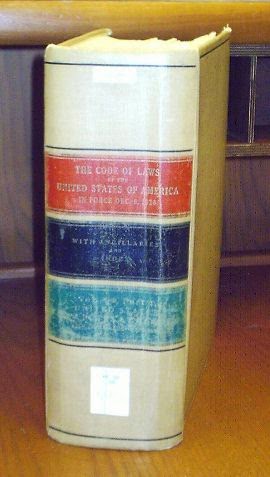
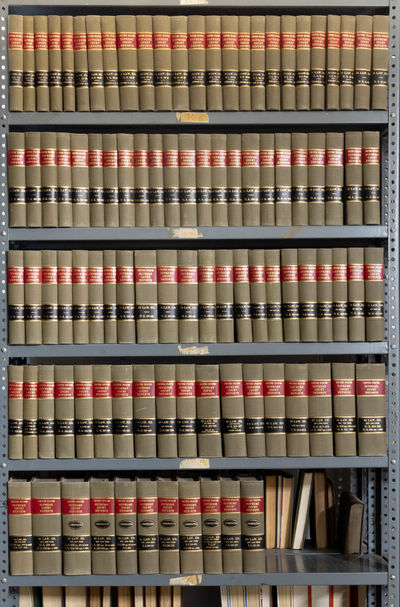
Ignorance of the law, the judges and cops are fond of saying, is no excuse. In 1925, this is what a complete copy of all Federal laws looked like:
That one volume represents all of the laws that were passed by Congress in the first 150 years of this country’s existence. That Federal Law library has now expanded immensely.
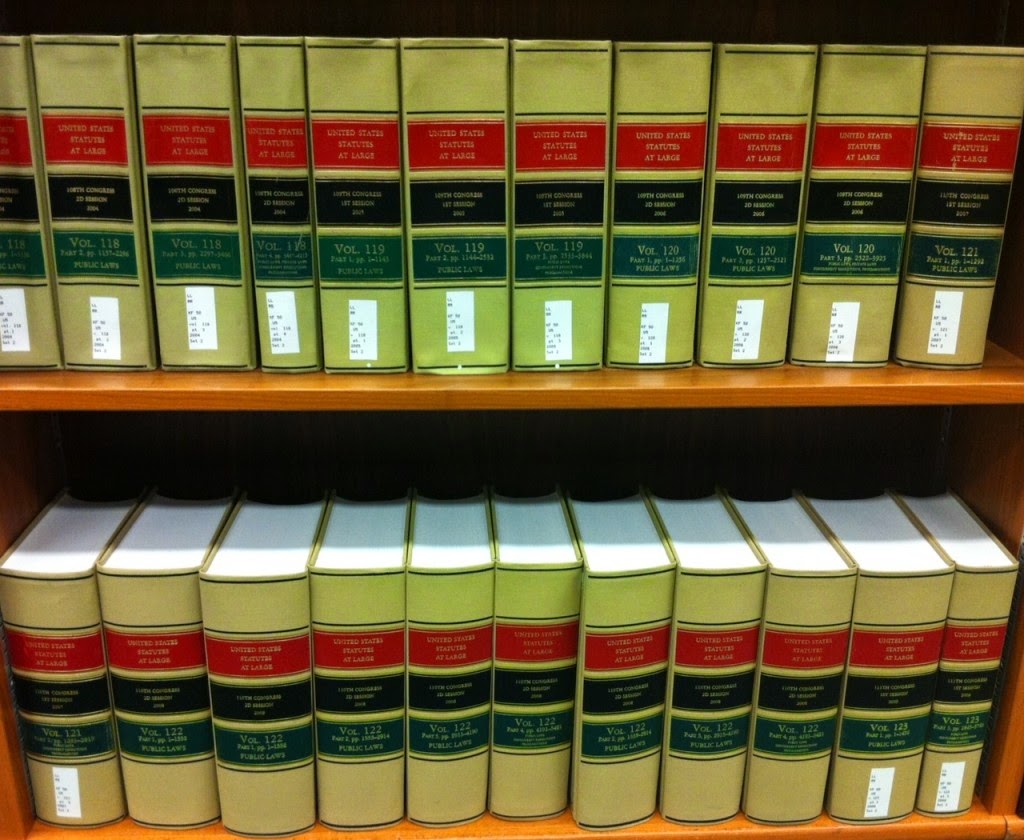
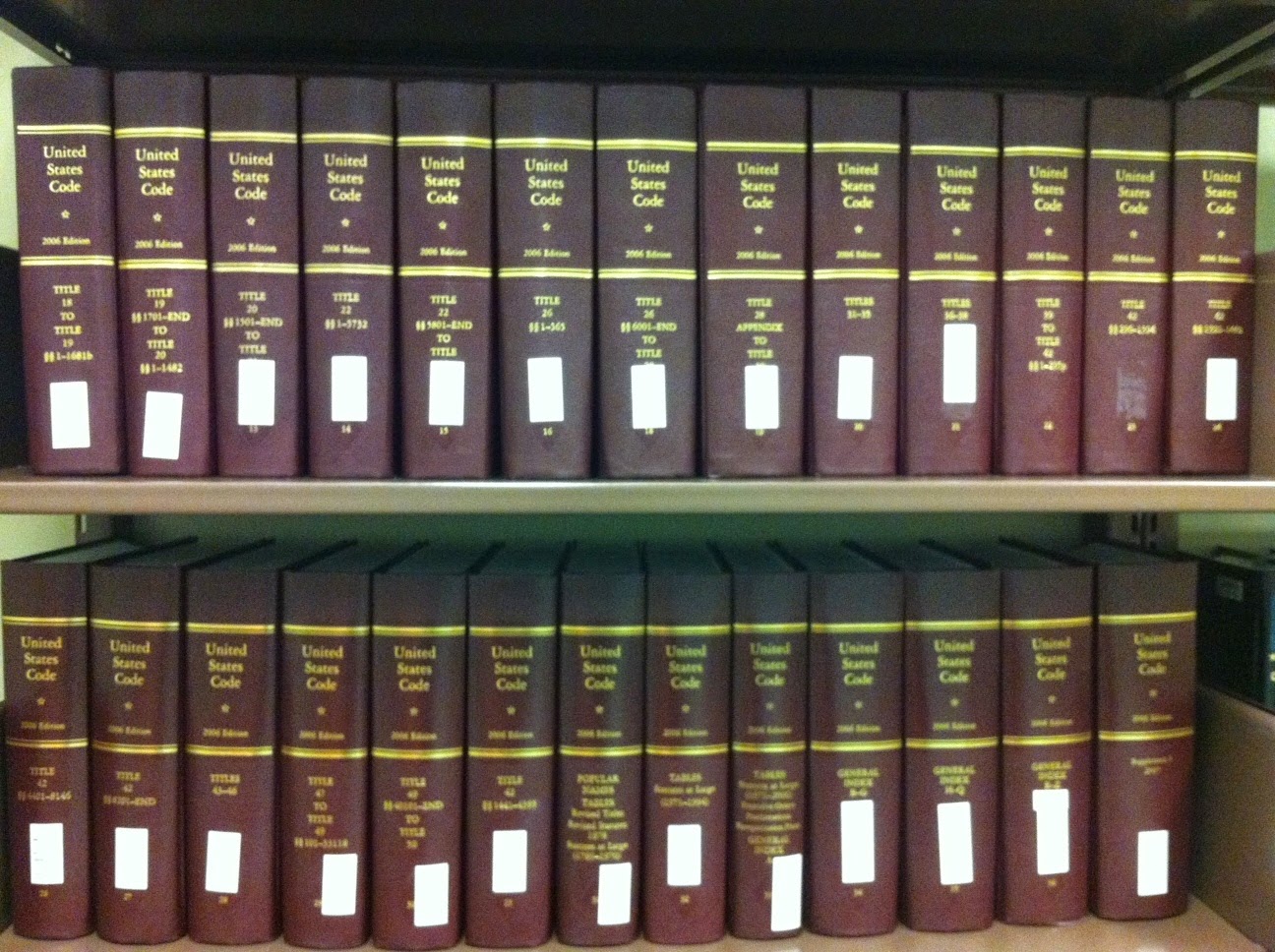
What was one volume in 1925 expanded to become 22 volumes just 90 years later. That isn’t all, though. There is also the United States Code:
The number of federal crimes you could commit as of 2007 (the last year they were tallied) was about 4,450, a 50% increase since just 1980. A comparative handful of those crimes are “malum in se”—bad in themselves, which include things like rape, murder, or theft. The rest are “malum prohibitum”—crimes because the government disapproves, such as owning a machine gun made after 1986, when owning one made in 1985 is perfectly legal.
In 1982, the Justice Department tried to determine the total number of criminal laws. In a project that lasted two years, the Department compiled a list of approximately 3,000 criminal offenses. This effort, headed by Ronald Gainer, a Justice Department official, is considered the most exhaustive attempt to count the number of federal criminal laws. In a Wall Street Journal article about this project, “this effort came as part of a long and ultimately failed campaign to persuade Congress to revise the criminal code, which by the 1980s was scattered among 50 titles and 23,000 pages of federal law.” Or as Mr. Gainer characterized this fruitless project: “[y]ou will have died and [been] resurrected three times,” and still not have an answer to this question.
So you see, even the Justice Department of the US government is not sure of how many laws there are, yet each and every one of us is responsible for knowing every one of them, along with the court cases that modify and define them, upon penalty of prison.
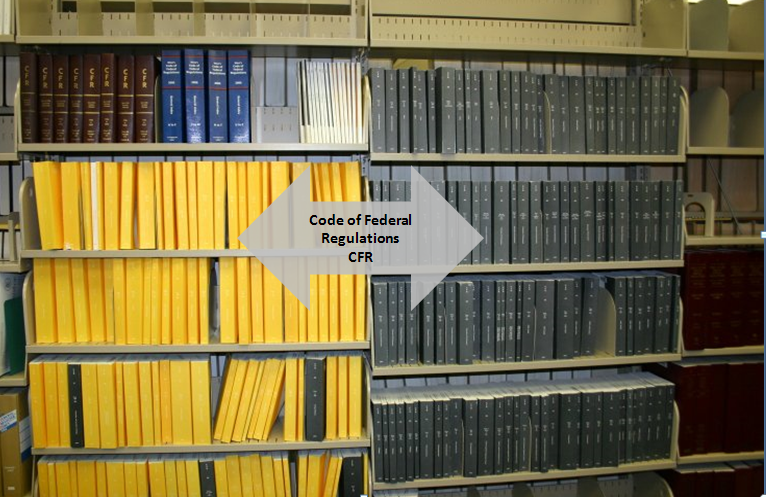
That isn’t all. The laws passed by Congress are just the beginning. There are also several dozen Federal bureaus that have had the power to write laws since 1940. The laws that they write are called regulations, and they are found in the Code of Federal Regulations:
In 2013, the Code of Federal Regulations numbered over 175,000 pages. Only a fraction of those pages involved regulations based on something spelled out in legislation. If a regulatory agency comes after you, forget about juries, proof of guilt beyond a reasonable doubt, disinterested judges and other rights that are part of due process in ordinary courts. The “administrative courts” through which the regulatory agencies impose their will are run by the regulatory agencies themselves, much as if the police department could make up its own laws and then employ its own prosecutors, judges and courts of appeals.
Then there are all of the court cases that decide what these laws all mean and how they will be applied. Here is a picture of the SCOTUS cases from 1790 to 1956:
Add in all of the cases from your Federal District and Circuit, plus all state and local courts, and you have quite a bit of reading to do.
The result of all of this is that each and every one of us is responsible for reading, understanding and following over 750,000 pages of laws, regulations, and court decisions- with complete understanding. If one were to begin studying these laws at age 12 and you read 50 pages per day, by age 53, you would finally have read all of them. The only problem is that, at the current rate, the government would have added another 500,000 pages of laws, and 28 years of reading to your quest. You would spend 75 years of your life trying to understand the laws that you must obey.
Remember, though: Ignorance of the law is no excuse. If you are spraying insect killer on some ants, and the can label says spray from 6 inches away, but you spray from 8 inches, you are a Federal criminal. If you are buying a gun, and you live in Florida, you had better use the abbreviation of FL as your address, because using the old abbreviation of FLA is a felony and can land you in prison.
Why is this happening? Ayn Rand gives us an insight into this:
The only power any government has is the power to crack down on criminals. Well, when there aren’t enough criminals, one makes them. One declares so many things to be a crime that it becomes impossible for men to live without breaking laws.
There is a case in NY that is important, where the U.S. Northern District Court ruled in Higbie v. James that New York’s concealed carry laws are violating the Second Amendment rights of nonresidents by making it nearly impossible for nonresidents to obtain a concealed carry license. It was sponsored by Gun Owners of America.
The plaintiffs in this case argued that they each have firearms licenses which permit them to bear arms in public in their respective states “and across most of the country.” They also claimed that New York does not permit them to carry their firearms while they are in New York solely because they are not residents or employees of the State. They argued that New York’s licensing scheme is an extreme outlier among the states because at least 27 states do not even require a permit to carry a concealed firearm in public, while the vast majority that do require permits will issue permits to out-of-state residents. The US District Court agreed, and struck down NY’s complicated and overly onerous regulations as being unconstitutionally designed to deny nonresidents their constitutional rights under the Second Amendment. The court ruled that state lawmakers can not restrict concealed carry licenses to maintaining residency, property ownership, or business interests in the state.
The tyrants of NY government attempted to make the argument that their licensing measures were not entirely prohibitive for non-residential applicants, saying certain guidelines allowed for those who owned habitable property or a business stake in the state to apply for such a license. In essence, they claimed that, because they allowed one nonresident to have a permit, this excused violating the rights of the rest of them. In essence, they are relying on the “token negro” defense. The court rightly called them out on this.
Look, this case will have no direct impact upon the reality of CCW for nonresidents in New York. We all know that, because those ass clowns will simply find another way to violate the rights of US citizens while bleating loudly about the rights of illegal immigrants to take a dump on New York city streets. Even those residents who have permits nominally have to have criminal background checks, a mental health professional sign off on the permit, and multiple references.
The reality is that New York’s scheme is all about who you know and political payoffs when deciding who gets a permit. I know someone who has a New York carry permit. He also has a state police license plate, which starts with 1SP. He began telling me that the state police union had a series of special plates made, and they are only available through Hamilton county in New York. He claimed that this plate was given to “friends” of the police union, and the lower the number was that followed the 1SP, the more important you were to the cops. He said that this plate routinely gets him out of traffic and parking tickets. Not because he paid for it, nor did he jump through hoops. It’s because he knows someone, or as he puts it, “I’ve got a guy.”
This sounded like a lload of BS to me, so I activated my Google skills. What I found was that handing out special plate numbers is a common practice in New York. and I quote:
To some recipients, special license plates issued by the Saratoga County clerk are a symbol of county pride. For others, they are an inherited treasure passed on by a family member or loved one. For many who have them — a list that ranges from county workers to state Supreme Court judges — an unwritten rule is that a lower number may indicate a special driver. Indeed, an examination of the recipients of the special plates, which carry an “SP” prefix, shows they are coveted by a select group of government employees and elected officials, including judges, prosecutors, town supervisors, attorneys and political party leaders. The spouses and children of those people are also among those, estimated to be in the hundreds, who have the plates.
Now the SP prefix goes to Saratoga County. The 1SP prefix, which I can find little about, belongs to the State Police. This is how things are done there, from Concealed Weapons Permits to License plates, corruption and special favors rule the day.
They claim it is for “county pride” but I am sure there are not that many people who believe that. This is a way of announcing to the police that you are politically well connected and should receive special treatment.
The real impact of the Higbie case is that the noose is closing. The era of violating people’s rights to bear arms is closing through the courts. That doesn’t mean the fight os over. Evil, corruption, and man’s quest for power to rule others never ceases. That’s why the fight can’t either.
Donate to the GOA or the FPC. They are doing the work of patriots.
I once lived near a school zone with signs posted that read “School Zone. Speed Limit 20 mph when children present” and I thought it was too vague. The way that the sign was worded, a child nearby at 2 am on Christmas morning would trigger the 20 mph speed limit.
But Weaver doesn’t dispute that it was him behind the wheel or that he was going over the 20 mph zone limit, he believes the violation was issued to him in error.
“I’m not happy, I’m not happy,” he said.
That’s because what the camera doesn’t show is the speed limit sign that’s posted warning drivers that the speed limit is 20 mph “when flashing,” wasn’t flashing at the time.
In fact, it can’t.
“There’s not a device that would afford a light to flash because they did not attach a lighting system or flashing system to this particular post,” he explained.
People are contesting the fines, but the judges are upholding them 90% of the time. The judges are claiming that the law says the sign has to either have times that the speed limit is in effect, or it has to have the words “When flashing,” but showing a complete lack of sense, the same judges claim that their hands are tied because the law doesn’t require that the lights be flashing, or even present.
A single company called RedSpeed is responsible for the cameras. So far, the company’s cameras have written half a million tickets. About 3,000 of them have been contested, and only 300 of them have been dismissed. Since the fine is $100 and the company gets 20% of it, it’s quite a lucrative shakedown.
The officers of the corporation? They are retired cops. One of them (a retired assistant police chief of Miami Beach) had this to say:
“I’m sympathetic with the ‘I didn’t understand the signage in the school zone.’ I’m sympathetic to that, but we have to implement and install in compliance with whatever [the Florida Department of Transportation] and the state tell us,” De La Espriella said.
When asked if he believes the law, as it’s written right now, is fair to drivers, he responded, “I think it’s an excellent law.”
I bet you do, you corrupt piece of shit. Where does the law say to entrap people by putting “when flashing” on the sign, but having no flashing light? We all know that isn’t what the law intended, you weasel. I am ready to vote against every single proposed law or politician who wants to make a law favoring any cop. I am on the verge of agreeing with the “defund the police” assholes.