This is a story of me afro-engineering a solution to some flooding that happened to my rear lanai. Now that there is a pool behind the house, what was our back porch has been closed off by an electric hurricane screen. There is some outdoor furniture and a TV in there, and it now serves as a sort of “Florida Room” and a place to store outdoor items when a hurricane comes. More on that in a different post.
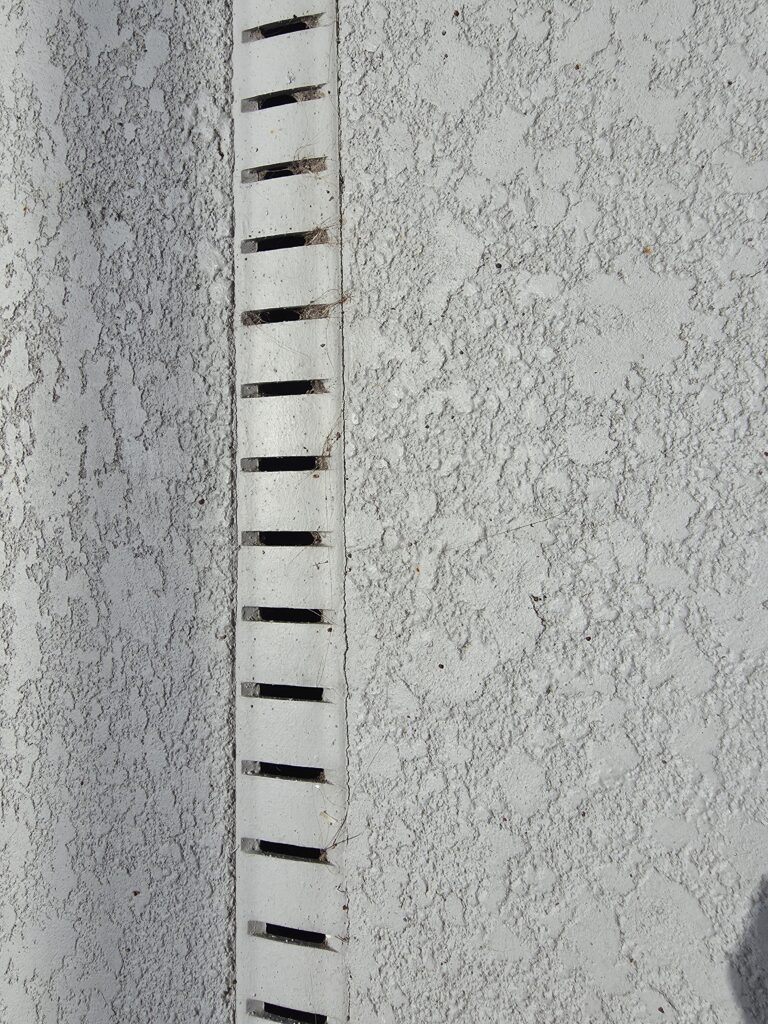
We had a thunderstorm come through on Saturday, and it was a fairly strong one. We got just over 3 inches of rain in less than 45 minutes. That caused a bit of an issue. When we put the pool in, the contractor put a drain in place that lies at the end of the pool deck closest to the house. It looks like this.
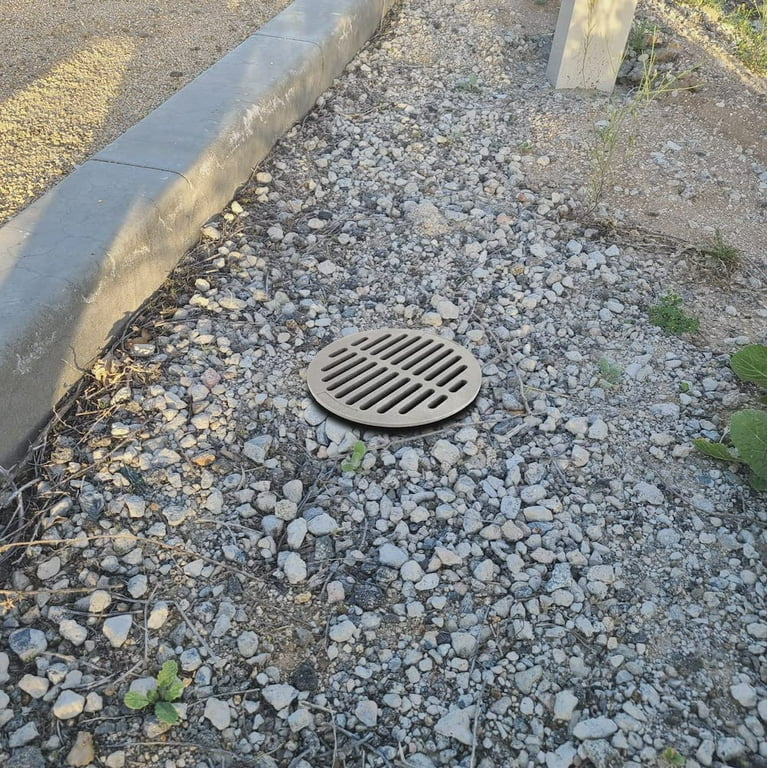
That is just a slot in the concrete about 2 inches wide and 4 inches deep. It discharges on both sides of the slab. Right above where that discharges, the downspouts from the gutter discharge. I dug a trench at that point, and ran a 4 inch corrugated pipe that runs about 20 feet back from the house. At the end closest to the house, it looks like this (pictured is not mine, it’s from the Internet):
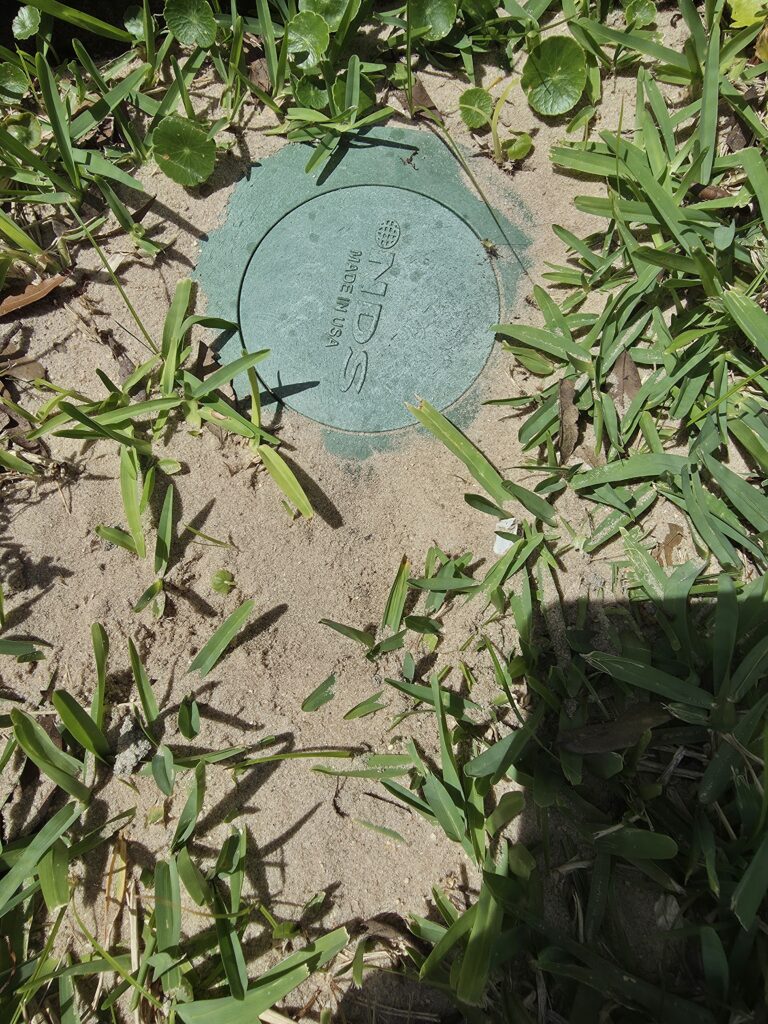
The discharge was one of these valves.
When the pipe fills with water, the weight of the water causes the valve to open. Well, as near as I can tell, the rain was coming down so hard that the drains were quickly overwhelmed, the area near the inlet to the drain pipes was soon underwater, and this caused a backup that flooded my rear lanai with about an inch of water. The rug out there was saturated, but luckily it’s an outdoor rug, so a couple of hours and a fan soon dried it out, no harm.
While it was raining, I went outside to see what the problem was. It had been so long since we had gotten any real rain, everything was clogged with dead oak leaves: the downspouts, the intake drains, all of it. So I cleared the leaves out, but that didn’t help a lot, and got me bitten on the hand by a rather large, angry spider that had been nesting in the leaves.
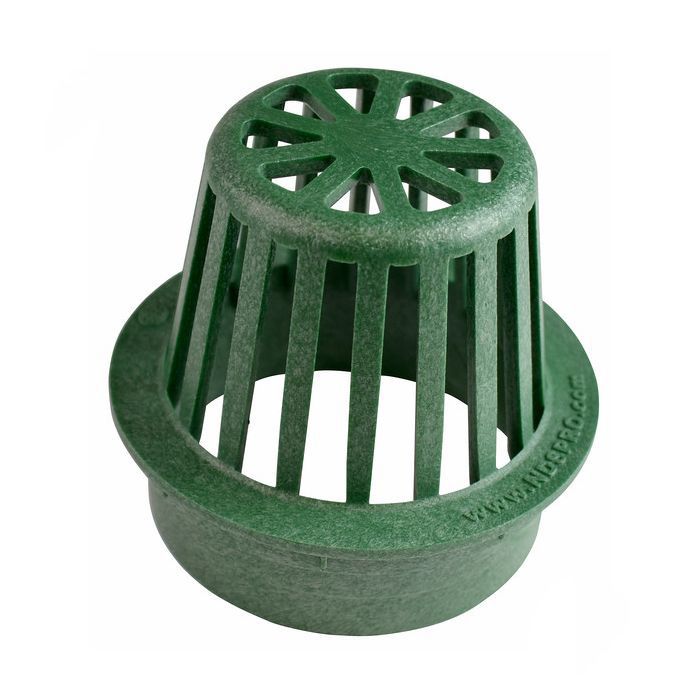
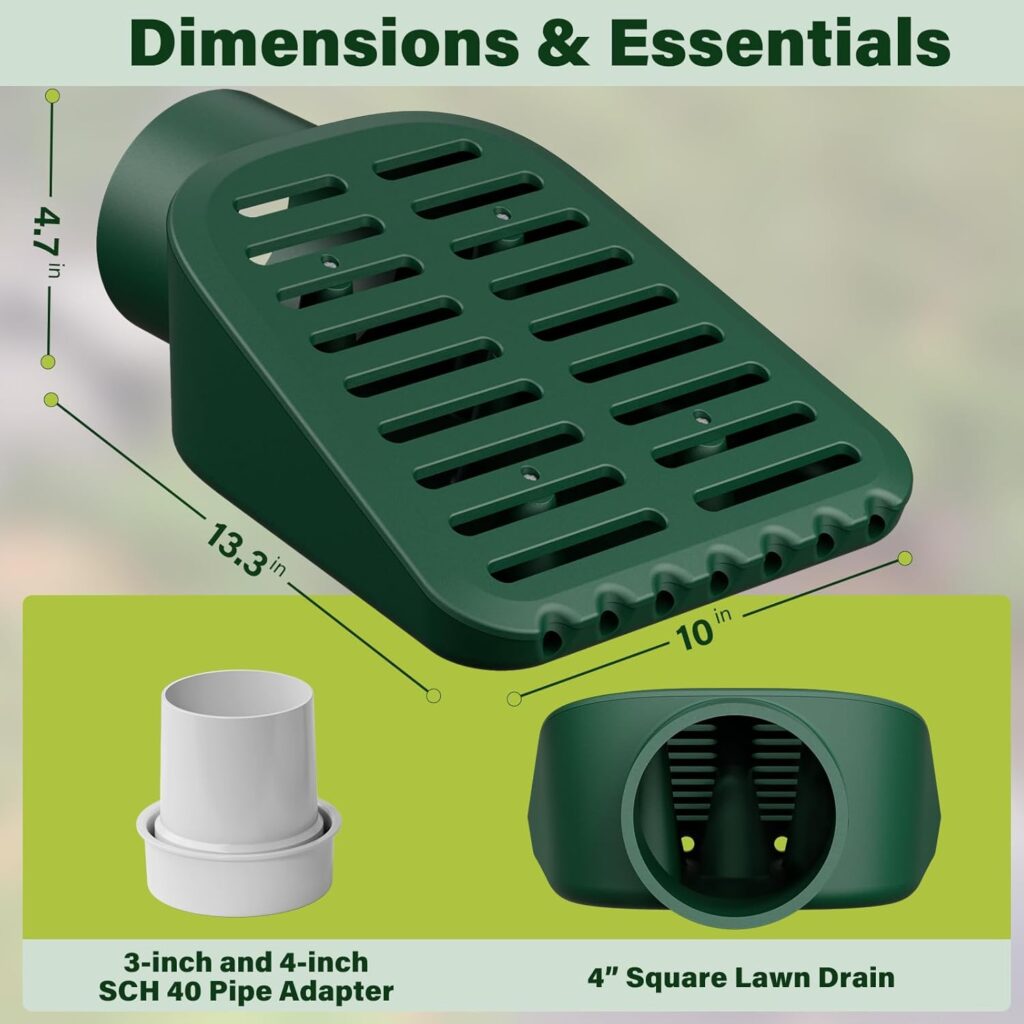
I spent Sunday digging up the ends of the drain pipe, and I replaced the intakes with this:
Since it is taller and not flat like the old ones, the hope is that this grate can handle more water AND is not likely to be clogged with leaves. Then I also replaced the discharge valves with these.
I am hoping that this will be large enough to allow more flow through the pipe. According to my math, a 4 inch corrugated pipe that is 20 feet long with a 1 inch drop every ten feet should be able to move about 75 gallons per minute. I have two of them (one on each side of the house) so I should be able to drain about 150 gpm.
Also according to my calculations, a rate of 3 inches of rain in 45 minutes is about 30 gallons per minute. This system should be able to keep up now, if I can keep it free of leaves. I guess we will find out next time we get a good rain, which in Florida is about once a week or so.
Keeping water out of the house is important, and no all prepping is sexy. Hope this helps someone else.
This is the redneck engineering that went into the window covers from earlier in the week. This will help my Gulf Coast readers. I try to improve hurricane preps every August as I get ready for the start of the season peak.
When the National Weather Service sets the classification of a Hurricane, they always list the maximum wind speed. The thing about that is the maximum winds are only found within a very small area- about 10 miles from the center or so. I did a pretty comprehensive post on the NHC and hurricanes, you can read it here. Since I rode out Milton just last year, let’s go over some facts:
Milton made landfall near Siesta Key, which is 20 miles south of the entrance to Tampa Bay, as a category 3 storm with 120 mile per hour winds.
Hillsborough County: Peak wind gusts 80 to 100 mph,
Polk County: Peak wind gusts 80 to 90 mph,
Pasco County: Peak wind gusts 65 to 75 mph,
Hernando County: Peak wind gusts 60 to 70 mph,
Citrus County: Peak wind gusts 50 to 60 mph.,
Note that wind speeds drop off dramatically once you begin moving away from the area of the coast where landfall occurs. A CAT 3 storm produces CAT 2 winds once you are 20 miles or so from the landfall, 40 miles from landfall gets you CAT 1 winds, and by the time you are 60 miles out, you are likely to only see Tropical storm force winds.
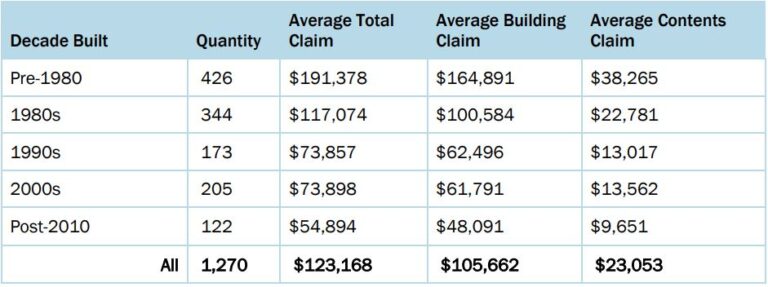
If you measure Florida’s peninsula, it’s between about 120 to 150 miles across for most of its length. If you live in the center, you are already about 65 miles from the coast. Meaning that, unless the core of the storm hits the coast closest to your house and makes a beeline to pass directly overhead within 6 to 8 hours of the Hurricane making landfall, you are unlikely to see winds that are any higher than 75 miles per hour with a CAT 3 storm, or about 100 miles per hour with a CAT 5. All houses built in Florida since 1998, when the state’s uniform Hurricane building code was adopted, have to withstand winds of up to 115 mph. The building codes have done a good job. Here are the average claims for Hurricane Ian, broken down by the decade each house was built:
With these newer building codes, the most significant weaknesses of homes are 1: flooding from wind driven water (called storm surge); and 2: missiles and flying debris being tossed by the wind breaking a window.
Storm surge isn’t an issue unless you live within a mile or two of a large body of water, so it’s wind driven debris breaking a window that is the primary concern. So we need to defend our homes from wind driven debris, and from the wind pressure itself.
Why is that important?
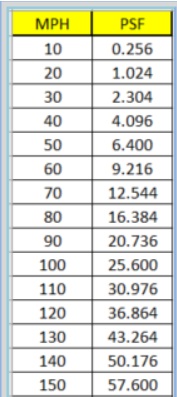
A wind speed of 120 miles per hour exerts a force of about 37 pounds per square foot, that drops to 26 pounds at 100 miles per hour, 16 pounds at 80 miles per hour, and only 9 pounds at 60 miles per hour. It’s a square function.
My windows are 3 feet by 5 feet, making them 15 square feet. At 120 mph, there is over 550 pounds of force acting on that window, if the wind is hitting it straight on!
The fasteners I am using are 3M Dual Lock 250/250 tape that is 0.5″ x 2.0″, resulting in 1 square inch in area. It takes 2.2 pounds per square inch to separate, and I am placing 20 of these strips around the outside of the panel to hold it to the window frame. It will take 44 pounds of force to remove the panel from the frame. This is equivalent to a 40 mile per hour wind directly pushing the panel away from the window.
I know what you are thinking at this point- how in the world are we going to use a Velcro like product to secure a panel to a window against 500 pounds of wind force, when the product only requires 44 pounds of force to remove? If the panel can be removed by a person, surely it can be removed by wind of this strength? To answer this, look at the directions involved. The wind would be pushing the panel IN to the window, while the fasteners are acting to keep it from falling out.
Is my engineering as good as a professional structural engineer backed by wind tunnel testing? No, I am sure that it isn’t. But my engineering is less than half of the cost, and sometimes good enough is good enough.
My real challenge here is how I am going to attach these panels to the upstairs windows. They are more than 15 feet from ground level, and I can’t reach the top of the frame from inside of the second floor.
As a test, I bought 4 panels and some supplies to attach them. Let’s see how they do.
I measured and cut the first panel, primed the surfaces of the panel and the window frame, then put the tape on the frame. Then I simply pressed the panel into the place where I wanted it. It is firmly in place, but at the same time, you can get a finger between the panel and window frame and remove it with a firm tug. Total time for this first panel was about an hour, but the others should be faster.
Of course, the only real test is another Hurricane, and I am not going to wish for one of those.
These panels aren’t bulletproof. They aren’t going to stop an intruder, nor are they meant to. Prepping is about being ready for the most likely events to happen. In the past 10 years:
In our old house, we had two different burglaries in the summer: one in 2017, and the second in 2018. Turns out it was the same guy both times. The judge approved a plea deal where he got probation and his record was expunged. For armed burglary, but that’s another rant for another day.
We have experienced 5 Hurricanes: Irma 2017, Michael 2018, Ian 2022, Helene 2024, and Milton and Debby hitting us in 2024. We had power failures lasting several days for two of those storms: Milton and Irma.
Our old house was struck by lightning no less than 5 times.
So our preps are centered around the most likely of events:
We are putting away money to guard against illness and job loss.
The new house has lightning protection built in.
We are now in a more rural area, so crime is mitigated somewhat.
Hurricane Preparedness
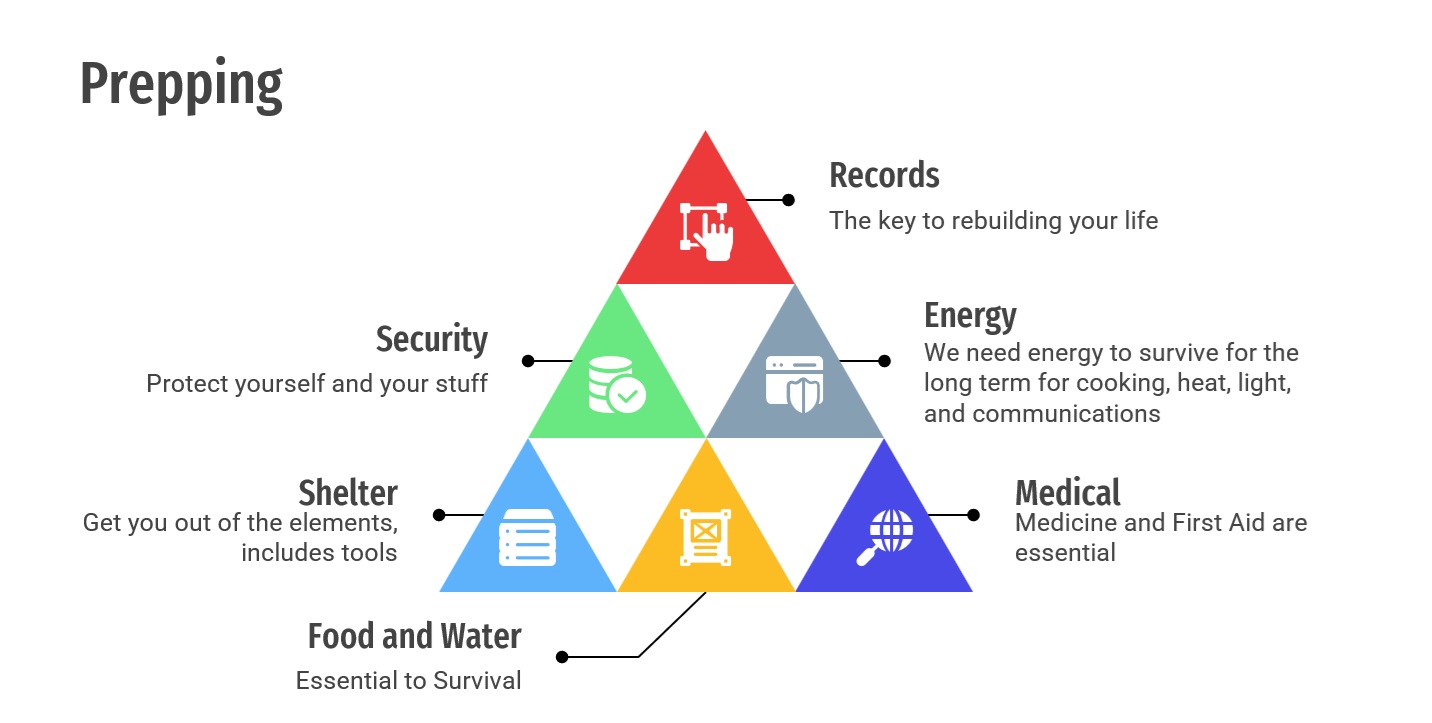
To see more on preps I recommend, please read this topic here. Also refer to the Preparedness pyramid.
Hurricanes in Florida are one of the more likely situations that require prepping. In the past decade, we have gone through at least 4 Hurricanes, with 3 of them causing us to spend more than 24 hours without electrical power. Being prepared in Florida means being ready for Hurricanes.
Hurricane Milton last year revealed to me some improvements that need to be made. Let’s take a look at our preparedness map.
One hole in our preps was revealed when we had high winds of 40-70 miles per hour pounding the back of our house for hours. It resulted in me sitting in my house watching my 12 foot wide, 8 foot high sliding glass door bow inwards from the pressure of the wind. Not good. So we needed to upgrade the security and shelter bricks of the prepping pyramid.
I decided to look into window fabric. It was expensive. I looked in to polycarbonate. One company wanted more than $2000 to cover my windows, and another $3200 to protect the sliding glass door. The issue is that the door is just too large for most products to cover.
I decided to find another solution. One came to me. I bought some of these panels from Lowe’s. I am attaching them to the house with 3M commercial fastening tape that’s kind of like Velcro on steroids. Two inch pieces placed 8 inches apart. I got it in white so it blends into the window frame when it isn’t in use. To make sure that it sticks, I am using a primer.
The total bill to cover 10 windows is $850.
Now on to the sliding glass door. It’s a monster at 12′ wide by 8′ high. I decided to turn the back porch into an emergency storage area by putting an electrically operated Kevlar curtain over the opening to the porch. (I did not use the company at the link.) The idea is that I will take everything that’s outside (like pool furniture and the like) place it on the porch, then close the Kevlar curtain. The cost of the curtain was about $4500.
So total cost to hurricane proof the house’s windows was just about $5300.