The worst diving accident in the history of the Maldives– 5 people died while on a cave dive to a depth of 160 feet. They died because they were foolish and likely were diving beyond their training, experience, and equipment. Let me explain:
Waves alone were likely not a factor. When you are underwater, you can feel waves to a depth of about 7 times the waves’ height. In order to even feel the effects of waves at 160 feet, those waves would have had to have been at least 23 feet high. That’s not very likely. However, strong winds can cause significant currents around atolls and through underwater caves. That may have factored into this, but no one is talking yet. Still, they had an experienced local dive guide who would be familiar with local conditions with them, so this may not be the case.
More of a factor was depth and the fact that they were in a cave. When you are SCUBA diving, the ultimate safety factor is being able to reach the surface. That’s why new divers are told to always dive with a buddy, because you can share that buddy’s air supply to reach the surface in an emergency. New divers learn all sorts of limits that are intended to ensure you can reach the surface.
When you can’t reach the surface, you are doing what is called “diving in the overhead.” In other words, there is something between you and the surface that is keeping you from reaching it. There are four things that can keep you from reaching the surface. Let’s discuss them:
SAC
The first is the amount of breathing gas you carry. A standard SCUBA tank is filled with 80 cubic feet of compressed air. At rest on the surface, a well experienced diver will breathe half a cubic foot of air per minute. Inexperienced divers can easily triple that, and a diver exerting themselves will also have increased air consumption. That is called your Surface Air Consumption, or SAC.
Depth increases your air consumption. Since pressure increases by one atmosphere of pressure every 32 feet of seawater, a person at 160 feet is breathing 5 times the air as one on the surface. That 80 cubic feet of air is now going to last only 32 minutes instead of 160 minutes. Add in fear, exertion, and the fact that it will take 3 minutes to get to that depth and 5 and a half minutes to safely ascend from that depth, and now your bottom time is about 7 or 8 minutes, maybe less.
When I was heavily into diving, I would usually dive with 120 cubic feet of gas. At 120 feet, I could get a maximum dive time of about 25 minutes. If they were diving Aluminum 80s at 150 feet, that time would likely have been no more than 14 minutes, and my SAC was excellent.
You are limited from returning to the surface simply because you will drown before you get there if you don’t have enough breathing gas.
No Decompression Limits
Another thing limiting your return to the surface is physiological. Your body absorbs gas while you are breathing it under pressure. Since air is a mixture of multiple inert gasses that are not metabolized, those gasses tend to be absorbed into your body tissues. The principle of these is nitrogen. Once the pressure is relieved by going to a shallower depth, that Nitrogen comes out of your tissues and makes tiny bubbles that expand as the pressure lessens. Think about the bubbles in soda. That’s what is happening. Those bubbles get trapped in places like joints, blood vessels, and various organs and cause all sorts of problems.
To prevent this from happening, divers restrict the amount of gas that is absorbed through limiting the amount of time they spend at depth. The maximum time a diver can remain at a given depth is called the “no decompression limit” or NDL. The definitive table for determining what the NDL is for any particular depth comes from the US Navy. (non-hosted pdf warning) It’s a complex subject, but the NDL for 160 feet of depth is about 7 minutes. If you remain at that depth for longer than this, you can’t return to the surface without decompressing, or you will get decompression sickness.
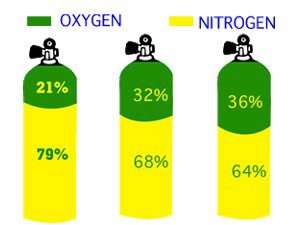
The NDL can be extended by using gas mixtures other than air. For example, a mixed gas called Nitrox was carried on the boat involved in this accident. Nitrox allows divers to stay down longer because some of the nitrogen in the air is replaced with oxygen. The catch here is that oxygen becomes toxic when breathed under pressure (called oxygen toxicity, or OXTOX). That limits the depth at which Nitrox can be used. The most common Nitrox mixes are EAN32, and EAN36. These contain 32% oxygen/68% nitrogen, and 36% oxygen/64% nitrogen. Neither of those mixes is safe for 160 feet. The maximum oxygen mix you can have at 160 feet is 27%, which is an uncommon custom blend.
Decompression sickness can also be avoided by letting those gasses leech out of your tissues at a slower rate. The easiest way to do this is to return to a shallower depth for an amount of time, to allow them to bleed off. For example, a diver might stop at 30 feet for 6 minutes to bleed off some of the nitrogen he absorbed while at a deeper point before returning to the surface. Many divers do what is called a “safety stop” at the end of every dive, which is in reality a 3 minute decompression stop at 15 feet.
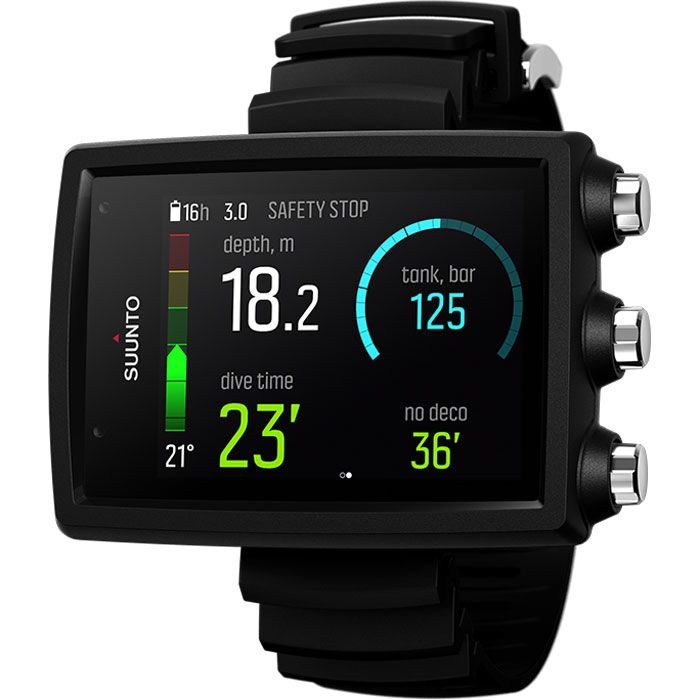
For various reasons, most divers don’t use tables to compute all of this. Instead, they wear computers that constantly compute the amount of gas in your tissues and advise you on how long you can stay down, and if you violate that limit they will make recommendations for decompression stops.
Physical barriers
The next barrier to reaching the surface is a physical one- diving in a location where there is a literal thing between you and the surface. That can be inside of a wreck, or in a cave. The hazard here is that it is easy to become disoriented or lost inside of one of these, and you are trapped and unable to find your way out. It takes different procedures, training, and equipment to enter a wreck or cave.
This incident
From diving oriented publications:
Though the dive-group were said to have entered the water in the morning, the alarm was raised only at 1.45pm, suggesting that they might have been prepared for a long, deep dive. Details have yet to be released about the equipment they were using.
Other reports indicate that the weather may have caused strong currents, which could have contributed. No information has been given about the precise cause of the fatalities, although some media reports have made references to oxygen toxicity and gas mixture problems.
Accidents
I have been present for several diving accidents, and I have known several people who have died SCUBA diving. I have also read hundreds of reports of SCUBA accidents. In each and every case of which I am aware, the accident was caused by a diver who went into a situation for which they were not:
- experienced
- equipped
- or trained
Or some combination of those three. That appears to be the case here. A dive inside of a cave, at a depth of 160 feet is beyond the training and experience of recreational diving. It’s called a technical dive, and these require a lot more training and equipment than most divers have.
Dives that go into more complex environments have to be planned. The deeper you go, the longer you stay down, and going into a cave or wreck all require much more planning than a simple 60 foot open water dive.
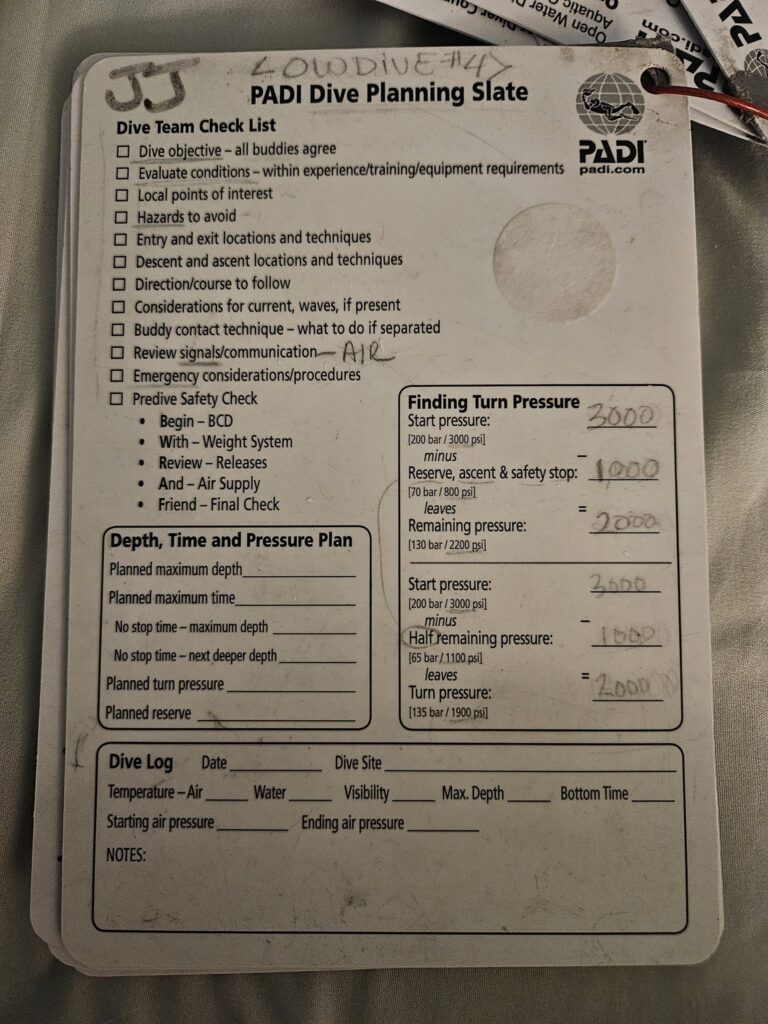
When diving in an overhead environment like this, the rule of thumb is take enough gas so where you have 1/3 of it in reserve when you reach the surface. For this dive, that would mean about 100 cubic feet of gas, but more like 110 cubic feet to be safe.
On top of this, the Maldives limits recreational diving to no more than 100 feet in depth.
This tragedy was a case of divers going beyond their limits, as most dive accidents are. Diving is a safe sport, as long as you follow the safety rules. Too many divers get tempted to push just a little beyond the limit, and that’s when tragedy strikes.
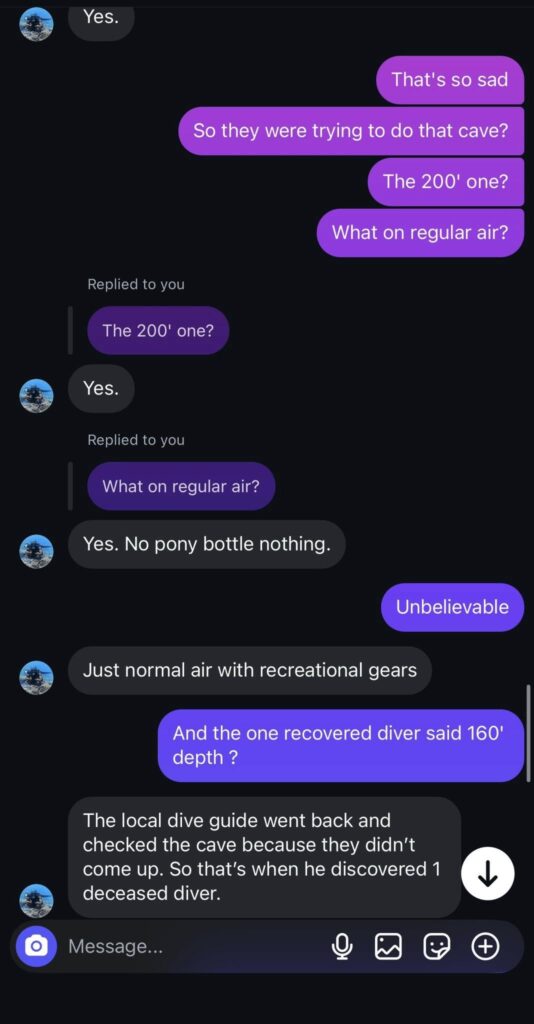
That is reportedly the case here, even though it isn’t a reliable source, the dive community is saying they were diving on recreational open water equipment, which seems to solidly point towards diver error.
The ocean can be an unforgiving bitch if you don’t respect her.
On the gripping hand
Other than diver error, there is also the possibility that their air was contaminated. Breathing in carbon monoxide, or air contaminated with compressor oil can be deadly. I once dove with Nitrox that was contaminated with compressor oil. I got a buzz from it at 50 feet and had to abort the dive. It cost me several hundred dollars to get all of my equipment cleaned for oxygen service. I never returned to that dive shop.
So there are other possibilities, but the smart money is on diver error.
My training
I have over 4000 logged dives, and I don’t know how many unlogged ones. I am a Master Diver and served on a Rescue Dive team for a number of years. We mainly did body and evidence recovery. The majority of my logged dives were from 60-120 feet, with my deepest dive being a 180 foot dive in Mexico. I’ve done a number of wreck dives, and a few caverns and caves. Caverns and caves just don’t interest me, it’s just a bunch of rocks. Boring.
I was just beginning to get into tech diving when I stopped diving. I had just completed extended range nitrox and was looking into doing trimix. Sadly, it became harder and harder to find others to dive with, so I went no further. My last dive was about 6 years ago.
I’m not going to say that I never broke the rules. I was just lucky enough not to get dead. I once went SCUBA diving in a hurricane. Well, the edge of a hurricane. We thought we would sneak a dive in, in between squall lines. That was one of the scariest dives I have ever done, and I learned an important lesson about the unpredictability of currents when the weather turns bad. Still, I got off lightly. All I wound up losing was a fin strap and the flooding of a $1200 underwater camera.
12 Comments
cave diver · May 15, 2026 at 10:58 am
I have been a certified cave diver since 1999. (OC & CC)
What TRAINING did these divers have? I found nothing in the articles…
There is no information on the intended profile – did they intend to keep to the cavern zone?
(Cavern zone is where natual light is still available.)
What equipement did they have? (lights, stage bottles, deco gas, backup computers/tables, etc.)
This profile could take a LOT of gas (trimix):
“The entrance is between 55 and 58m. The cave goes inside to approximately 100m and forks and goes deeper.”
This dive should have been called by Gianluca Benedetti of the Duke of York if they did not have the training or equipment to execute the dive plan.
“The fifth diver was Gianluca Benedetti, a diving instructor from Padua and operations manager for Luxury Yacht Maldives and Albatros Top Boat, which operate the 36m Duke of York liveaboard on its central and southern atolls itineraries.”
“The Duke of York caters for technical and rebreather divers as well as those diving within the official 30m Maldives depth limit.”
Divemedic · May 15, 2026 at 5:01 pm
Reports are coming in that the group was on open circuit air. One of the divers had this on her CV:
International Cave Diver Level I certification (CMAS)
“Speleologia Sub 1° grado” (1st-degree Cave Diving) through FIPSAS.
TDI Decompression Diver certification
Underwater scooter/diver propulsion vehicle certification (SSI)
TDI Extended Range certification
TDI/SDI Open Water Instructor, Nitrox Instructor, and CPROX AED Instructor certifications.
She appears to have been the most certified of the group, and even then her cave certification is little more than cavern diving, certifying you only to the first 50 meters of the cave. This is a full on technical dive that would require full extended range cave certification as well as normoxic or even advanced trimix.
hat kind of dive is not ordinary recreational diving. It sits in a narrow overlap of advanced cave diving, deep decompression diving, likely trimix procedures, overhead-environment emergency management, and difficult current/visibility conditions.
David · May 15, 2026 at 11:13 am
What CAVE DIVER said.
I haven’t dived in about 20 years but I’m cave trained and certified and have done about 200 cave dives with air and mixed gas. This story is so sad – there is nothing in a cave worth dying for.
Tom235 · May 16, 2026 at 7:24 am
Sounds like FAFO.
Luckily I’m immune to diving accidents. Depending on SCBA with a fire dept was risky enough; no desire to add a U to the mix. Each to their own though.
Rob · May 16, 2026 at 10:41 am
I just wanted to thank you for sharing your expertise. We all appreciate it.
Don Curton · May 16, 2026 at 1:24 pm
That Nitrox stuff is interesting. I’ve never dived, but working in industry we have lots of tasks that require the use of breathing air due to hazardous chemicals and byproducts. In our terms, we have compressed air (natural air run thru a compressor into a cylinder) and manufactured air (compressed N2 and compressed O2 added in the correct ratio to a cylinder). The Nitrox would be called manufactured air in our parlance. The company I worked for banned it’s use after an accident in which several cylinders of 100% nitrogen were made by mistake and pretty much instantly killed a two man crew. I’d be really nervous to use that stuff.
Divemedic · May 16, 2026 at 3:18 pm
The procedure is that you use an oxygen sensor to check it before connecting it to a regulator for breathing
-rightwingterrorist · May 16, 2026 at 1:53 pm
As an ex Commercial Diver, Class A Bell/Saturation, with a logged deepest dive of -775′, I have to say that going into dark and scary places without being able to follow your umbilical out is sorta crazy.
Just my 2 cents.
Squire · May 18, 2026 at 11:38 am
Hey, quick question:
I’m not a diver besides a scuba merit badge two decades ago, but I like reading.
You said there were four things that could keep you from surfacing, then mentioned 3.
SAC- running out of air
Decompression Limits- the Bends
Physical barriers- being stuck in a cave.
What’s #4? Nitrogen narcosis?
Divemedic · May 18, 2026 at 12:31 pm
The fourth would be entanglement. Fishing line, rope, something else holding you down. Its why divers carry knives.
Curtis · May 20, 2026 at 12:15 pm
I dove for about 10 years but I would never have even tried this. In the original article I read on this it said that the one survivor in the party opted for no reason to sit this dive out. I can think of a dozen perfectly acceptable valid smart reasons not to get into the water with the fools that did go on the dive. In short, your odds of enjoying your diving experiences is largely dependent on choosing smart people as your diving buddies.
Compounding Tragedy – Area Ocho · May 16, 2026 at 1:54 pm
[…] the efforts to recover the bodies of the four divers whose bodies still haven’t been found, one of the military divers has died of decompression illness. As a result of this latest fatality, […]
Comments are closed.