Human beings only have two ways to deal with one another: reason and force. If you want me to do something for you, you have a choice of either convincing me via argument, or force me to do your bidding under threat of force. Every human interaction falls into one of those two categories, without exception. Reason or force, that’s it.
Marko Kloos, Why the gun is civilization, 2007
At the national level, it is negotiation (diplomacy) or warfare. Warfare is the method of getting an adversary to take a course of action involuntarily. Using or threatening another nation with warfare isn’t the only way to wage war. It can be done with economic force as well. Countries engaging in economic warfare seek to weaken an adversary’s economy by denying the adversary access to necessary resources or by otherwise inhibiting its ability to benefit from trade, financial, and technological exchanges with other countries.
The US and its politicians have for years wielded economic force (sanctions and the like) for decades without realizing just how much resentment it causes. For some reason, our leaders seem to think that everything that happens in the world is something that the US needs to be involved in.
So they use sanctions like a club. They twist the arms of some nations to support them in boycotts, UN decisions, and the like. Each time the US flexes its muscle, dislike and resentment builds. Why? Because these nations are being held at economic gunpoint and are being forced to take an action that is against what they perceive is their best interests. In other words, they are being attacked by the US in economic warfare. This was caused by the US using its economic might as a club to keep other nations in line, rather than using it as a surgical instrument.
Make no mistake, the US has been engaged in economic warfare for most of the post-WW2 period. Who started it? I will leave that to historians, but make no mistake, the US is using the economic advantage its had by being the only nation whose economic base wasn’t wrecked in WW2, backed by pure military might to enforce its will upon the nations of the world. We have been engaged in economic warfare with one nation or another for decades.
This works until the economically and militarily strong nation begins to weaken. COVID, along with the government’s response to it, the fact that our nation’s President is a dotard, and the runaway inflation being caused by profligate spending did exactly that.
So China and the BRICS nations are responding in kind. China is seeing to it that the economic empire that the US has been engaged in maintaining is coming to an end. As the President of the US, Biden’s responsibility is to see to it that the US and its citizens are taken care of. He is too busy lining his pockets and following the instructions of his Chinese masters.
China is a master at long term planning. They have thoroughly infiltrated the US government. From congressmen sleeping with Chinese intelligence agencies to plain old fashioned bribery, the nation’s key government officials have been completely compromised.
So China is following up on its biological warfare attack by counter attacking the US by destroying the dollar. It’s brilliant- they cause a pandemic that the US helped fund the creation of, help fund the gaming of the US election that followed, using that to put one of its assets in charge, then attack the currency while their asset distracts us with a proxy war that China is assisting in.
China isn’t stupid- they know what the US can and can’t do. They are playing the long game while the US spends its time and resources worrying about an inconsequential war between Ukraine and Russia. The US has sent more than $70 billion to Ukraine in the past 16 months, and just budgeted an additional $45 billion in the latest debt ceiling deal.
Meanwhile, the US dollar is being deliberately and systematically attacked. Where does this go? Do the math and tell me what you think in comments…
The Republicans this weekend did what they always do. They caved in. They reached a deal for our nation’s debt that allows them to campaign as conservative while actually doing nothing of substance.
The deal allows the government to spend until January 1, 2025 without any limits at all.
It’s what Republicans do best- feather their own nests. That’s why Trump vs. DeSantis is a meaningless debate.
China has signed agreements for half a trillion dollars a year in non-dollar trades. This is a naked attempt to attack the US economy. It’s an act of war, but since our President is bought and paid for by China, he ignores this.
What we have here is a country where more than half of the nation votes for a living. They vote to get largesse from the public treasury without the education or intelligence to see the cost. They also vote to punish the remaining 43% of the country through confiscatory taxation.
There is a difference between price increases and inflation. With a price increase, the commodity that you want to purchase becomes more expensive. This is usually due to supply and demand forces that change the market price for that commodity. With inflation, all commodities cost more in the currency that has been inflated. This is also caused by supply and demand forces, but in this case those forces are acting upon the currency. The supply of currency is up, so it becomes worth less. At a certain point, this causes demand for that currency to drop, further exacerbating the inflation.
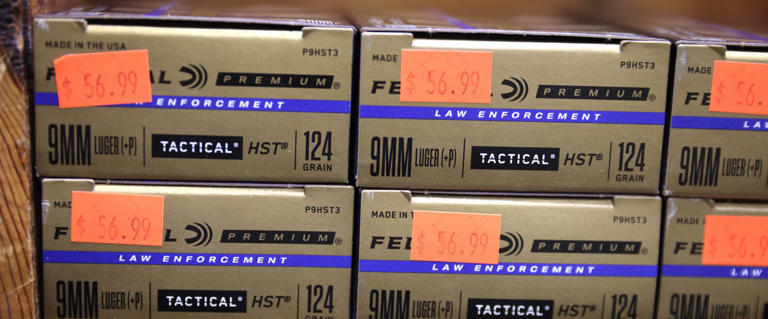
As for ammo, especially War Shots, we’ll never see pre-Covid prices again (I need a time machine….)
He’s right. Ammo prices have been rising. Small arms ammunition prices shot up 157% from 2000 to 2022, a period in which price increases caused by inflation climbed by 170%, meaning that in terms of other goods and services, ammo is cheaper now than it was in 2000. To illustrate the impact of rising prices, a box of 20 .223 caliber rifle rounds cost about $12 in the year 2000. Today, the same ammunition costs more than $30.
My very first handgun that I bought was a Smith and Wesson Model 59. (I’m still sorry I sold that gun) Since 9mm was not yet a popular cartridge in 1987, the ammo for it wasn’t as cheap as other calibers. I remember paying $7.50 for a box of 9mm ball. Two years later, I bought a S&W 4506 when they first came out, and was paying $8 per box of UMC .45 ball.
The price increases of ammo that were brought about by COVID were due to a supply issue created by the closing of ports, factories, and shipping facilities as a part of governments shutting down portions of the economy, and were exacerbated by a huge increase in demand that was brought about by panic buying of ammo in light of the George Floyd/Antifa/BLM civil disturbances. The double whammy of supply reduction and demand increase conspired to cause a shortage, which drove up ammo and firearms prices.
That issue has largely been corrected, and the supply issue has largely returned to normal for the mainstream cartridges. There are still shortages of off track ammo like revolver ammo, 10mm, and other calibers that are now short in supply because manufacturers are concentrating on the mainstream ammo supply. As that continues to stabilize, the sidestream ammo market prices will come down a bit.
However, I don’t think that ammo prices will ever return to where they were in January of 2020, when I was buying 9mm for $7 per box (less than I was paying in the 1980s!).
That is why I do not think the elevated ammo prices that we are seeing now have anything to do with the COVID shutdown. The prices we see now are the new floor. Thanks to the inflationary pressures of Trump and Biden (and the uniparty) running the government printing presses, the dollar is worth less. That means that the prices of everything that is sold for dollars will be higher in terms of dollar cost. That is, the new prices for ammo are caused by inflation.
In February of 2019, there were 15.45 trillion dollars in existence in the entire world. By July of 2022, there were 21.73 trillion dollars in existence- a whopping 40% increase in supply in only 2.3 years.
We know that there were less goods and services available, but there were 40 percent more dollars chasing that reduced amount of goods and services. That caused inflation. The United States is in the midst of a period of historic inflation. The average price of goods and services was up a multi-decade high of 9.1% year over year in June 2022.
Since that peak in July of 2022, the Fed has taken steps to reduce the money supply, and we now have somewhere around $20.6 trillion in circulation. We are never going to get back to $16 trillion. It isn’t possible without collapsing this house of cards our economy is built upon.
So for that reason, we are never going to see prices like February of 2020 again. Those days are gone. Enjoy your time paying $10 per 50 round box of 9mm. It will cost more as we print more money. There will come a time when we look back wistfully at $10 ammo boxes.
The money is gone. They spent it. Like a dad who is angry because when you sent your kid off to college, you gave him your credit cards to use in the event of an emergency, and he maxed them all out on unnecessary bullshit, it’s our fault for giving them essentially unmonitored access to the credit cards. Yep, I said it- it is our fault for not watching what they were spending the money on. So now we have $200,000 in maxed out credit cards, and nothing to show for it. Except in this case, it’s $35 trillion worth of useless treasury notes, and a bunch of promises.
So yeah, everyone is getting screwed. Take a moment to let that sink in. Now feel the anger? You pissed off? Well, so was I, when I first began to realize just how fucked we are.
The time to complain about that was when the Congress spent DECADES throwing money around like a Frat boy with his dad’s credit cards. And yes, it was spent on bullshit.
$190,000 by Senator Charles Schumer (D-N.Y.) for digitization of the New York Historical Society’s photo collection.
$200,000 by Rep. Howard Berman (D-Calif.) for the Providence Holy Cross Foundation tattoo removal violence prevention program in Mission Hills.
More than $220 million to build a bridge between Gravina Island, an island that was home to 50 residents at the time, and the Ketchikan Airport.
Don’t think that the holy grail of the Republicans, the defense budget, was immune from this waste. Rep. Duke Cunningham (R-Ca.) resigned and pleaded guilty to accepting $2.4 million in kickbacks from military contractors for steering billions of dollars worth of defense budget dollars their way, using his positions on the Defense Appropriations subcommittee and the Intelligence Committee to insert earmarks for military spending.
$500,000 in federal funding for the construction of a very unique museum in Sparta—a town that had a population of about 18,000—the Sparta Teapot Museum of Craft and Design.
$14.8 billion to Boston for a tunnel (The Big Dig) that was the most expensive highway project in history.
$3.4 million for a tunnel in Florida that would allow turtles to cross Highway 27 safely.
Decades of wasteful project after wasteful project, adding up to hundreds of trillions of dollars in spending. Every single President since Eisenhower has been a part of it. Who is blame? We are. We let them do it. Let the anger soak through you, then take a deep breath. Let it out. I agree with you. It sucks.
The money is gone. There is no way that it will ever be paid back. We owe more money than physically exists. That right- add up all of the money in the world: Dollars, Euros, Yen, Yuan, all of it. Now send it all in. That doesn’t even pay what the US owes, much less the debt of all of the other nations in the world. Now you begin to see just how fucked we all are. Yes, I am using the word “fucked” even though profanity is not used here very often. Why? Because no other word really begins to describe just how bad things really are.
There is no way out of this. The bill is going to come due, and we are the ones who will be stuck with it. That pension you are owed? Gone. The Social Security fund that took from you a third of every dollar that you earned for your entire working life? It’s been spent. I’ve been warning you about this since I figured it out, back in 2007.
Again, the time for us to have fixed this passed some time ago. I became an adult during the Reagan administration. It was probably already too late at that point. My generation inherited the problem, but we certainly didn’t even try to fix it. So yeah, I blame the Boomers (and my own parents, who were part of the silent generation) for creating the problem, but the generations since then certainly didn’t try to fix anything. That makes all of us responsible.
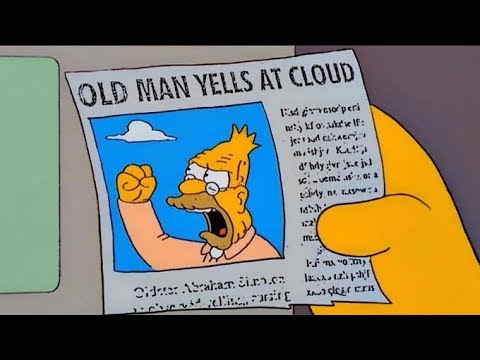
Lacta alea est. It’s too late to cry over spilt milk. You can be mad, but that is like the old man yelling at clouds: it doesn’t change anything.
All we can do now is try and save what we can, and in my opinion, all we can do is try and save our local area. Be ready, band together with as many like minded neighbors as you can, and try to weather the storm. Sauve qui peut.
Get skills. Stockpile tools, gear, food. Learn to garden. Plan. Make friends with neighbors who have complimentary skills. Stockpile stuff that you can trade to people with skills who may compliment your own. For example, extra guns for neighbors who may not have one. They can use it to stand watch while you sleep, or cover your backside.
It’s coming. We don’t know when, but at this point, it’s undeniable.
This is what the Socialist leader of Canada has to say:
When we see that women’s participation in the economy has reached an all-time high, this much is clear: $10-a-day child care isn’t just good social policy, it’s also good economic policy.
I normally don’t post things from other countries, but many of our own political figures support stupid stuff like this. Let’s do the math:
If a mother wants to work an 8 hour job, she gets 30 minutes for lunch, plus time to get to and from work, so let’s call it 9 hours of child care per day. That also means the kid will have to be fed lunch, call it a cost of $5 for lunch. That leaves nine hours of child care for $5.
Then there is insurance, utilities, health insurance, and all other expenses, not to mention the cost of paying the childcare worker. Let’s assume that we are going to pay our childcare worker an average of $18 an hour. All expenses considered, this fictional daycare center will need to assign 65 children to each childcare worker in order for this to be feasible.