Hurricane Interruptions

I was trying to get some solid data on the performance of my solar array, but we were interrupted by Hurricane Debbie. Still, negative data is still data.

  • When it’s a typical Florida sunny day with sunshine until the arrival of our typical afternoon thunderstorms, my 10 kWDC array generates about 58 kwhAC per day.
  • Two days before Debbie arrived, it was getting quite cloudy. We only generated 32 kwh.
  • As the rains began to arrive on Sunday, our output dropped to 18 kwh.
  • It rained all day on Monday, and we only generated 17 kwh. Still, generating that much power while simultaneously getting more than 3 inches of rain is a feat.

It’s sunny today, so we are back to full power. I want a week of solid, typical weather before I lay it all out.

We lost power once for about 15 minutes, in addition to a handful of blips, where the power was out for less than a second. The Powerwalls transferred us to battery power in about 1 or 2 seconds. Just long enough that we had to reset the clocks.

More data to come.

Drone

This prepping topic is on security. Being able to keep an eye on your surroundings is a great way to assist in the security of your area. Not only can you quickly determine if a threat to your physical security is approaching, you need to be able to scout in advance of any movement that you are making, look at areas that may be hazardous (like flooded areas) and other things you may want to see at a distance.

One of the keys to security is not letting opponents surprise you. A person who is prepared needs to be familiar with the area where they live, and be able to monitor that area for the appearance of those who would endanger their safety. You never want an opponent to surprise you. Watching events, it is becoming obvious that a drone is a huge multiplier by allowing you to keep an eye on large areas of the territory surrounding your shelter, so I decided to get one.

Apparently, a 20 year old was able to thwart the Secret Service by using a drone, while the SS drone was not able to fly because of “connectivity issues.”

The drone I selected is a DJI Mini 4k. There are more capable drones out there, but the large advantage with this drone is that , at less than 249g, the drone is light enough that it doesn’t need to be registered with the government in order to be legal, and we all know that I am not registering shit. I got it as a Prime day deal for less than $400. That deal included the drone, three batteries, and the charger.

It was easy to fly, and I took it up for its first flight after watching the below video. I am posting it here, cued up to some elevated footage, so you can see how clear the video is.

The only thing different with mine is that I have it set for Imperial instead of metric units, and the lower left corner is a Google maps kind of display that shows you where the drone is on a map. I have found the drone to be intuitive and easy to fly. I have been taking it easy because I don’t want to lose it, but on the two days I have flown it, it has gone as high as 250 feet and flown as far away as 1,000 yards. The drone reaches a top speed of 20 mph, and the battery gives about 30 minutes of flight time. Following the rule of thirds (one third to go out, one third to return, and a third for contingency) that means the drone has the endurance to go out about 3 miles. I’m not yet comfortable flying it that far.

It’s capable of operating in winds of up to 15 miles per hour, but I won’t fly it in winds that high.

I recommend that you find your own drone to keep an eye on the area.

The disclaimer: I don’t advertise, and receive nothing for my reviews or articles. I have no relationship with any products, companies, or vendors that I review here, other than being a customer. If I ever *DO* have a financial interest, I will disclose it. Otherwise, I pay what you would pay. No discounts or other incentives here. I only post these things because I think that my readers would be interested.

On Aquanta

I previously recommended the use of a controller for your water heater as a way of controlling power consumption. Now that I have the solar up and running, the Tesla app is a great way to monitor and check up on your electrical loads.

Now that I have the ability to do this, I am convinced that the Aquanta water heater controller doesn’t actually DO anything. Whether I am home or not, using hot water or not, the amount of electrical power that the Aquanta is claiming I am using to heat water doesn’t change, at about 15kwh per day. The only time the amount of power the Aquanta was claiming went down is when we put the system in “Away” mode- telling it to turn off the hot water while we were out of town. At that point, the Aquanta reported that we were using about 1 kwh per day. The only problem? The amount of power we were using for the entire household didn’t change, according to the Tesla app.

At this point, I began suspecting that the Aquanta is a random number generator. It reports to you how much money it is saving you, but isn’t actually doing anything. I decided to test it and see what was going on. I am going to make a serious accusation here, so let me state that I did all voltage readings using a FLUKE 115 True RMS multimeter.

I measured the voltage across the output of the Aquanta while it was in “efficient” mode with a green LED showing and got a reading of 249 VAC. The water heater uses power consumed of 4500 watts (4.5kw), so a little application of Ohm’s law results in 18 amps and 14 Ohms of resistance. We can directly use Ohm’s law because the water heater has no capacitance or inductance, it is a purely resistive load.

Then I put it into “Away” mode. The LED on the unit turned red, so I measured the output voltage and got 70 VAC. Another application of Ohm’s law using the same 14 Ohms we calculated before tells us that the water heater is now using 5 amps and 50 watts of power. Take that 50 watts of power and multiply it by 24 hours in a day, and you get about 1 kWH per day.

So it doesn’t shut off the water heater, it merely lowers the voltage from line voltage down to about 70 VAC. I am not sure when or how it does this, other than in vacation mode, but I don’t think I am saving any power.

I just don’t think that this is a good unit to use if you want to save power, so I am withdrawing my recommendation of the Aquanta unit. My recommendation is to either use an electro-mechanical water heater timer, or a smart pool pump relay.

Four Days

So we are four days into operation of the solar equipment. Right now, we are operating on a limited basis, more on that in a moment. I am not home because we are on the road, but both air conditioners, all vampire loads, and the water heater are running.

Output

We chose a system that is 10 kilowatts DC. That translates to about 8600 watts AC. The system begins generating electricity at about 9am, and reaches a peak of 8kw at around 10:30. By 1pm, the Powerwalls are fully recharged from the night before. At that point, there is no place else for the generated power to go, so system output drops to match whatever the house is using. More on that later.

We haven’t used any electricity from the grid since the sun came up on Friday morning. That indicates that I have enough panels for my house.

Storage

There are two places that I can store the power I generate. One of them is in the Powerwall, which has a total capacity of 27 KWh. Right now, I am maintaining a minimum of 30% as emergency backup, and using the rest to compensate for lower output at night or overcast conditions, or to make up for transient high loads, like when both air conditioners and the water heater are running at the same time. The advantages of using the battery are that the power stays within my home, and losing the grid means that I can still access it. The disadvantage is that the upfront cost of batteries is high.

The second place that I can store generated power is in the grid. The electric company buys my excess power in the form of credits that I can redeem when my system can’t keep up with the loads that I am placing on it- nighttime, stormy weather, or when loads simply exceed what I am producing. The advantage of this is that the upfront cost is low, but the disadvantage is that it relies on the electrical grid for redemption.

I can’t use the grid as storage because I don’t yet have permission to operate (PTO) from the power company. I should get it within two weeks after our final electrical inspection, which is supposed to be this week. So we should be fully operational by August 9.

Results So Far

Each day, we are generating between 35 and 45 kWh before panel output is reduced when the batteries are full. The solar energy being generated is directly running the house during the day, with the rest charging the Powerwalls, which run the house at night.

The water heater is using 4 kw when running, the upstairs AC is using 1.5kw, the downstairs AC uses 2.7kw, and the rest of the house uses 0.3kw. Since the ACs and water heater don’t run all of the time, the panels are more than capable at this point of keeping up by charging the batteries during the periods when the large appliances aren’t running.

Once we get our PTO, I will know more.
Installed

The solar power system was installed this week, We turned it on this morning. 24 panels, each capable of supplying 420 watts, for a total capacity of 10 kW. We can’t yet sell the power back to the power company, because they haven’t yet approved our application. Until then, we will run off of batteries and solar, with the excess being given to the power company free of charge. Hopefully, that will change within a week or two.

The install took two days, even though it was supposed to only take one. On day one, the team got the Powerwalls mounted, and 21 of the 24 panels on the roof before an incoming afternoon thunderstorm stopped work for the day. On day two, they got the final three panels up, ran all of the conduit and wiring, then shut power off to the house for about an hour so they could make all of the connections. They turned the system on, but that was at 1700, after it began raining again, so we didn’t generate any solar at all yesterday.

At 1000 this morning, we were generating 5 kW from solar while only using 0.5 kW, with the 4.5kW of excess going into the batteries. Our Powerwalls are already charged to 50% of capacity, and we have already generated 6.5 kWh purely from solar.

I will revisit the numbers within a week or so. It’s still to early to talk about how well the system is going to meet our needs.

Medicine

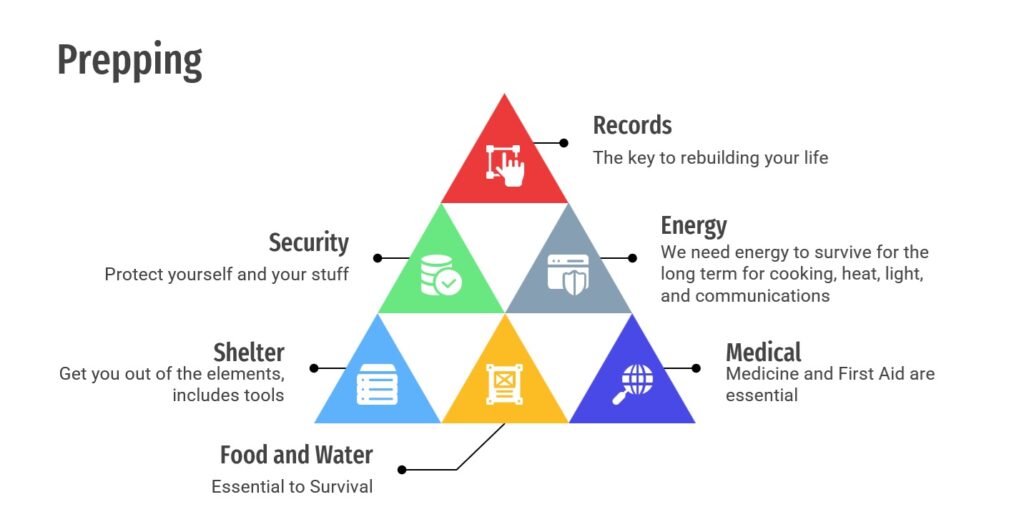
Our series on preparedness continues. We have looked at records, did an extensive (and ongoing) examination of power, and now we move on to medicine. When people think of medicine, they think of the sexy parts: usually trauma. Yeah, using a ballpoint pen and a pocketknife to open an airway in someone’s throat makes for great television, but isn’t really something you are going to have to do.

Trauma is a surgical emergency. The only thing I can recommend with trauma, beyond first aid is stabilize the injury and get the victim to a location that is equipped and able to perform the necessary surgery. If things have gotten to the point where that isn’t possible, the victim probably isn’t going to make it. To stabilize the patient, it helps to have a decent first aid kit like this one. Here are the basics of how to treat a gunshot wound from a talk I gave at the 2021 Florida Blogshoot. There are all sorts of people that will tell you to carry IV equipment, BVMs, and all of that, but frankly, you don’t need that stuff. There are plenty of studies that bear that out.

I have seen medical bloggers insist that you need to stock a room full of sterile, disposable dressings. Hogwash. All you need to do is cut up some old sheets, put them in a pot of boiling water for ten minutes, wring them out with hands freshly washed in clean, potable water, then dry them in the clothes dryer. Now you have clean bandages.

No, the important medicine that you need are the less sexy parts of the medical profession. The most important thing that you can have from a medical standpoint is knowledge. Start with a first aid and CPR course, something like First Responder or EMT. You can get an EMT certification in as little as two months for the cost of a single handgun. The more you know, the more you know, and one thing that you learn may be the difference between saving a life and not.

What medicines do we need? First, recognize that the biggest killers of people in a SHTF scenario will be contaminated food/water, and sepsis. Having things on hand to deal with those things will go a long way. So here we are with a list of medicines:

  • Iodine (Betadine will do)- wound disinfectant
  • Soap- cleanliness prevents infection
  • Rubbing alcohol- disinfectant
  • Vinegar- it can be used as a disinfectant
  • Loperamide (Immodium)- diarrhea is a huge killer, as it can cause severe dehydration and electrolyte imbalances
  • ondansetron (which is a prescription drug) and meclizine (over the counter) to prevent vomiting. They are dangerous for the same reasons that diarrhea is.
  • Acetaminophen (for fevers)
  • Ibuprofen (for inflammation)
  • hydroxychloroquine and ivermectin (for parasitic infections)
  • if possible, grow an aloe plant. Aloe is useful for burns and as a powerful laxative. If you can’t have an aloe plant, you need some burn ointments and a laxative.
  • hydrocortisone cream for inflammatory rashes
  • diphenhydramine, both pills and ointment
  • triple antibiotic cream
  • At least three of the following six broad spectrum antibiotics: Augmentin (amoxicillin and clavulanate), ciprofloxacin, doxycycline, metronidazole, azithromicin, cephalexin
  • Pseudoephedrine (Sudafed)
  • Aspirin
  • Famitodine
  • Clotrimazole cream

Those will handle most of what you will need in a SHTF situation.

If you want to read more in my preparedness series, click here for the complete library of posts on the subject. You can also refer to the training materials page.

Panels

IcyReaper wants to know more about the panels that we selected. I checked through the previous posts and realized that I hadn’t talked about them at all. The PV panels are the heart of any solar system, so let’s review them.

When considering which manufacturer I wanted to go with for our PV panels, we wanted to go with a large, reputable panel manufacturer. SunPower, REC and Panasonic are three manufacturers widely known for producing some of the highest quality solar panels with low degradation and good warranties. For that reason, they cost up to 30% more, but I wanted reliability.

Although REC was originally a Norwegian company with a good reputation in the industry, their panels are actually made in Singapore. The company has been bought and sold several times, and is now owned by another company headquartered in India. The company makes panels with higher efficiency and more output at up to 470 watts per panel, but they are more expensive than some of their slightly less efficient models. It winds up costing more to get the extra output than it would to simply add more panels, and roof space isn’t an issue for me, as I have a lot of sun facing southern roof to work with.

We decided on the REC Alpha Pure 2 panel for our PV panel. The spec sheet can be found here (pdf alert). The panel is 1.8 meters by 1 meter, and has an output of 420 watts with an efficiency of 22 percent. It has a 20 year warranty and has been tested as retaining 92% of its rated output at 25 years. If the REC panels are installed by a certified installer, the warranty is extended out to 25 years. You can read a review on REC panels here.

REC solar panels operate at high efficiency, have a low 0.25% annual degradation rate and come with an excellent 25-year performance, product and labor warranty. As I mentioned in earlier posts, the panels are designed for 140 mile per hour winds and hailstones of up to 35mm. In my book, that made them durable enough to withstand some serious weather.

The panels look nice, because they are pure black with no light colored lines. They simply look better than the older panels.

The disclaimer: I don’t advertise, and receive nothing for my reviews or articles. I have no relationship with any products, companies, or vendors that I review here, other than being a customer. If I ever *DO* have a financial interest, I will disclose it. Otherwise, I pay what you would pay. No discounts or other incentives here. I only post these things because I think that my readers would be interested.

Engineering is Done

It’s been a busy week here at the Sector Ocho support facility. Aside from working three 12 hour days, I also had two days of training tossed in, for a total of 52 hours this week. Let’s see if they pay the overtime or not.

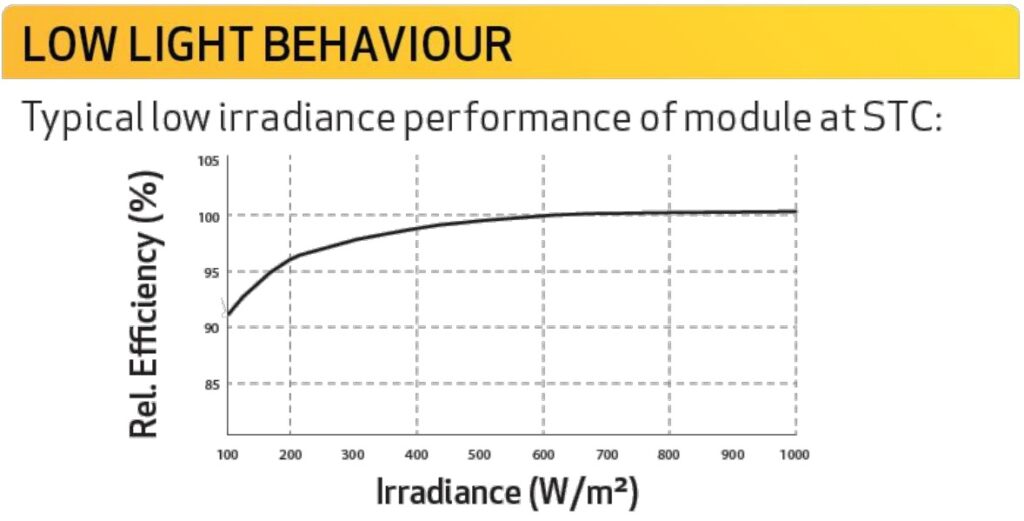
I also got the final engineering report on the solar project. The 24 solar panels have a total surface area of about 500 square feet. That works out to 46.5 square meters. The panels have an efficiency of 22 percent, meaning that we generate a maximum of 10,260 watts at full daylight (full, direct sun is 1,000 watts per square meter). What is interesting is that even in heavy clouds, we still get 230 watts per square meter of sunlight here in Florida (I measured it), and the panels will still produce more than 95% of full output at that light level:

The panels themselves are rated for wind up to 140 miles per hour, and hailstones up to 35mm in diameter.

Now that the engineering report is done, we are applying to the electric company and the city for our operating and construction permits. I have to clear out one side of the garage for the wiring, panels, and mounting of the Tesla powerwalls. Installation should be within the next two to three weeks, depending on permit times.

Loads Update

Here we are, in the summer. Time to revisit our calculations on power consumption for our planned solar installation. Here is the usage data, combined with temperatures for the month.

  • January: Average use was 27kwh per day. Average Temp 60 degF, High 82 degF, Low 35 degF
  • February: Average use 27kwh per day. Average Temp 61 degF, High 87 degF, Low 37 degF
  • March: Average use 22 kwh per day. Average Temp 69 degF, High 89 degF, Low 43 degF
  • April: Average use 20 kwh per day. Average Temp 71 degF, High 92 degF, Low 48 degF
  • May: Average use 36 kwh per day. Average Temp 79 degF, High 98 degF, Low 63 degF

You can see that electric use varies with the temperature. The hot months of summer are going to be more costly in terms of electrical use, but that is somewhat offset by more daylight hours. I will continue using the estimated figure of 48 kwh per day. If we assume an average of 6 hours of peak daylight per day, then we need to be generating about 8 kw per hour of daylight. Since I am pricing out 9.6-10 kw of capacity, I think that I am right where I need to be.

Now I need to figure out how much battery capacity I need.