10mm, Bears, Ammo Shortage, Shopping

A couple of weeks ago, I asked “What caliber for bear?” A few of you mentioned the 10mm.

It turns out (via Commander Zero) that handguns are effective on bears 97% of the time. Who knew? Like me, he leans to the .44, but there is no getting around the 10mm and its higher capacity.

There is also Peter’s post over at Bayou Renaissance Man about the 10mm coming back as a defensive round.

I own defensive handguns in .38Spl, .380ACP, .357 Magnum, .357Sig, .40S&W, .45ACP, and 9x19mm. They require magazines, speed loaders, and a stock of ammo that has to be maintained and occasionally fired. Adding another caliber to the mix will require a lot of shopping and a fair amount of money. Then again…

You guys suck. Now I am starting to think about branching into a new caliber in the middle of this crazy ammo shortage. I may have to take a trip to the LGS to see what 10mm offerings are there…

LGS has gotten ridiculous

I arrived at the range and paid my $20 (plus tax) range fee. I used to have an annual pass (cost $650 for both the wife and I) but we let it expire during 2020 because the COVID shutdown made it silly to pay for a range pass we weren’t using. Once they reopened, we didn’t renew it because ammo had gotten so expensive that we couldn’t go shooting enough to make it worthwhile.

Why? At $20 an hour per shooting lane, we need to go to the range at least three times per month to make it worthwhile to have a membership. Even if the wife and I each took a lane, that still means a range visit every three weeks. Ammo has gotten to be so expensive that we just couldn’t pull that off.

In January of 2020, I bought a 1,000 round case of 9mm for $150. So 15 cents a round for 9mm. Then the ammo supply dried up. When I finally DID get a ‘good’ deal on 9mm, it cost me $150 for 500 rounds of 9mm. That’s right- 30 cents per round, for this stuff:

I took it to the range this morning. That was a disaster. After firing one magazine of it, the RSO came over and told me that I couldn’t shoot steel case ammo, because they were unable to sell the casings to their scrap dealer. He invited me to buy some ammo in the store to continue shooting. Here is a cross section of what they were selling:

Norma .22LR for $10 a box?

Remington .38 Special for $1 a round.

Winchester 9mm for 50 cents a round. I can get the same stuff from 2A warehouse for 37 cents a round.

This means that shooting 2 boxes of ammo at this range using their ammo is going to cost me:

  • A $10 annual “membership fee”
  • $20 for the range fee
  • $13 in extra ammo costs.

Over the course of a year, a monthly trip to the range using their ammo will cost me $406 in range fees and extra ammo costs. Also, I don’t reload, but if I did, this would bug me: They won’t let you take your brass with you.

So I will make sure that I have brass cased ammo next time.

Staples

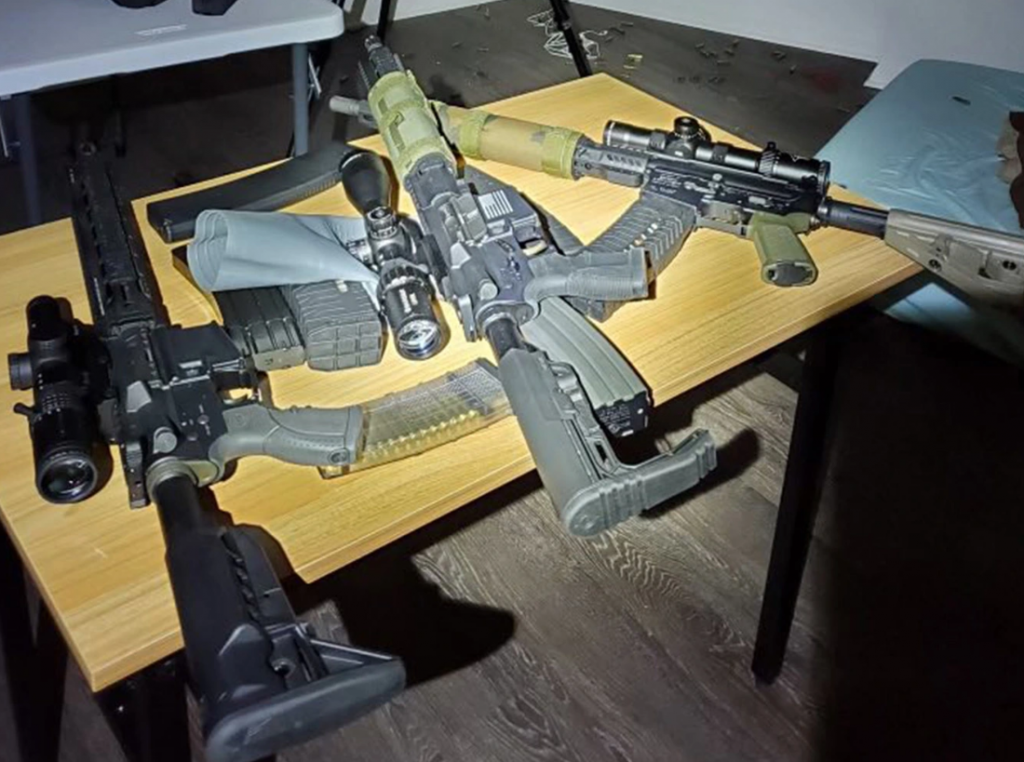
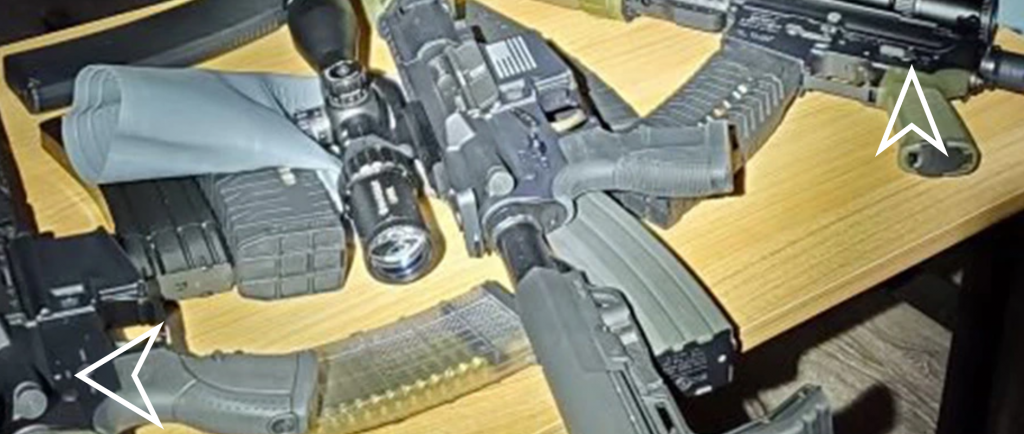
I recently became aware of a Supreme Court case from 1994, Staples v. United States. This case involved a man who had been arrested for having an AR-15 with more than a few components of an M-16 fire control group installed inside of it including the selector, hammer, disconnector, and trigger.

Suspecting that the AR-15 had been modified to be capable of fully automatic fire, BATF agents seized the weapon. The defendant was indicted for unlawful possession of an unregistered machinegun in violation of the NFA.

At trial, BATF agents testified that when the AR-15 was tested, it fired more than one shot with a single pull of the trigger. It was undisputed that the weapon was not registered as required by the NFA. The defendant testified that the rifle had never fired automatically when it was in his possession. He insisted that the AR-15 had operated only semiautomatically, and even then often requiring manual ejection of the spent casing and chambering of the next round. According to the defendant, his alleged ignorance of any automatic firing capability should have shielded him from criminal liability for his failure to register the weapon.

The trial court disagreed, and the man was convicted and sentenced to five years’ probation and a $5,000 fine. He appealed the conviction, and the appeals court agreed with the trial court, affirming his conviction. It was appealed and wound up at the SCOTUS level. Justice Thomas wrote the majority opinion, and let me tell you, there are some great quotes in that opinion.

The opnion says that the language of the statute provides little in the way of guidance in this case. The NFA is silent concerning the mens rea (intent) required for a violation. It states simply that “[i]t shall be unlawful for any person . . . to receive or possess a firearm which is not registered to him in the National Firearms Registration and Transfer Record.”

Nevertheless, silence on this point by itself does not necessarily suggest that Congress intended to dispense with a conventional mens rea element, which would require that the defendant know the facts that make his conduct illegal.

Staples v. United States, 1984

The Government argued in that case that Congress intended the NFA to regulate and restrict the circulation of dangerous weapons. Consequently, in the ATF’s view, this case fits in a line of precedent termed “public welfare” or “regulatory” offenses, in which SCOTUS understood that Congress sought to impose a form of strict criminal liability through statutes that do not require the defendant to know his conduct was illegal.

One money quote that I saw was this one:

The Government does not dispute the contention that virtually any semiautomatic weapon may be converted, either by internal modification or, in some cases, simply by wear and tear, into a machinegun within the meaning of the Act. 

Give the case a read, and see what you can find.