This is a story of me afro-engineering a solution to some flooding that happened to my rear lanai. Now that there is a pool behind the house, what was our back porch has been closed off by an electric hurricane screen. There is some outdoor furniture and a TV in there, and it now serves as a sort of “Florida Room” and a place to store outdoor items when a hurricane comes. More on that in a different post.
We had a thunderstorm come through on Saturday, and it was a fairly strong one. We got just over 3 inches of rain in less than 45 minutes. That caused a bit of an issue. When we put the pool in, the contractor put a drain in place that lies at the end of the pool deck closest to the house. It looks like this.
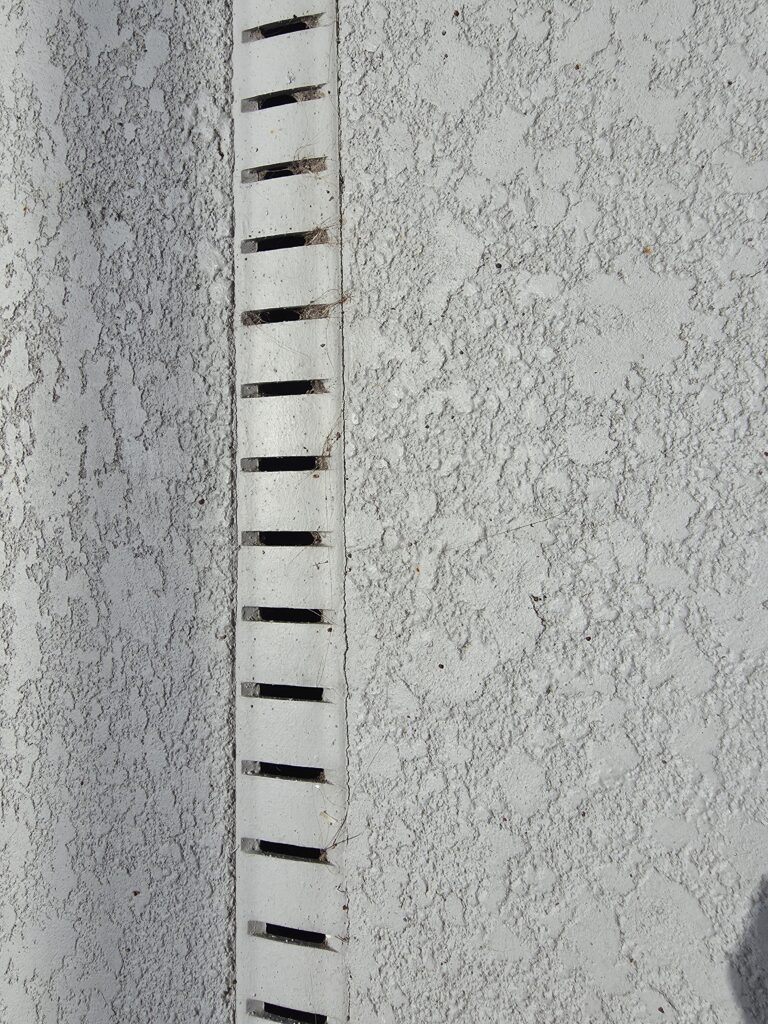
That is just a slot in the concrete about 2 inches wide and 4 inches deep. It discharges on both sides of the slab. Right above where that discharges, the downspouts from the gutter discharge. I dug a trench at that point, and ran a 4 inch corrugated pipe that runs about 20 feet back from the house. At the end closest to the house, it looks like this (pictured is not mine, it’s from the Internet):
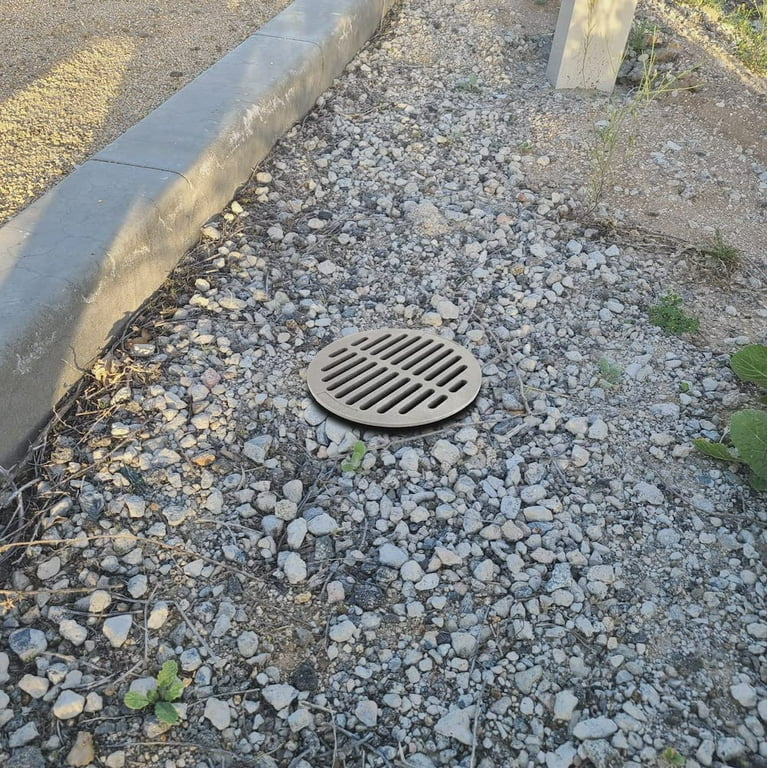
The discharge was one of these valves.
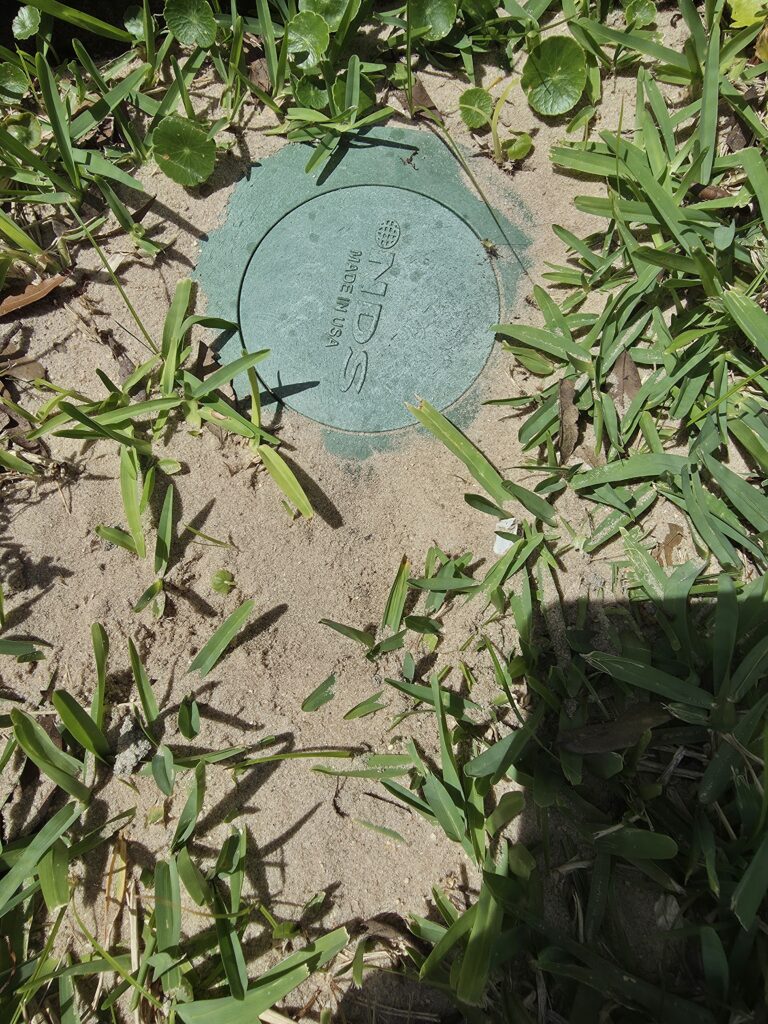
When the pipe fills with water, the weight of the water causes the valve to open. Well, as near as I can tell, the rain was coming down so hard that the drains were quickly overwhelmed, the area near the inlet to the drain pipes was soon underwater, and this caused a backup that flooded my rear lanai with about an inch of water. The rug out there was saturated, but luckily it’s an outdoor rug, so a couple of hours and a fan soon dried it out, no harm.
While it was raining, I went outside to see what the problem was. It had been so long since we had gotten any real rain, everything was clogged with dead oak leaves: the downspouts, the intake drains, all of it. So I cleared the leaves out, but that didn’t help a lot, and got me bitten on the hand by a rather large, angry spider that had been nesting in the leaves.
I spent Sunday digging up the ends of the drain pipe, and I replaced the intakes with this:
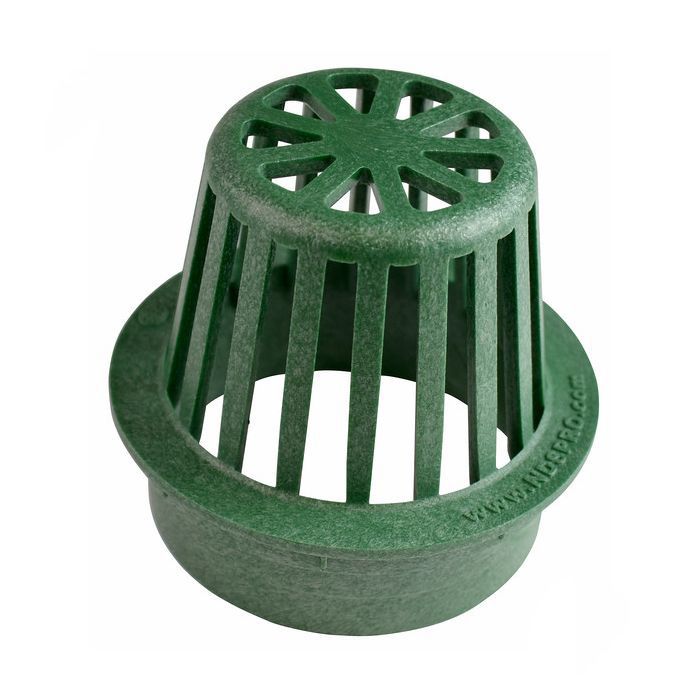
Since it is taller and not flat like the old ones, the hope is that this grate can handle more water AND is not likely to be clogged with leaves. Then I also replaced the discharge valves with these.

I am hoping that this will be large enough to allow more flow through the pipe. According to my math, a 4 inch corrugated pipe that is 20 feet long with a 1 inch drop every ten feet should be able to move about 75 gallons per minute. I have two of them (one on each side of the house) so I should be able to drain about 150 gpm.
Also according to my calculations, a rate of 3 inches of rain in 45 minutes is about 30 gallons per minute. This system should be able to keep up now, if I can keep it free of leaves. I guess we will find out next time we get a good rain, which in Florida is about once a week or so.
Keeping water out of the house is important, and no all prepping is sexy. Hope this helps someone else.
6 Comments
ghostsniper · May 27, 2026 at 6:22 am
Very good. You did almost exactly what I did on our Florida home, back in 2002. That is called a Deco drain and they are not addressed in the building codes. Typically they exit the side of the deck and that’s it. Typically, in afternoon downpours, puddling can occur, with unacceptable results as you’ve described.
Our lot was 80′ wide and the house was 60′ wide so about 10′ from the side of the house to the property line. Nobody lived on either side of us – just vacant lots. Because of the floodplain we had to have about 3 feet of fill dirt installed on the lot. So there was considerable slope in the 10′ wide side yards. (we also had a 6′ tall estate fence around the entire back and side yards.)
Using a hot air gun and PVC pipe I created receivers to plug into the end of the deco drains and then into 4″ non perforated pipe. When done, the pipe was not visible as it was under the sod. On the far end, it exhausted in a termination vent like you show. Never had flooding again but I did have to watch that termination and clear it out now and then.
Having said that, it was probably not a permanent solution. In the 4 years we lived in that house no one built on the 2 adjacent lots. If they had, their lots too would have had to been built up to the flood plain as our was and that drain exhaust would no longer work.
I can think of no other solution for this problem. Perhaps, at each deco drain, auger a 24″ dia hole 10′ deep and fill it with rocks and pebbles. (french drain)
SP RN · May 27, 2026 at 8:26 am
Was it a radioactive spider?
Divemedic · May 27, 2026 at 10:07 am
No superpowers yet. I do have two small holes in my wrist, a quarter of an inch apart, though.
C · May 27, 2026 at 8:45 am
I would say that’s about what I’d do. Except I have been known to over engineer things. My previous neighbor claimed that you can’t keep a crawl space or basement from flooding. That it will happen eventually. I asked if he wanted to bet money on it. He declined.
Elrod · May 28, 2026 at 2:47 am
What is/are the water volumes the drainage system is expected to move? (surface area X projected rain rate + additional incoming runoff / 7.48 (gallons per cubic foot) = gallons per minute to drain. What percentage of worst case is the design standard? 3 inches in 45 minutes is 4 inches per hour; not exactly our of norms for central Florida thunderstorms (my weather station recorded what was a rate of just over 10 inches/hour once when I lived there, but it lasted only about 30 minutes; Melbourne once got 26 inches in 24 hours).
One thing I did was add a few downspouts and used 2 aluminum downspout outlets – 1 on the bottom of the gutter into the downspout, the other – oversized and cut shorter by 3/4 inch- inverted inside the gutter with a “widening V” notch cut into each end; light rain those downspouts didn’t pass any water, heavy rain that filled the gutters, the higher the water in the gutter the more water each added downspout would pass. I was willing to accept the possibility of occasional flooded flowerbeds and pool surround to avoid a flooded lanai when the gutters couldn’t handle the rain rate and overflowed onto the lanai. Might something similar work for your lanai drainage?
No Longer Paying – Area Ocho · May 27, 2026 at 4:49 pm
[…] was researching water flows for the drains in my rear concrete deck. Grok insisted that this narrow channel of 2 inches deep by 1.5 inches wide can move 240 gallons […]
Comments are closed.