The ACLU claims that college students in California have a legal and constitutional right to be called the names and pronouns of their chosen gender identity. They claim that this right exists even if you have not legally changed your name. It isn’t just the ACLU in California- the organization’s national policy mirrors it. Interesting that they invent this “right” out of thin air while simultaneously ignoring the Second Amendment and SCOTUS on that issue.
In June 2020, the Supreme Court of the United States in Bostock v. Clayton County concluded that discrimination on the basis of sex encompasses both discrimination based on sexual orientation and discrimination based on gender identity.
In 2016, one college student made a game out of it and declared to his school that his pronoun was “His Majesty” and used official school policy to force staff members to use it. The left went apoplectic, claiming that he fundamentally doesn’t understand gender identity—or pronouns. I think that it is the left that doesn’t get it.
Total Frat Move wrote that gender-neutral pronouns just make “everyday a fun game of ‘let’s solve the puzzle in my pants,’” and that “when you inconvenience the entire world because you learned a hip new word you insist on being called, then you’re just an asshole.”
I agree, but in the spirit of this, we must acknowledge that the law requires that I be called whatever name or pronoun corresponds to my gender identity. If I ever find myself in an environment that insists I follow such a silly and arbitrary rule, I will find in necessary to prove just how silly and arbitrary it is. So let’s refer to the US Department of Labor to see how we can do this. Here are the definitions that they are using:
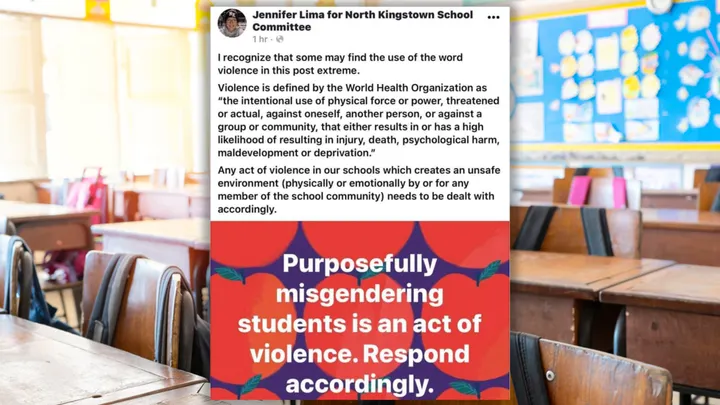
Names and Pronouns. Refer to each person by the name and the pronoun(s) by which the person wants to be referred. If you don’t know, ask in a tactful and respectful way. For example, you can say, “what pronouns do you use?” or you can introduce yourself with the pronouns you use, which may prompt someone to share the pronouns they use. Continued intentional misuse of a person’s name and pronouns – also known as misgendering – may breach the person’s privacy, may put them at risk of harm, and in some circumstances, may be considered harassment.
Gender identity: A person’s internal sense of being male, female, or something else such as agender, binary, gender fluid, gender nonconforming, genderqueer, or nonbinary. Since gender identity is internal, one’s gender identity is not necessarily visible to others. All people have a gender identity.
So let’s choose something to illustrate the absurdity of this, and then use the law to bludgeon them over the head with it. I choose to identify as Schrodegender. That is, I simultaneously exist in a quantum state of all genders, and only resolve into one specific gender once the observer makes an attempt to measure my specific gender. Each person will be required to look in my pants to observe whatever genitalia I am expressing at that moment before using that pronoun.
Or you can just call me “Assmaster,” either will be acceptable. To refuse to do so is to violate my constitutional rights.