This old couple got a restraining order against their grandson. When he got out of prison, he ignored that piece of paper, went to their home and murdered his grandmother by beating her head in with a hammer. He then called the maid and expected her to clean up the crime scene. The maid was able to escape and contact police, but when they arrived, they found that the grandfather had arrived home, and the man had beaten him as well.
So wait, a retraining order didn’t work. Contacting the cops didn’t do too well, either. I mean, the maid flagged down a passing cop, and it took him so long to get there that the grandfather got home and was beaten by the suspect before they arrived.
So how did the judge respond? Let him out on bail, but not before giving him another piece of paper telling him not to return to the home to finish the job.
Florida is a gun friendly state. Having a gun in the house would have worked better in stopping him that a piece of paper.
I first reported on the Applebee’s shooting back in March. There was a follow-up three days later. The story goes that our critter was seated at an outside patio table at the Applebee’s when he said something crude and disrespectful to a woman who was dining outside. The woman’s boyfriend told him to cut it out. Our critter then fired at least three gunshots in the air before pointing his gun at the couple’s car, who fled the scene in their car. Multiple witnesses saw the incident and the gun.
In response to the gunshots, customers that had seen the incident and shooting outside of the restaurant fled into the store, and the staff locked the door. Our critter then walked to the side door where an customer let him in to the store through an employees only entrance. When he got inside, he angrily asked customers in the store, “Why did you call the police?” and then said, “Do you want to see what is in my pockets?” As he began to pull things from his pockets, a man with a concealed weapons permit who was inside the restaurant shot our critter, killing him. No firearm was found on the body.
The latest is that the state has ruled that the shooting was a good defensive shooting, and no charges will be filed. That pisses the local liberals media off. There is a story and video here. You can judge for yourself.
To me, the standard is reasonable man. There was a crowd outside of the restaurant, who having seen what happened, fled into the store seeking cover from what they claimed was a shooting. The shooter then entered the store and began pulling objects from his pockets. With those facts and knowing that there have been a lot of mass shootings, I would have shot him as well.
I would like to know where the gun went. Multiple witnesses saw the gun and heard the shots. Where did it go?
The liberal skank that threatened to come after this website and my job? Thanks to a reader tip and a short records search, I know who she is.
She threatened to contact my employer to get me fired. She contacted this website’s registrar in an attempt to have this blog deplatformed. She posted to social media, asking people to help identify me so I could be canceled. She tried to doxx me. Turnabout is fair play.
She is Stephanie Tuttle Coccarelli of Fredonia, NY and is 30 years old. She has worked as a recruiter for a home health agency since February 2022. She is no record of her having a nursing license in NY, so her profile claim of being a nurse is a lie. The agency is a home health care agency and she is an office drone. She claims that she has fired lots of nurses for refusing to honor a patient’s pronouns and claims that she will get my HR to do the same to me if she can figure out who I am and where I work. She doesn’t hire or fire anyone. Again, HR office recruiter drone. Here is her picture. Note the Magic Marker drawn in eyebrows and glasses that make her look like Mrs. Potatohead.
The more she wants to come at me, the more of a profile I will build. If she keeps it up, I will get a PI and a lawyer. Defamation, libel, and slander suits can be a real bitch.
I may send a comment to her employer today to let them know how she spends her workday.
So in response, I sent this message to her employer, using the contact us link on the website.
I would like to let you know that one of your recruiters, Stephanie Coccarelli, is spending her workday on social media telling nurses that she will write to their employers and get them fired for disagreeing with her political opinions. You don’t have to believe me, check it out for yourself. Her twitter handles are @stephc1024 and @stepht1024. I’m staying anonymous because she is obviously vindictive.
Do I think she will get fired? No, but I am betting that her boss will talk to her about this. Maybe she will eventually back off of attacking me. The worst she can do to me at this point is get my Twitter account banned. So? I have several, just like she does. Banning me from Twitter won’t hurt me a bit. It isn’t like I wasn’t banned several times during the Liberal censorship days before Musk bought the place.
I really enjoy pissing off people like her. She is a liberal, antigun, proabortion, pro-tranny leftist moonbat who spends her working hours on social media doxxing, insulting, and attacking people on Twitter. She decided to threaten me, my business, and my job online because I made a statement of opinion, then proceeded to do exactly that. So turnabout is fair play. This isn’t work, it’s actually fun.
I’m not saying that you should bury ALL of your guns. I am saying, what if you had several caches as sort of an insurance plan? Say one of these tubes, and buried a couple of off-paper rifles, a dozen magazines, and a couple of hundred rounds of ammo? Bury them somewhere where they are unlikely to be found, and even if they ARE, cannot be connected to you? Use your imagination. Bury them next to a sewage lift station or a radio tower. There is unlikely to be any digging there, and even if there is, it won’t be connected to you if you are smart and wear gloves.
Would it be an insurance policy against all of your guns being taken in a Red Flag order?
Delusions: A false, unshakable belief which is out of keeping with the patients social and cultural background.
Primary delusions
A new meaning arises not in connection with other psychopathological event and is not understandable.
Delusional mood: has knowledge of something going on around him but do not know what it is.
Delusional perception: attribution of new meaning to a normally perceived object.
Delusional idea: delusion appears fully formed in the mind.
Secondary delusions
A delusion which is understandable in terms of persons cultural background or emotional state.
Content of delusions
Delusions of persecution
Persons or groups.
About to be killed or being tortured.
Being robbed of property or knowledge.
Of being poisoned or infected.
Delusions of reference.
Delusions of influence.
Delusions of jealousy.
Infidelity- seen in brain disease, alcohol addiction, affective psychoses and can be dangerous, may attempt murder.
Delusions of love.
Erotomania: may try to follow, contact or persuade.
Grandiose delusions.
Schizophrenia, drug dependence ,organic brain syndromes, mania (jocular and haughty).
Regarding worth, talent, knowledge or power.
Delusions of ill health
Depressive illness, schizophrenia.
Could be extended to cover persecutory delusions.
Hypochondriacal delusions.
Some physical defect, disorder or incurable diseases.
Infestations, ugly or dysfunctional body parts
May include spouse or children.
Result of somatic hallucinations in schizophrenia.
Delusions of guilt
Unpardonable sin.
Can give rise to persecutory delusions.
Lead to suicide.
Nihilistic delusions .
Denies the existence of body, mind, loved ones or the whole world.
Very agitated depression, delirium, schizophrenia.
Delusions of poverty- Destitution is facing him and family.
Delusional misidentification.
Capgras syndrome.
Religious delusions- Can be grandiose in nature.
Delusions of control.
Treatment:
Don’t play into the delusions, but don’t argue with the patient.
Instead, be firm: “You know that isn’t true. Let’s stay focused on what is real.”
Be calm, patient, acceptance, active listening. Don’t condemn the patient, but help them to come to the realization that what they are experiencing isn’t reality.
Place delusion in a time frame and identify triggers.
Identify all the components , triggers related to stress or anxiety.
If related with anxiety, teach anxiety management skills.
Develop symptom management program.
Assess intensity frequency and duration
Fleeting delusions can be worked out in a short time frame.
Listen quietly until need to discuss.
Identify emotional components.
Observe for evidence of concrete thinking. Is patient and nurse using language in the same way?
Observe speech for symptoms of a thought disorder.
Maintain consistency.
Just going to leave this here while noting that it doesn’t say to buy into the delusion by using their preferred pronouns.
So the woke crowd is apparently claiming that they have emailed the registrar for this site and is requesting a takedown because we have pissed off the woke crowd. That won’t affect the server, but if the name host decides that they are going to bend… If that happens, we will be switching to our alternate address, divemedic.xyz
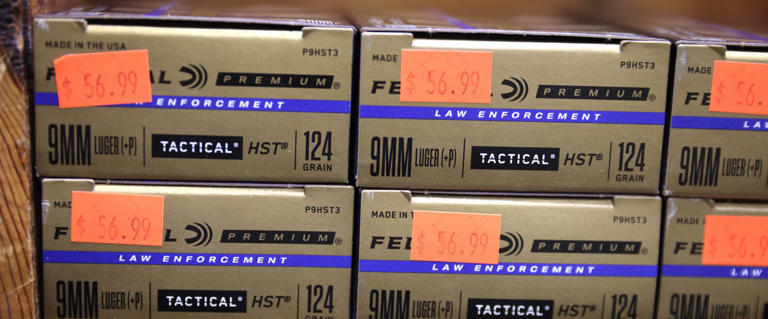
There is a difference between price increases and inflation. With a price increase, the commodity that you want to purchase becomes more expensive. This is usually due to supply and demand forces that change the market price for that commodity. With inflation, all commodities cost more in the currency that has been inflated. This is also caused by supply and demand forces, but in this case those forces are acting upon the currency. The supply of currency is up, so it becomes worth less. At a certain point, this causes demand for that currency to drop, further exacerbating the inflation.
As for ammo, especially War Shots, we’ll never see pre-Covid prices again (I need a time machine….)
He’s right. Ammo prices have been rising. Small arms ammunition prices shot up 157% from 2000 to 2022, a period in which price increases caused by inflation climbed by 170%, meaning that in terms of other goods and services, ammo is cheaper now than it was in 2000. To illustrate the impact of rising prices, a box of 20 .223 caliber rifle rounds cost about $12 in the year 2000. Today, the same ammunition costs more than $30.
My very first handgun that I bought was a Smith and Wesson Model 59. (I’m still sorry I sold that gun) Since 9mm was not yet a popular cartridge in 1987, the ammo for it wasn’t as cheap as other calibers. I remember paying $7.50 for a box of 9mm ball. Two years later, I bought a S&W 4506 when they first came out, and was paying $8 per box of UMC .45 ball.
The price increases of ammo that were brought about by COVID were due to a supply issue created by the closing of ports, factories, and shipping facilities as a part of governments shutting down portions of the economy, and were exacerbated by a huge increase in demand that was brought about by panic buying of ammo in light of the George Floyd/Antifa/BLM civil disturbances. The double whammy of supply reduction and demand increase conspired to cause a shortage, which drove up ammo and firearms prices.
That issue has largely been corrected, and the supply issue has largely returned to normal for the mainstream cartridges. There are still shortages of off track ammo like revolver ammo, 10mm, and other calibers that are now short in supply because manufacturers are concentrating on the mainstream ammo supply. As that continues to stabilize, the sidestream ammo market prices will come down a bit.
However, I don’t think that ammo prices will ever return to where they were in January of 2020, when I was buying 9mm for $7 per box (less than I was paying in the 1980s!).
That is why I do not think the elevated ammo prices that we are seeing now have anything to do with the COVID shutdown. The prices we see now are the new floor. Thanks to the inflationary pressures of Trump and Biden (and the uniparty) running the government printing presses, the dollar is worth less. That means that the prices of everything that is sold for dollars will be higher in terms of dollar cost. That is, the new prices for ammo are caused by inflation.
In February of 2019, there were 15.45 trillion dollars in existence in the entire world. By July of 2022, there were 21.73 trillion dollars in existence- a whopping 40% increase in supply in only 2.3 years.
We know that there were less goods and services available, but there were 40 percent more dollars chasing that reduced amount of goods and services. That caused inflation. The United States is in the midst of a period of historic inflation. The average price of goods and services was up a multi-decade high of 9.1% year over year in June 2022.
Since that peak in July of 2022, the Fed has taken steps to reduce the money supply, and we now have somewhere around $20.6 trillion in circulation. We are never going to get back to $16 trillion. It isn’t possible without collapsing this house of cards our economy is built upon.
So for that reason, we are never going to see prices like February of 2020 again. Those days are gone. Enjoy your time paying $10 per 50 round box of 9mm. It will cost more as we print more money. There will come a time when we look back wistfully at $10 ammo boxes.