I don’t think it’s any coincidence that this was announced the same week that Musk bought Twitter and is saying he will stop censoring those on the right. Read from the statement:
Disinformation and misinformation propagated and disseminated by both domestic and foreign actors were listed as the first key factors influencing the heightened threat environment, with grievances stoked by unsubstantiated widespread election fraud conspiracy theories and COVID-19 mis/disinformation noted as inspiring violent extremist attacks during 2021.
So job one is going to be the silencing those who are calling shenanigans on COVID restrictions and election fraud. According to a statement made to the AP, “The spread of disinformation can affect border security, Americans’ safety during disasters, and public trust in our democratic institutions.”
I broke this blog away from blogger and onto my own server because I was pretty sure that the left’s big push was going to be centered on silencing those of us who would oppose this takeover of our government. It looks like that will be happening, and they are going nuclear with this sooner than I thought.
Expect sources of information that don’t fit the officially approved narrative to begin disappearing, and voices opposing the government to be silenced. Last year, I reported that the Biden administration endorses the “Christchurch Call,” a series of sweeping regulations to “eliminate terrorist and violent extremist content online.”
Scary times, indeed. I don’t think that this election is going to go the way that the polls indicate.
I haven’t posted in a couple of days. After managing to make it two years without COVID, I have managed to catch it twice in as many months. The odd part is that the two episodes have differed in symptoms.
The first time consisted of large amounts of congestion and coughing that lasted eleven days. I had no fever and COVID tests came up negative, but I lost my sense of taste and smell.
This latest bout had me with a mild stuffy nose and cough, no fever, and only lasted four days. I was so tired, I couldn’t stay awake. I wasn’t sure that I had COVID until my wife got sick, took a test, and it was positive. So I took one too, and what do you know, it was positive. Then yesterday morning, I woke up without a sense of smell or taste. This second bout with COVID has been MUCH milder than the first. The only other symptom is copious amounts of sweating.
I have no idea how we caught it. With my wife being a teacher and me working in a busy emergency room with daily contact with COVID patients, who knows?
Joseph Kennedy was a football coach and it was his practice at the end of games – after the players and coaches from both teams would meet at midfield to shake hands – to pause and kneel to pray. Kennedy said he wanted to give thanks for what his players had accomplished and for their safety, among other things.
Kennedy initially prayed alone on the 50-yard line at the end of games, but students started joining him and over time he began to deliver a short, inspirational talk with religious references. Kennedy says he never required players to join or asked any student to pray. He also led the team in prayer in the locker room before games, a practice that predated him.
He lost his job as a result, and subsequently sued the school district. That lawsuit has found its way to SCOTUS. This post isn’t about the lawsuit. It’s about the MSM reaction to it. Note that the story linked here is to ESPN, a sports network owned by Disney, who as we all know is embroiled in controversy over their support for teachers discussing sex with 5 year old children. In class, where the children have no choice but to listen.
So the left is claiming that students seeking the approval of the coach will participate in the religious ceremony of prayer in order to ingratiate themselves with him. This, they claim, is totally different from a teacher leading 6 year old students through an exercise on transgenderism.
As a completely non-religious person, I can say that I would rather the coach lead the children than some pink haired freak trying to convince my child that mutilating their genitals is the way to go.
Remember when the AMA was getting behind the anti gun crusade? Now they are getting into grooming. The AAP (American Academy of Pediatrics) is publishing a new book for kids that aims to explain puberty and the changes that are coming to their bodies.
The book is aimed at boys, girls, and other. That’s right, now doctors are saying dumb shit like:
With traditional puberty education, whether it’s in schools or in books, we talk about how girls get their periods and boys get erections. But some girls – for example, transgender girls – might not get their periods. They need to understand about erections and those changes in their bodies.
If a twelve year old child is getting erections, they are not girls. They are boys. This is an excellent opportunity to screen any potential doctor for your child. Simply ask them, “Are you a member of the American Academy of Pediatrics?” If the answer is yes, follow that question up with, “What are your feelings about the AAP’s policy on transgender children?”
This should allow you to decide on if this is the best choice for your child’s health care needs. This is a battle for your children. Act accordingly.
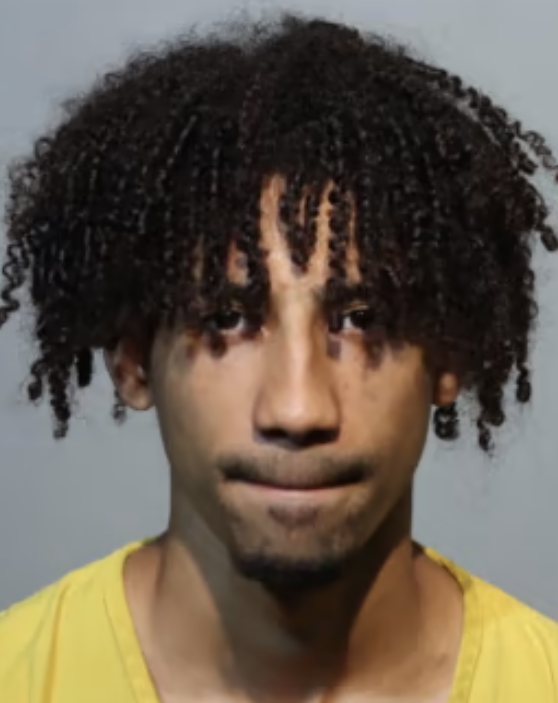
I posted last week about a man who ran over another after following the victim’s wife home due to road rage. The police received a call into a tip line, which led to the arrest of a suspect, a man by the name of Dontae Styles.
It turns out that Mr. Styles is pretty well known to Central Florida police. In just Seminole and Orange counties, he has 1 felony arrest, 4 misdemeanor arrests, and 19 traffic tickets in the past 2 and a half years since his 18th birthday.
Most interesting is a felony arrest from April of last year, where he was caught on a woman’s dash camera pointing a gun at her in traffic on Interstate 4. Why? Because she wouldn’t get out of the left lane when he wanted to pass. Even though the incident was caught on video, prosecutors dropped the charges because the case wasn’t “suitable for prosecution.”
In one of the misdemeanor cases from January 2019, police were investigating a motorcycle with defaced tags when Mr. Styles jumped on the bike and attempted to drive away. During that investigation, Mr. Styles admitted that he purposely covers his plates to avoid being caught by police. Charges were dropped because the case wasn’t suitable for prosecution.
Ticket after ticket with a common theme. Speeding, running red lights, no insurance, expired tags, wrong tag on the vehicle, driving while license suspended. In every single case, there would be a fine and perhaps a suspension of his license, which he plainly ignores and continues driving.
Then when he is finally arrested, prosecutors drop the charges because they aren’t suitable for prosecution. Even when he is caught on camera.
All in all, since he turned 18, Dontae has been a one man crime spree. He has shown that he carries a firearm, and now he has advanced to the point where he will kill you if you get in his way. So far, not one prosecutor or judge has seen fit to toss his criminal black ass in jail, but we constantly hear about how black men don’t get a fair shake in court.
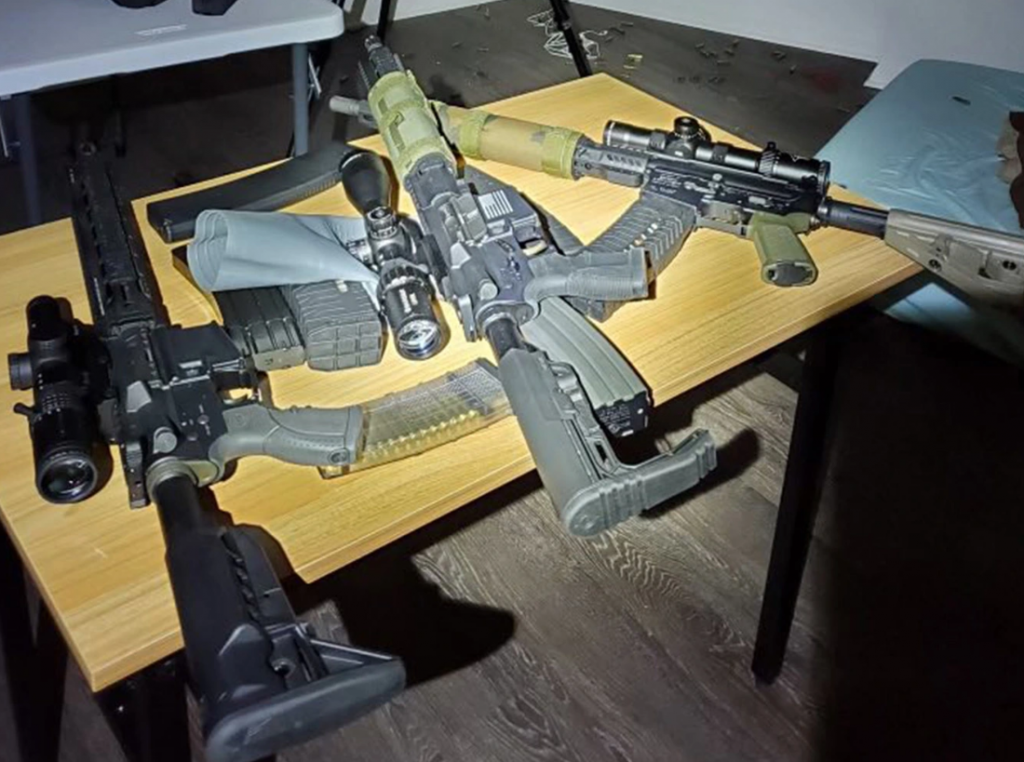
Homeowner shoots burglar. The local Sheriff says: “you’re not in trouble. Come see us. We have a gun safety class we put on every other Saturday, and if you take that, you’ll shoot a lot better, and hopefully, you’ll save the taxpayers money,”
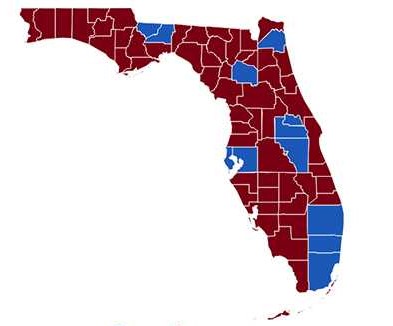
To help you decide where in Florida is the best place to live, look at this map. The red areas are good, but if you are a liberal antigun pedophile burglar, stay where you are. You might get shot and fed to a gator.
A county judge from Texas has invited Disney World to move to Texas. For reasons that we have already discussed, the biggest of which is the $12-25 billion price tag, Disney World isn’t going anywhere. The newest hotel (Star Cruiser) just cost Disney $1 billion alone.
It doesn’t surprise me that this judge would take this position. He is, after all, a Democrat. As we are all now aware, the Democratic party is the party of child molesters and communists. If the Republicans can’t use this issue to capture the soccer moms, they deserve to vanish into history.
Speaking of history, I promised you all more Central Florida Disney history.
Back in the late 60’s, Walt Disney wanted to build a larger theme park than the one he had built in California. Not only did he want a theme park, he wanted to build a futuristic city that would be a technological Utopia, with a dome protecting the residents from the weather and allowing a perfect environment.
The problem was that he needed to buy land for low prices. As soon as people found out it was him buying land, he reasoned, prices would skyrocket. So he hired two shady men: Paul Helliwell, who ran CIA operations in Southeast Asia, and William “Wild Bill” Donovan, head of the World War II spy organization that eventually became the CIA. Together, they hatched a plan that would give Disney total control over the legal environment of his new project.
First, Donovan and his law firm created numerous shell corporations through which large amounts of property could be purchased. A disinformation campaign kept the locals from determining that it was really the Disney company that was buying large tracts of land. Disney was correct about keeping it secret. As soon as people found out that it was him buying the land, the price per acre became 1,000 times higher, going from $80 to $80,000 an acre within weeks.
Disney needed to make sure that he had control over every aspect of the project: building codes, taxes, everything. So CIA spy Paul Helliwell did what he had already done in Southeast Asia: Create a shadow government. They created phantom cities where the property was located, installed a compliant government and proceeded to make their own rules.
This is what allows things like Disney’s policy preventing medics from declaring people dead. It allows Disney to collect taxes from Hotels located in the area, and the tax money funds Disney operations in a completely tax free (for Disney) way.
RCID pays the Orange County Sheriff’s office $8.5 million a year to provide law enforcement within its jurisdiction. On top of that, the theme park pays $5.6 million a year to pay individual deputies $40 an hour to act as security guards in the park. They wear their department issued uniform, carry a department issued firearm and radio, drive their taxpayer issued patrol car, and are paid by the department that they work for. The theme park then pays their department for the service. Depending on the situation, they are considered to be security guards or police.
If they want to search you but don’t have a warrant or probable cause, they are security guards. If they ask you a question and you lie, they are then cops and you have broken the law. If you resist them in any way, they are cops. They get to have things however it works out best for them. As this great grandmother found out, when Disney security searched her bags as a part of a security check and she was arrested for having CBD oil. The charges were later dropped, but this illustrates the problem I have with cops as security. They can search you, and you have no constitutional protections. But let them find something illegal, and they instantly can use the fruits of what would otherwise be an unconstitutional search and arrest you.
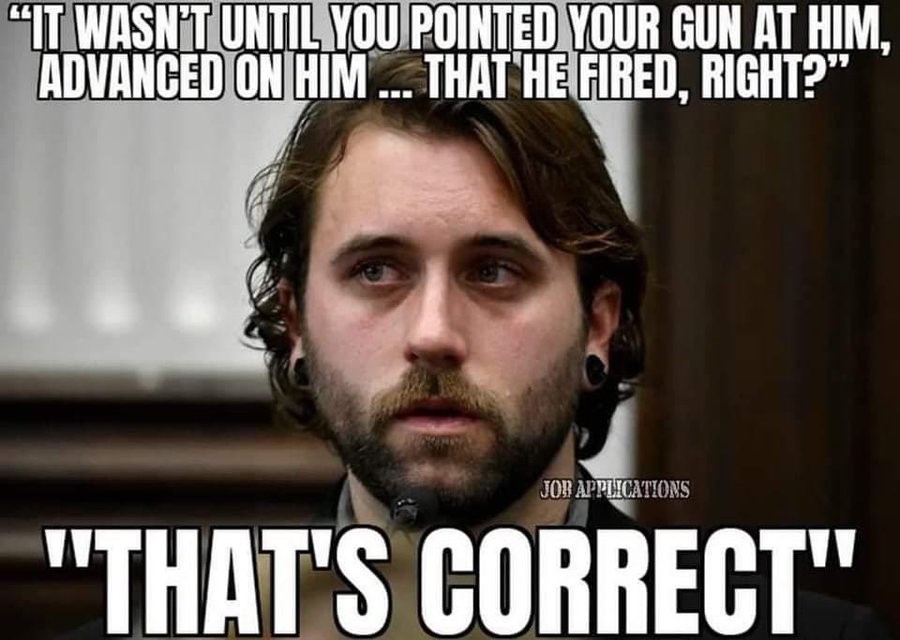
Joe Biden was seen shaking hands with Gaige Grosskreutz at a recent Democrat fundraiser.
Today, Joe Biden shook hands with Gaige Grosskreutz, the felon who nearly murdered Kyle Rittenhouse and lied to the police about carrying an illegal firearm: pic.twitter.com/arE2HwTJyF
Of course we remember him. He was was illegally carrying a handgun, had been convicted of “intoxicated use of a firearm” in 2015, domestic abuse, burglary, and his paramedic license had been revoked when he decided to fake his surrender to Kyle Rittenhouse before trying to use his firearm to murder Rittenhouse. He caught a bullet in the arm for his crime. I wonder which hand he used to shake with Joe.
On the stand in open court, Grosskreutz admitted that he committed a felony.
So Biden supports wife beaters, felons, and child molesters. No surprise there.
Obama made a speech this week, where he called for media companies to censor even more people in order to combat “disinformation.” He claims that disinformation is a “threat to our Democracy” and wants tech giants to have even more power to combat it.
The First Amendment is a check on the power of the state. It doesn’t apply to private companies like Facebook or Twitter, any more than it applies to editorial decisions made by the New York Times or Fox News. Never has. Social media companies already make choices about what is or is not allowed on their platforms and how that content appears. Both explicitly through content moderation and implicitly through algorithms. The problem is we often don’t know what principles govern those decisions.